Mainnet」タグアーカイブ

Complete Guide to Pi Network: How it Works and How to Earn Coins, Explained for Beginners

What is Pi Network: A Beginner’s Guide

Pi Network is attracting attention as an innovative cryptocurrency project. This network is steadily evolving towards the launch of its open mainnet, offering new opportunities to participants (Pioneers).

Pi Network’s Current Status and Future Potential

Pi Network continues to grow with its unique strategy. The core team carefully manages coin circulation to maintain the health of the ecosystem. This creates an environment that is easy for new participants to join.

Pi Coin Distribution Status

Currently, about 78% of Pioneers hold less than 10 Pi coins. This indicates a large number of new participants. On the other hand, some long-term participants hold thousands of coins but are waiting for KYC (identity verification) completion.

How to Increase Your Pi Coins

There are several ways to increase your Pi coins. Here are the main strategies.

Utilizing Online Businesses

One of the easiest ways is to start a small online business that accepts Pi coins. You can earn Pi coins by selling unwanted items or providing services.

Operating a Pi Node

If you have technical knowledge and funds, you can consider operating a Pi Node. The initial investment is about $2,000, and monthly maintenance costs are also required, but you have the potential to earn a certain amount of Pi daily.

Accepting Payments in Pi Coin

If you have an existing business, accepting payments in Pi coin allows you to earn Pi coins while contributing to the ecosystem’s growth.

Pi Network’s Long-Term Vision

Pi Network aims for long-term value creation rather than short-term profits.

Building a Sustainable Ecosystem

Pi Network does not rely on coin sales and secures operating funds through its own advertising platform. This allows for sustainable growth while protecting the value of the coin.

Future Outlook for Pi Network

Pi Network is positioned as a long-term project with the potential to be passed down to future generations. It is important for participants to build value alongside the ecosystem’s growth, rather than focusing on short-term gains.

What is Pi Crypto Connect? Pi Network’s Next-Generation Financial Platform

Pi Network: Building an Innovative Cryptocurrency Ecosystem and the Path to Main Network Launch

Pi Network, an emerging cryptocurrency project characterized by mobile mining, is showing significant progress towards the launch of its main network. Preparations by the core team are in full swing, and the dawn of a new financial system is approaching.

Pi Crypto Connect: The Core of an Innovative Financial Ecosystem

At the heart of Pi Network’s new initiative is “Pi Crypto Connect”. This program has the following features:

  • Pi Network’s open-source codebase
  • Automatic open network launcher and management system
  • Integration of Raspberry Pi and cryptocurrency transactions
  • Collaboration with major banking institutions and international financial organizations

Pi Crypto Connect functions as an open-source database and serves as an automatic operation and management system for Pi Network’s open network. Furthermore, it offers diverse functions such as sending and receiving cryptocurrencies, wallet management, and monitoring market trends.

Pi Network Features and Current Status

Pi Network is an innovative cryptocurrency project with the following features:

  • Mobile mining is possible
  • Uses Stellar Consensus Protocol (SCP)
  • Acquired over 33 million users as of March 2022
  • Currently in the enclosed mainnet phase

Currently, Pi Network is in a phase where transactions are possible between users who have passed KYC (Know Your Customer). In the future, it aims to transition to an open mainnet.

Pi Network Ecosystem and Future Outlook

Pi Network aims to build a comprehensive cryptocurrency ecosystem:

  • Provision of Pi wallet
  • Integration with major cryptocurrencies (Bitcoin, Ethereum, Ripple, etc.)
  • Extensive collaboration with international financial institutions

Future exchange methods are also planned, but currently, exchange is not possible. More specific information is expected to be provided as the project progresses.

Pi Network Value and Future Potential

Much attention is focused on the initial value setting of Pi Network. According to some sources, there are reports that the value of 1 Pi is set at $314, but this has not been officially confirmed. There is no doubt that Pi Network is positioned as a currency that will play a central role in a new financial system.

Collaboration with Global Financial Institutions

A notable point of Pi Crypto Connect is its extensive collaboration with global financial institutions. Connected institutions include:

  • International Monetary Fund (IMF)
  • World Bank
  • Bank for International Settlements (BIS)
  • Asian Development Bank
  • Inter-American Development Bank
  • African Development Bank
  • European Central Bank (ECB)
  • U.S. Federal Reserve Board (FRB)

Furthermore, institutions such as the Securities and Exchange Commission (SEC), European Securities and Markets Authority (ESMA), and Financial Stability Board (FSB) are also connected, suggesting an aim to build a comprehensive financial ecosystem.

Future Outlook and Expectations

The launch of Pi Network’s main network has the potential to significantly impact the cryptocurrency industry. Especially in the coming months, important news and updates are expected.

Pi Network’s innovative approach holds the potential to bridge the gap between the traditional financial system and the world of cryptocurrency. The ease of mobile mining, a robust technical foundation, and collaboration with a wide range of institutions suggest the possibility that Pi Network could herald the dawn of a new financial era. As attention focuses on future developments, it is necessary to carefully monitor the project’s progress.

Pi Network Latest Developments: Development Progress and Market Analysis

Pi Network is one of the projects attracting attention in the cryptocurrency world. This article provides a detailed explanation of the latest development status of Pi Network, the overall trends in the cryptocurrency market, and questions that users may have.

1. Pi Network Development Status

The Pi Network development team is steadily progressing towards the KYC (Know Your Customer) process and the migration to the mainnet. The extension of the KYC deadline to November 30, 2024, has expanded the opportunity for more users to participate. Although the mainnet migration is behind the original schedule, the development team is proceeding cautiously and surely.

2. Answers to User Concerns

Many users have concerns about incomplete KYC and delays in migrating Pi to their wallets. If KYC is incomplete, there is a possibility of receiving individual support by contacting the support team. Regarding wallet migration, it is taking time because the development team is proceeding cautiously, but they are striving to handle all users fairly.

3. Cryptocurrency Market Trends and Pi Network

The recent cryptocurrency market has been experiencing significant volatility. Many other cryptocurrencies (altcoins) are also being affected, correlated with the price fluctuations of Bitcoin. Since Pi Network is not yet listed on exchanges, there are no direct price fluctuations, but the overall market trends could potentially influence the future value of Pi.

4. Importance of User Count

In the success of a cryptocurrency project, the number of users is a very important factor. Pi Network has gained many users by taking a user-friendly approach. This strategy is highly likely to lead to the future success of the project.

5. Emerging Trend: Telegram Projects

Recently, Telegram-based projects have been attracting attention. While these projects can gain many users in a short period, questions remain about their long-term value and practicality. Pi Network distinguishes itself from such trends and aims for long-term value creation.

6. Binance’s Movements and Market Impact

The movements of major exchange Binance have a significant impact on the overall cryptocurrency market. Recently, it has been noted that Binance is actively listing meme coins. This indicates that projects with a large number of users are gaining increased attention. For Pi Network, this could be advantageous when considering future exchange listings.

7. Long-Term Perspective on Pi Network Investment

When considering investing in Pi Network, it is important to have a long-term perspective. Instead of being swayed by short-term market fluctuations, focus on the fundamental value and future potential of the project. Pi Network holds the potential for long-term success due to its large user base and unique strategy.

In conclusion, Pi Network is steadily progressing with development and adopting a user-centric strategy. Focusing on the long-term potential of the project, rather than being swayed by short-term market fluctuations, can be considered a wise investment strategy.

Pi Network FAQ: KYC process, Node bonuses, Security measures, and more

Introduction

We have created a collection of frequently asked questions and answers often seen in the Japanese Pi community. We hope this helps you when you are unsure about your Pi mining operations.

Questions about the KYC Process

Please refer to this for how to do KYC.
https://pinetwork.masters-all.com/pinetwork-kyc

Q1: I’m having trouble because my KYC application hasn’t been approved for nearly a year. Can I reapply?
A1: The Pi Network KYC review process may take time due to the large number of users and multinational support. If you wish to reapply, please contact the official chat or support team. You may be asked to reconfirm or resubmit your documents if necessary. Also, Pi Network is working on improving the KYC process, and efficiency is expected to increase in the future.

Q2: After applying for KYC, my bonus became zero. What should I do?
A2: After applying for KYC, your node bonus may temporarily decrease until your account is verified. Please try the following measures:

  • Restart the Node app and Docker
  • Update the software to the latest version
  • Check the router’s port forwarding settings

If these steps do not resolve the issue, we recommend reporting the details in the official chat and seeking additional support.

Q3: If my KYC application hasn’t been approved for a long time, is there anything I can do besides reapplying?
A3: If your KYC application hasn’t been approved for over a year, consider the following measures:

  • Review your application details: Reconfirm that the submitted documents are not incomplete and that there are no errors in the information.
  • Utilize community forums: If other users have experienced similar problems, solutions may be shared.
  • Check social media: Check Pi Network’s official Twitter and blog for the latest KYC updates.
  • Use your passport: Some users have reported that using their passport when reapplying expedited the review process.

Pi Network is working on improving the KYC process, and increased efficiency is expected in the future.

Q4: What is the Tentative KYC Program?
A4: The Tentative KYC Program is an additional identity verification step introduced by Pi Network in addition to the regular KYC process. The main purposes of this program are as follows:

  • Additional checks: Detailed verification of submitted information to further strengthen identity verification.
  • Account quality improvement: Strengthen the exclusion of fraudulent accounts and bots, making it easier for real users to pass KYC.
  • Network integrity assurance: Improve the quality of active Pi owners and enhance the overall reliability of the ecosystem.

The Tentative KYC Program is applied to accounts with more complex attributes and maintains network quality through careful review.

Questions about Node Bonuses

Please refer to this for how to operate a Pi Network node (explaining initial setup, etc.).
https://pinetwork.masters-all.com/pinetwork

Q1: My node bonus suddenly decreased. What is the reason?
A1: The decrease in node bonuses is mainly thought to be due to the following factors:

  • Stricter KYC verification: Decrease in active users due to the exclusion of fraudulent accounts and bots.
  • Enhanced network security: Prevention of external attacks and unauthorized access.
  • Increase in the number of users: Distribution of bonuses with the joining of new users.

These factors combined cause fluctuations in bonuses.

Q2: If my node bonus becomes zero, is there a way to get the bonus again?
A2: If your node bonus becomes zero, please try the following measures:

  • Restart the app and Docker: Resetting the software may resume the bonus.
  • Update the software: Updating to the latest version may resolve issues.
  • Check security settings: Reconfirm port forwarding and firewall settings.

Q3: What are other reasons for a sudden decrease in node bonuses?
A3: A sudden decrease in node bonuses can be caused by the following factors:

  • Network attacks: If external attacks or unauthorized access increase, bonuses may temporarily decrease.
  • Software issues: Bugs in the Pi app or Docker may cause the node to not function correctly.
  • Sudden increase in users: A sudden surge in new users distributes the bonus, reducing the bonus amount per person.
  • Stricter KYC: Fluctuations in the number of active users due to the decrease in fraudulent accounts have an impact.

Q4: If my node bonus decreases again, how should I deal with it?
A4: If your node bonus decreases again, please try the following measures:

  • Update software to the latest version: Update the Pi app and Docker to the latest version.
  • Restart the node: Restart your computer or smartphone and restart the node app.
  • Check network settings: Reconfirm your router’s port forwarding settings and firewall settings.

Questions about Pi Network Mainnet Migration

Pi Network Announces Grace Period for KYC and Mainnet Migration! Must be completed by the end of 2024
https://pinetwork.masters-all.com/pi-network-kyc-mainnet-migration-grace-period/

Q1: When will the Pi Network Open Mainnet launch?
A1: The launch date for the Pi Network Open Mainnet has not been officially announced. It is scheduled to launch after the progress of the KYC process and network stability are confirmed. As a guideline, it is expected around June 28, 2023, or March 14, 2024, but the confirmed date is undecided.

Q2: What is the Pibridge project?
A2: Pibridge is a DEX and CEX model project that connects Pi Network’s Pi coin to other blockchains (e.g., Binance Smart Chain) and provides liquidity. This allows users to exchange Pi coins with other cryptocurrencies and utilize DeFi features such as staking and farming. It is an important project aimed at increasing the value of Pi coin within the Pi Network.

Q3: What are the benefits after migrating to the Pi Network Open Mainnet?
A3: After migrating to the Open Mainnet, the following benefits are expected:

  • Transaction transparency and security: Pi coin transactions will be conducted on the blockchain, making fraud and tampering difficult.
  • Extensive ecosystem: Connect with other blockchains through Pibridge, enabling access to various services such as DeFi services and NFT marketplaces.
  • Improved user experience: Features of Pi Browser and Pi app will be enhanced, allowing for smoother transactions and mining.
  • Value stabilization: The value of Pi coin may stabilize due to the limited supply of locked-up Pi coins.

Through these measures, Pi Network aims to build a sustainable ecosystem and become a valuable cryptocurrency for users.

Questions about Technical Issues

Q1: My Pi Browser or Node app is stuck in an infinite loop. What should I do?
A1: If your Pi Browser or Node app is stuck in an infinite loop, please try the following measures:

  • Reinstall the software: Delete the app or Docker container once and reinstall the latest version.
  • Restart the system: Restart your computer or smartphone to clear cache and temporary files.
  • Check settings: Confirm that Docker settings and port forwarding are configured correctly.
  • Contact official support: If the issue is not resolved, report the details in the official chat and seek support.
  • Update to the latest version: If the issue is caused by a bug in a specific version, updating to the latest version is effective.

Q2: If my Pi Browser or Node app becomes slow, how should I deal with it?
A2: If your Pi Browser or Node app becomes slow, please try the following measures:

  • Check system resources: Check if other applications are consuming a lot of resources and close unnecessary apps.
  • Clear cache: Clear the Pi Browser cache and restart the app.
  • Upgrade hardware: Consider using higher-performance hardware for smoother mining.
  • Check network connection: Check if your internet connection is stable and restart your router if necessary.

Q3: If my Pi Browser or Node app is stuck in an infinite loop, how should I deal with it?
A3: If your Pi Browser or Node app is stuck in an infinite loop, please try the following measures:

  • Reinstall the software: Delete the app or Docker container once and reinstall the latest version.
  • Restart the system: Restart your computer or smartphone to clear cache and temporary files.
  • Check settings: Confirm that Docker settings and port forwarding are configured correctly.
  • Check official channels: If the issue is not resolved, check the official chat.
  • Update to the latest version: If the issue is caused by a bug in a specific version, updating to the latest version is effective.

Q4: If Pi Browser is under maintenance and cannot be used, what should I do?
A4: If Pi Browser is under maintenance and cannot be used, please try the following measures:

  • Check official announcements: Check Pi Network’s official chat or Twitter for maintenance progress.
  • Restart the app: Restart Pi Browser or the Pi app to reset the system.
  • Use a VPN: In some cases, accessing using a VPN may resolve the issue.
  • Wait: You just have to wait until the maintenance is completed. Maintenance usually completes within 24 hours.

Also, it is expected that issues related to KYC and node bonuses will be resolved after maintenance.

Q5: Is there a way to fix the Pi Browser auto-reload issue?
A5: If Pi Browser is experiencing auto-reload issues, please try the following measures:

  • Update to the latest version: Install the latest version of Pi Browser from the app store.
  • Clear cache: Clear the browser cache and restart.
  • Check security settings: Properly set permissions for camera and microphone access.

Some users have reported that using their passport when reapplying expedited the review process.

Q6: If the Pi App’s storage capacity increases abnormally, how should I deal with it?
A6: If the Pi App’s storage capacity increases abnormally, please try the following measures:

  • Clear cache: Clear the app’s cache to delete temporary files.
  • Optimize data: Delete unnecessary or old data and optimize storage.
  • Reinstall the app: Delete the Pi App once and reinstall the latest version.
    (Be careful not to forget your password and other settings.)

Reasons for the increase in Pi App data capacity may include node data synchronization and accumulation of log files. Regular maintenance can optimize capacity.

Questions about Exchanges and Fake Pi Coins

Q1: Fake Pi coins are being traded on exchanges. How can I distinguish them from real ones?
A1: If fake Pi coins are being traded, you can distinguish them from real ones by the following points:

  • Check the official list: Only trade on exchanges certified by the official Pi Network website or reliable sources.
  • Be cautious of IOU trading: Since Pi coin is not officially listed on exchanges at this time, be cautious of IOU-based trading.
  • Exchange reliability: Only use reliable exchanges like Binance or Coinbase and check official announcements.
  • Unnatural price fluctuations: Fake coins often experience rapid price fluctuations, so be suspicious if the price is unstable.

The organizers of Pi Network have warned against fake coins and fraudulent trading and recommend trading only through official channels.

Q2: Regarding Pi coin trading on exchanges, what is the difference between IOU trading and actual Pi coin?
A2: There are the following differences between IOU trading and actual Pi coin:

  • IOU trading: This is like a certificate issued by an exchange for Pi coin and is different from actual Pi coin. IOU is limited to trading within the exchange and operates outside the Pi Network blockchain.
  • Actual Pi coin: When the Pi Network Open Mainnet launches, actual Pi coin will become tradable on the blockchain. This means that ownership of Pi coin will be actually recorded on the blockchain, ensuring security and transparency.

IOU trading is a temporary form of trading before Pi coin is officially listed on exchanges, and price fluctuations between exchanges can be large, so caution is required. It is recommended not to rely on IOU trading until actual Pi coin becomes available on the blockchain.

Questions about Pi Network Security Settings

Q1: Port forwarding on the router is required when operating a Pi-Node. How should I set it up?
A1: To operate a Pi-Node, you need to open specific ports. Please refer to the following steps:

  1. Log in to the router: Access the router’s administration screen (usually by entering the router’s IP address in the browser’s address bar).
  2. Set up port forwarding: Specify the ports used by Pi Network (e.g., 31400-31409) and set up forwarding to the IP address of the device where the Node app is installed.
  3. Check UPnP: On some routers, enabling UPnP (Universal Plug and Play) may automatically open ports.
  4. Adjust firewall settings: Allow Pi-Node communication in the firewall settings of your computer or server.
  5. Check security logs: Periodically check the router’s security logs to monitor for attempted unauthorized access.

Specific setup methods vary depending on the router model, so please refer to the manufacturer’s official guide or support page.

Q2: What other settings are needed to strengthen Pi-Node security?
A2: To strengthen Pi-Node security, it is recommended to make the following additional settings:

  • Strengthen firewall settings: Improve security by not only allowing the ports used by Pi-Node (e.g., 31400-31409) but also closing unnecessary ports.
  • Use a VPN: If using a public network, use a VPN to encrypt communication and ensure node security. (It is not recommended on public networks in the first place)
  • Regular security updates: Regularly update the router and node application software and apply the latest security patches.
  • Set strong passwords: Set strong passwords for router and node management accounts and change them regularly.
  • Monitor for unauthorized access: Periodically check the router’s security logs to monitor for suspicious access.

These measures can significantly improve Pi-Node security.

Questions about Pi Network Community Activities

Q1: My invited friends are not reflected in the referral team. What should I do?
A1: If your invited friends are not reflected in the referral team, please check the following points:

  • Accurate invitation code entry: Check if your friends have entered the invitation code correctly.
  • Mining started after invitation: Check if your friends have started mining after being invited.
  • System synchronization: Wait for the system to reflect the data over time.

Q2: I checked KYC using Pi Browser, but it keeps showing “Under Review”. What should I do?
A2: If it keeps showing “Under Review” when you check KYC using Pi Browser, please try the following measures:

  • Check camera access permission: Check if Pi Browser is allowed camera access required for KYC.
  • Restart the app: Restart Pi Browser or the Pi app to reset the system.
  • Contact official support: If the issue is not resolved, report the details in the official chat and seek support.
  • Update the app: Update Pi Browser or the Pi app to the latest version.

Some users have reported that using their passport when reapplying expedited the review process.

Q3: If the Pi App’s storage capacity increases abnormally, how should I deal with it?
A3: If the Pi App’s storage capacity increases abnormally, please try the following measures:

  • Clear cache: Clear the app’s cache to delete temporary files.
  • Optimize data: Delete unnecessary or old data and optimize storage.
  • Reinstall the app: Delete the Pi App once and reinstall the latest version.
  • Contact official support: If the issue is not resolved, report the details in the official chat and seek support.

Reasons for the increase in Pi App data capacity may include node data synchronization and accumulation of log files. Regular maintenance can optimize capacity.

Q4: If my invited friends are not reflected in the referral team, what other reasons could there be?
A4: If your invited friends are not reflected in the referral team, the following reasons could be considered:

  • Incorrect invitation code entry: Your friend may not have entered the invitation code correctly. Please check again.
  • Mining not started: If your friend has not started mining correctly, they may not be reflected in the referral team.
  • System synchronization delay: It may take time for the system to reflect the data. Please wait for a while.
  • Issues or bugs: Issues or bugs on the application side may prevent reflection in the referral team.

If the issue is not resolved, it is recommended to contact official support and report the details.

Supplementary Information

The Pi Network operating team is continuously working to improve user experience and strengthen security. We recommend regularly checking the official website and official social media channels for the latest information and updates. Additionally, utilizing community forums and official support channels can facilitate quick problem resolution and sharing of the latest information.

Pi Network’s KYC Deadline Extended! Updates and Measures

Pi Network users, we have great news! The deadline for Pi Network’s KYC (Know Your Customer), scheduled for 2024, has been extended, allowing more users to complete KYC. This article will explain the KYC extension in detail and what you should do to keep your Pi safe.

Details of the KYC Extension

The deadline for Pi Network’s KYC application has been extended until November 30, 2024. This extension allows many Pioneers (users) to complete KYC with ample time and protect their Pi tokens.

KYC is a necessary step to migrate Pi to the Mainnet. To correctly migrate your Pi, you must complete KYC within the deadline. If your application is delayed, you may lose a portion of your Pi.

Mainnet Migration Timeline

While the KYC deadline has been extended, the final deadline for Mainnet migration remains unchanged as December 31, 2024. Please note that if you do not migrate your Pi to the Mainnet by this deadline, a portion of your balance may become invalid.

Launch of Pi Network’s Open Mainnet

By the end of 2024, Pi Network’s Open Mainnet is scheduled to launch. This means Pi Network will be fully public and accessible to anyone. By then, all Pioneers are required to complete KYC and Mainnet migration.

Summary

The KYC extension provides time to complete the process by November 30, 2024. Don’t miss this opportunity; complete your KYC and prepare for Pi migration. Complete all migration procedures by December 31, 2024, and prepare for the future of Pi Network.

Always check for the latest Pi Network information and don’t forget the necessary procedures to make the most of your Pi.

New On-Chain Lockup for Pi Wallet: Boost Your Mining Rate!

A new feature has been released on Pinetwork. This is Pi’s new lockup feature.
Translated blog post.

Source
https://minepi.com/blog/on-chain-lockup/

As introduced in the Pi2Day announcement, Pioneers who have successfully migrated to Mainnet can now voluntarily create new lockups on the blockchain! Before this feature was introduced, Pioneers could not lock up Pi even after migrating to the Mainnet blockchain or after their original lockup expired, even if they wished to. This feature addresses that need and allows migrated Pioneers to utilize lockup mining rewards.

How to Create a New Lockup

Simply tap “Lockup” in your Pi Wallet and select “Create New Lockup” to start an immediately effective lockup. Lockups are binding until the period ends. The mining boost will take effect in the next mining session after the lockup.

① Open the wallet in PiBrowser.
This is the screen showing the Pi you currently hold. At the bottom, the Pi currently locked up is displayed.
The lockup button in the middle of the screen is the new lockup feature.

② Pressing the lockup button allows you to set up a lockup if it’s possible. Unfortunately, I am currently in a period where 100% is locked up for another two years, so I don’t have any Pi to lock up newly.


Purpose of This Feature

This lockup feature is a strategic move to ensure a healthy and smooth transition aligned with the network’s growth and evolution. It particularly focuses on fostering a utility-based ecosystem grounded in app usage and real goods/services transactions, providing another opportunity for Pioneers to enhance their mining rate.

Differences from Pre-Migration Lockup

Both types of lockups use the same reward calculation method and cannot be undone once committed. However, there are differences in the Pi affected and the implementation method. Pre-migration lockup settings boost current Pi based on future lockup settings and affect the next migration. On the other hand, this new feature applies only to Pi on the Mainnet blockchain and directly locks up Pi immediately after confirmation in the wallet interface.

Introduction of 200% Lockup

Furthermore, this feature allows for a 200% lockup (200% of the currently migrated amount). Many Mainnet migrated Pioneers may receive utility-based Pi through Pi apps or local commerce, potentially having more Pi in their Mainnet wallet than the Pi they mined. In this case, they can lock up this amount to maximize their lockup mining rewards.

Impact on Open Network Progress

In line with the Open Network priorities, the introduction of a new decentralized lockup mechanism is crucial for achieving a balanced and thriving Pi ecosystem. To encourage long-term participation and self-management of Pi’s circulating supply through decentralized actions, directly introducing the new lockup feature on the blockchain adds a missing element to the Mainnet ecosystem, enabling a more decentralized effort to support the network’s utility and sustainability.

Read the lockup section of the 2021 Whitepaper for more details!

Stay tuned for updates and prepare to make the most of the new feature!

The Pi Network aims to transition to the Open Network in 2024, contingent upon meeting specific conditions and strategic goals. This transition depends on community cooperation and the influence of external factors. For a complete understanding of the requirements affecting Open Network progress, please refer to the full announcement.

Pi Node – Open Network Preparation and Node Version Update

In the Pi blockchain, nodes are central to decentralization. Accessible to all Pioneers with internet-connected computers, their progress is crucial for realizing the Pi Network’s vision. As we approach the Open Network, the progress of nodes becomes increasingly important. There was a blog update from pinetwork, so I will post a Japanese translation of the article. The existence of 200,000 nodes on the testnet is a significant presence in the cryptocurrency space, so I look forward to future updates.

Original article: https://minepi.com/blog/node-version-update/

Pi nodes have the potential for large-scale computation. There are currently over 200,000 computer nodes on the testnet, which are planned to migrate to the mainnet during the Open Network period. This will make Pi nodes one of the world’s largest distributed systems, enabling tasks such as training large-scale open-source AI models. This opens up the possibility for node operators to earn more Pi in the future and brings new utility opportunities.

Preparation for Open Network

To prepare nodes for the Open Network, it is necessary to enable switching between the testnet and mainnet. This will allow node runners to smoothly migrate to the mainnet when the network opens. Future versions of the node application and server will support this switching functionality.

Introduction of Testnet 2

To test this functionality before the mainnet opens, we are introducing a new clean testnet blockchain, ‘Testnet2’. Initially, some nodes will be assigned to this new Testnet2. The blockchain each node is connected to will be displayed in the node application’s UI. This feature is planned to be introduced in the next node version.

Testnet Reset

The testnet is used for testing purposes and may be reset periodically. A reset may occur in the coming weeks or months, particularly as part of the preparation and testing work for the Open Network. A reset will result in the loss of all user testnet wallets and test Pi balances. It is important for developers and users to design their apps to function correctly even after a testnet reset.

Recent Node Version Updates

Significant node version updates have been made in preparation for the Open Network. These updates are essential for enhancing node analytics, standardizing applications across regions, and laying the foundation for node selection and decentralization. Since Pi Day 2024, three versions have been released.

Version 0.4.11 (May 9, 2024)

This version was automatically distributed to all node runners.

  • Added a new UI feature to display detailed information about the node’s catch-up process.
  • Introduced warnings regarding interruptions in the catch-up process.
  • Improved the method for determining the latest block.
  • Improved logging functionality to allow sending up to 40 lines of log information when issues occur.
  • Implemented a mechanism to determine the appropriate execution container, assisting with accurate node reporting.

Version 0.4.10 (April 9, 2024)

Resolved an issue where Docker containers did not start automatically. This fix allows nodes to be started from within the Pi Node app, and the corresponding Docker containers will also start as expected.

Version 0.4.9 (March 14, 2024)

  • Added a new page to display the node’s known peer list.
  • Allowed Pioneers to add their own known nodes (peers) if they cannot access Core Team nodes.
  • Made the history URL customizable for downloading blockchain history and resuming operations up to the latest block if the node cannot access the synchronization server.
  • Resolved an infinite loading screen issue experienced by some Pioneers during the setup of newly downloaded nodes.
  • Fixed the port check function to ensure all necessary ports are open.
  • Set the default container for all nodes to Pi-Consensus.
  • Resolved an issue where the Pi Node installation date was displayed as “N/A”.
  • Resolved an issue where the Pi Node uptime was displayed as “N/A”.
  • Improved error handling methods to limit downtime.

This article details the latest updates regarding Pi Network nodes and the preparation status for the Open Network. The following points are particularly impressive:

1. Detailed Explanation of Progress
– Specific improvements and new features in node version updates (0.4.9, 0.4.10, 0.4.11) are carefully explained, clearly conveying the technical evolution.
– Information regarding important new features, such as the introduction of the new Testnet2 and the development of the mainnet/testnet switching function, is clearly presented.

2. Consideration for Users
– User-friendly improvements such as the node auto-update function and fixes to the installation date display are included, indicating improved convenience for node operators.
– Warnings regarding testnet resets are also provided, showing consideration for users.

3. Sense of Anticipation for the Future
– The large-scale computing power of Pi nodes is emphasized, suggesting that new utilities such as distributed computing and AI model training can be expected in the future.
– Reading this article increases the sense of anticipation for the new opportunities and possibilities that the Pi Network will offer as it continues to evolve.

Overall, this article balances technical details with user-friendly improvements, not only providing the latest information on Pi Network nodes but also fostering a sense of anticipation for the future.
These improvements are important steps towards the Open Network, but they are not the final stage. We look forward to further updates and information. For information on introducing nodes, please see here.

https://pinetwork.masters-all.com/pinetwork%e3%81%a7node%e9%81%8b%e5%96%b6%e3%82%92%e3%81%99%e3%82%8b%e6%96%b9%e6%b3%95%ef%bc%88%e5%88%9d%e6%9c%9f%e8%a8%a positron%e3%81%aa%e3%81%a9%e3%82%92%e8%a7%a3%e8%aa%ac%ef%bc%89/

Japanese Translation of the Acknowledgment of Receipt to be Signed After Passing KYC

After passing KYC, you will be asked to sign in step 7 of the checklist. Since it will be displayed in English at that time, I have translated everything using an automatic translation site (DeepL) for those who are not sure what it means. (This is the text as of December 2023. Please note that it may change in the future.)

Translated Content

For the network’s legal compliance, you need to accept this “Acknowledgement to Receive Pi Tokens” before you can migrate to the Mainnet.
PI NETWORK
ACKNOWLEDGEMENT TO RECEIVE PI TOKENS
TO: (Your Name) Recipient

Receipt of PI tokens (the “Tokens”) by the Recipient is subject to the accuracy of the following representations and warranties, as well as the release.

Recipient hereby represents and warrants as follows:

Use of Tokens. Recipient is acquiring the Tokens for the exclusive purpose of using the Tokens for Recipient’s own account, not as a nominee or agent, and not with a view to resale, speculation, or investment, and Recipient has no present intention of selling, granting any participation in, or otherwise distributing the same and is not otherwise acting as an underwriter, dealer or other person participating in a distribution of Tokens. Recipient has no expectation of profits from acquiring the Tokens. Recipient understands that any liquidity for the Token or ability to resell the Token may be limited and that it should not be acquiring the Tokens with an expectation of reselling at a profit. Recipient understands that the Tokens are designed solely for its intended use on the Pi Network. The Tokens do not represent a right to any income stream, distribution, profit share, or other form of pecuniary reward or interest.

Prohibited Participants. (iii) individuals listed on the U.S. Department of Commerce’s Denied Persons or Entity List, the U.S. Department of Treasury’s Specially Designated Nationals or Blocked Persons Lists, the U.S. Department of State’s Debarred Parties List or the sanctions lists adopted by the United Nations and the European Union to such extent such sanctions are extended by the UK Government to its Overseas Territories, or their employers or associated entities. Pi Network may, in its sole discretion, reject or approve any Recipient and will, in its sole discretion, determine the jurisdictions where potential acquisitions may be made.

Restrictions on Transfer. The Tokens are not intended to be securities but there is substantial uncertainty as to the securities classification of digital assets at this time, and no offer, sale or distribution of the Tokens has been registered with the United States Securities and Exchange Commission (“SEC”) or any other authority in any state or other country or jurisdiction. If the Tokens are deemed securities, they may be subject to restrictions on resale and other requirements. The Tokens may not be transferred other than in compliance with applicable law. The Recipient earned the Tokens solely through mining contributions and was not offered or sold the Tokens, directly or indirectly, by means of any form of general solicitation or general advertisement, including (i) any advertisement, article, notice or other communication published in any newspaper, magazine or similar medium or broadcast over television or radio or (ii) any seminar or other meeting whose attendees had been invited by general solicitation or general advertising.

Recipient Sophistication and Access to Information. Recipient has sufficient knowledge and understanding of cryptographic tokens, token storage mechanisms (such as token wallets), blockchain technology, and appropriate security protocols and financial and business matters to understand and appreciate the risks and implications of acquiring the Tokens. Recipient has obtained sufficient information about Pi Network and the Tokens to make an informed decision to acquire the Tokens.

Compliance with Law. Recipient’s receipt and any prospective usage, sale or transfer of the Tokens complies with the applicable law in Recipient’s jurisdiction, including, but not limited to, (i) legal capacity and any other threshold requirements in such jurisdiction for the receipt, usage, sale or transfer of the Tokens and entering into contracts with Company, (ii) any foreign exchange or regulatory restrictions applicable to such receipt, usage, sale or transfer and (iii) any governmental or other consents that may need to be obtained.

Tax. Recipient understands that Recipient bears sole responsibility for any taxes as a result of the matters and transactions pertaining to the Tokens, and any future acquisition, ownership, use, sale or other disposition of Tokens held by Recipient. Recipient will comply with any applicable tax obligations in its jurisdiction arising from Recipient’s acquisition or use of the Tokens. Recipient understands that Recipient should consult Recipient’s own tax advisor regarding implications of the treatment of the Tokens under applicable tax Law and is relying solely on Recipient’s own tax advisor with respect to the tax implications of the acquisition, ownership and disposition of the Tokens.
Release. Recipient, on behalf of itself and its successors, assigns and other legal representatives, hereby absolutely, unconditionally and irrevocably, releases and forever discharges Pi Community Company, SocialChain Inc. and the Pi Network (together, the “Company”) and each of its past, present and future affiliates, owners, members, directors, managers, officers, employees, consultants, representatives, and each of its and their successors, assigns and representatives (the “Releasees”), from any and all claims, demands, proceedings, actions, causes of action, suits, orders, obligations, contracts, agreements, executions, judgments, duties, debts and liabilities whatsoever, whether known or unknown, suspected or unsuspected, both at law and in equity, which Recipient now has, has ever had, or may hereafter have, against the Releasees arising from or related to the Tokens, including the Company’s provision thereof to Recipient.

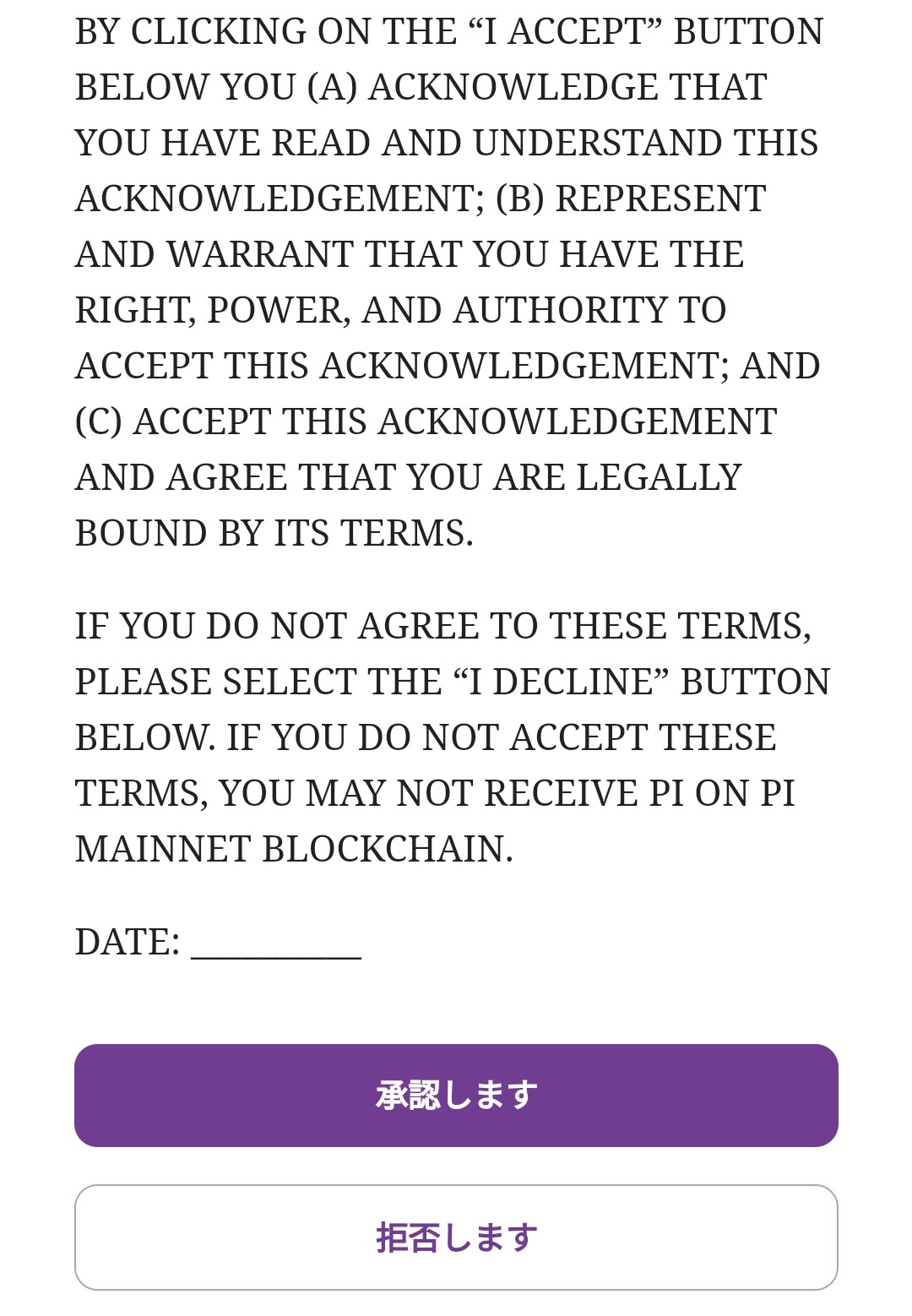
BY CLICKING ON THE “I ACCEPT” BUTTON BELOW YOU (A) ACKNOWLEDGE THAT YOU HAVE READ AND UNDERSTAND THIS ACKNOWLEDGEMENT; (B) REPRESENT AND WARRANT THAT YOU HAVE THE RIGHT, POWER, AND AUTHORITY TO ACCEPT THIS ACKNOWLEDGEMENT; AND (C) ACCEPT THIS ACKNOWLEDGEMENT AND AGREE THAT YOU ARE LEGALLY BOUND BY ITS TERMS.

IF YOU DO NOT AGREE TO THESE TERMS, PLEASE SELECT THE “I DECLINE” BUTTON BELOW. IF YOU DO NOT ACCEPT THESE TERMS, YOU MAY NOT RECEIVE PI ON PI MAINNET BLOCKCHAIN.

DATE: __________

Summary of the Above

This “Acknowledgement to Receive Pi Tokens” explains the conditions and provisions for receiving Pi tokens. The main points are summarized below:

  1. Use of Tokens: The tokens are intended for use in your own account. They are not intended for resale or speculation. Also, the tokens do not represent a right to monetary rewards or profits.
  2. Prohibited Participants: Individuals or entities listed on certain sanctions lists are prohibited from receiving tokens.
  3. Restrictions on Transfer: The tokens are not intended to be securities, but if they are deemed securities, restrictions on resale and other requirements may be imposed.
  4. Recipient Sophistication and Access to Information: The recipient understands the risks and implications of acquiring the tokens and makes an informed decision to acquire them based on sufficient information.
  5. Compliance with Law: The recipient complies with legal requirements related to the receipt, use, sale, or transfer of tokens.
  6. Tax: The recipient is solely responsible for taxes related to the tokens.
  7. Release: The recipient releases Pi Community Company, SocialChain Inc., Pi Network, etc., from any and all claims.

If you agree to these terms, click the “I Accept” button. If you do not agree, select the “I Decline” button. If you do not accept these terms, you will not be able to receive Pi on the Pi Mainnet blockchain. This concludes the summary of the Pi Token Receipt Acknowledgement. For specific details, it is recommended to consult a professional.

Original English Text

JA

For the network’s legal compliance, you need to accept this Acknowledgement to Receive Pi Tokens before you can migrate to the Mainnet.
PI NETWORK
ACKNOWLEDGEMENT TO RECEIVE PI TOKENS
TO: 自分の名前 (the “Recipient”)

Receipt of PI tokens (the “Tokens”) by the Recipient is subject to the accuracy of the following representations and warranties, as well as the release.

Recipient hereby represents and warrants as follows:

Use of Tokens. Recipient is acquiring the Tokens for the exclusive purpose of using the Tokens for Recipient’s own account, not as a nominee or agent, and not with a view to resale, speculation, or investment, and Recipient has no present intention of selling, granting any participation in, or otherwise distributing the same and is not otherwise acting as an underwriter, dealer or other person participating in a distribution of Tokens. Recipient has no expectation of profits from acquiring the Tokens. Recipient understands that any liquidity for the Token or ability to resell the Token may be limited and that it should not be acquiring the Tokens with an expectation of reselling at a profit. Recipient understands that the Tokens are designed solely for its intended use on the Pi Network. The Tokens do not represent a right to any income stream, distribution, profit share, or other form of pecuniary reward or interest.

Prohibited Participants. (iii) individuals listed on the U.S. Department of Commerce’s Denied Persons or Entity List, the U.S. Department of Treasury’s Specially Designated Nationals or Blocked Persons Lists, the U.S. Department of State’s Debarred Parties List or the sanctions lists adopted by the United Nations and the European Union to such extent such sanctions are extended by the UK Government to its Overseas Territories, as such lists may be amended from time to time. Pi Network may, in its sole discretion, reject or approve any Recipient and will, in its sole discretion, determine the jurisdictions where potential acquisitions may be made.

Restrictions on Transfer. The Tokens are not intended to be securities but there is substantial uncertainty as to the securities classification of digital assets at this time, and no offer, sale or distribution of the Tokens has been registered with the United States Securities and Exchange Commission (“SEC”) or any other authority in any state or other country or jurisdiction. If the Tokens are deemed securities, they may be subject to restrictions on resale and other requirements. The Tokens may not be transferred other than in compliance with applicable law. The Recipient earned the Tokens solely through mining contributions and was not offered or sold the Tokens, directly or indirectly, by means of any form of general solicitation or general advertisement, including (i) any advertisement, article, notice or other communication published in any newspaper, magazine or similar medium or broadcast over television or radio or (ii) any seminar or other meeting whose attendees had been invited by general solicitation or general advertising.

Recipient Sophistication and Access to Information. Recipient has sufficient knowledge and understanding of cryptographic tokens, token storage mechanisms (such as token wallets), blockchain technology, and appropriate security protocols and financial and business matters to understand and appreciate the risks and implications of acquiring the Tokens. Recipient has obtained sufficient information about Pi Network and the Tokens to make an informed decision to acquire the Tokens.

Compliance with Law. Recipient’s receipt and any prospective usage, sale or transfer of the Tokens complies with the applicable law in Recipient’s jurisdiction, including, but not limited to, (i) legal capacity and any other threshold requirements in such jurisdiction for the receipt, usage, sale or transfer of the Tokens and entering into contracts with Company, (ii) any foreign exchange or regulatory restrictions applicable to such receipt, usage, sale or transfer and (iii) any governmental or other consents that may need to be obtained.

Tax. Recipient understands that Recipient bears sole responsibility for any taxes as a result of the matters and transactions pertaining to the Tokens, and any future acquisition, ownership, use, sale or other disposition of Tokens held by Recipient. Recipient will comply with any applicable tax obligations in its jurisdiction arising from Recipient’s acquisition or use of the Tokens. Recipient understands that Recipient should consult Recipient’s own tax advisor regarding implications of the treatment of the Tokens under applicable tax Law and is relying solely on Recipient’s own tax advisor with respect to the tax implications of the acquisition, ownership and disposition of the Tokens.
Release. Recipient, on behalf of itself and its successors, assigns and other legal representatives, hereby absolutely, unconditionally and irrevocably, releases and forever discharges Pi Community Company, SocialChain Inc. and the Pi Network (together, the “Company”) and each of its past, present and future affiliates, owners, members, directors, managers, officers, employees, consultants, representatives, and each of its and their successors, assigns and representatives (the “Releasees”), from any and all claims, demands, proceedings, actions, causes of action, suits, orders, obligations, contracts, agreements, executions, judgments, duties, debts and liabilities whatsoever, whether known or unknown, suspected or unsuspected, both at law and in equity, which Recipient now has, has ever had, or may hereafter have, against the Releasees arising from or related to the Tokens, including the Company’s provision thereof to Recipient.

BY CLICKING ON THE “I ACCEPT” BUTTON BELOW YOU (A) ACKNOWLEDGE THAT YOU HAVE READ AND UNDERSTAND THIS ACKNOWLEDGEMENT; (B) REPRESENT AND WARRANT THAT YOU HAVE THE RIGHT, POWER, AND AUTHORITY TO ACCEPT THIS ACKNOWLEDGEMENT; AND (C) ACCEPT THIS ACKNOWLEDGEMENT AND AGREE THAT YOU ARE LEGALLY BOUND BY ITS TERMS.

IF YOU DO NOT AGREE TO THESE TERMS, PLEASE SELECT THE “I DECLINE” BUTTON BELOW. IF YOU DO NOT ACCEPT THESE TERMS, YOU MAY NOT RECEIVE PI ON PI MAINNET BLOCKCHAIN.

DATE: __________

Pi Network Mainnet Migration Explained: The Truth About the 2024 Open Network Rumor

Pi Network is a groundbreaking project that allows you to mine cryptocurrency using your smartphone. It is currently in the testnet phase, so actual transactions are not possible, but it is planned to migrate to the mainnet in the future.

Mainnet means that Pi’s blockchain will be publicly released, allowing anyone to participate. Once on the mainnet, Pi will be manageable and exchangeable on exchanges and wallets, just like other cryptocurrencies.

However, migrating to the mainnet requires several conditions. The development team aims to transition to the mainnet’s Open Network period in 2024, but only if the following three conditions are met. (Summarized from content posted on the official blog on December 27, 2023)

→Open Mainnet did not happen in 2024.
It was announced that it will open in Q1 2025, so please refer to this.
Pi Network [Latest Information] Mainnet Migration Decided for Q1 2025! Summary of KYC Verification and Migration Status

In this article, we will explain what the necessary conditions for Pi Network’s mainnet migration are and what Pi Network’s KYC is.

What are the necessary conditions for Pi Network’s mainnet migration?

The Pi Network development team announced that they will transition to the mainnet’s Open Network period in 2024. Open Network means that Pi’s blockchain will be publicly released, allowing anyone to participate.

However, to transition to the Open Network, the following three conditions must be met.

Condition 1: Completion of Open Network preparation work in terms of technology, product, business, and legal aspects

Achieving this condition is primarily the work of the development team. Most of this preparation work is listed in the projects also published as the V2 roadmap. This roadmap will continue to be updated.

The roadmap includes items such as the following:

  • Development and testing of Pi Node
  • Development and testing of Pi Wallet
  • Improvement and expansion of Pi Apps
  • Development and testing of Pi Platform
  • Optimization and testing of Pi Consensus Algorithm
  • Evaluation of Pi Blockchain security and performance
  • Education and awareness of the Pi community
  • Addressing Pi’s legal, regulatory, and compliance matters

Once these tasks are completed and the Pi Network is deemed ready for the Open Network, Condition 1 will be achieved.

Condition 2: Achieving the following goals in terms of KYC, Migration, and Utility Creation

Achieving this condition is primarily the work of the Pioneer community. Pioneers are users participating in the Pi Network. Pioneers need to achieve the following goals in terms of KYC, Migration, and Utility Creation.

  • KYC and Migration: 15 million Pioneers who have passed KYC, and 10 million Pioneers who have migrated to the mainnet.
  • Utility: 100 different applications that are mainnet or mainnet-compatible, comply with Pi’s platform policies, and provide genuine needs and value to the Pi ecosystem.

KYC stands for Know Your Customer, which is a necessary procedure to participate in the mainnet blockchain. To pass KYC, you need to submit your photo, identification documents, etc., using the Yoti app, which is an official partner of Pi Network. Pioneers who have passed KYC can move their Pi to their wallet when migrating to the mainnet. Although it is said that over 15 million people need to pass KYC, the administrator is hopeful as many passing reports have been coming in recently.

Migration is the process of moving from the testnet to the mainnet. To migrate to the mainnet, you need to download and install an application called Pi Node on your computer. Pi Node plays a role in participating in Pi’s blockchain, verifying transactions, and generating new blocks. Pioneers who have migrated to the mainnet become part of Pi’s blockchain and can contribute to Pi’s security and performance.

Utility is about increasing the value and use cases of Pi’s cryptocurrency. To create utility, you need to develop and use various applications using the Pi platform. You need to develop and use various applications using the Pi platform. The Pi platform is a place where you can buy and sell goods and services, accept advertisements and donations, and provide entertainment such as games and social media using Pi’s cryptocurrency. The Pi platform already has applications like the following:

  • Pi Lifestyle: An application where you can purchase goods such as fashion and beauty products or sell your own products using Pi’s cryptocurrency.
  • Pi Brainchain: An application where you can share knowledge and skills or learn using Pi’s cryptocurrency.
  • Pi Music: An application where you can listen to music and podcasts or publish your own works using Pi’s cryptocurrency.
  • Pi Games: An application where you can play games or develop your own games using Pi’s cryptocurrency.

These applications comply with Pi’s platform policies and provide genuine needs and value to the Pi ecosystem. Pi’s platform policies are the rules and guidelines that applications participating in the Pi platform must follow. Pi’s platform policies include items such as the following:

  • Usage of Pi cryptocurrency: Pi cryptocurrency can only be used within the Pi platform, and exchange with other cryptocurrencies or fiat currencies is prohibited.
  • Supply of Pi cryptocurrency: The supply of Pi cryptocurrency is determined by the Pi blockchain’s consensus algorithm, and applications cannot affect the supply of Pi cryptocurrency.
  • Price of Pi cryptocurrency: The price of Pi cryptocurrency is determined by the balance of supply and demand within the Pi platform, and applications cannot affect the price of Pi cryptocurrency.
  • Security of Pi cryptocurrency: The security of Pi cryptocurrency depends on the security of the Pi blockchain, and applications cannot affect the security of Pi cryptocurrency.
  • Transparency of Pi cryptocurrency: The transparency of Pi cryptocurrency depends on the public nature of the Pi blockchain, and applications cannot affect the transparency of Pi cryptocurrency.
  • Ethics of Pi cryptocurrency: The ethics of Pi cryptocurrency depend on the values of the Pi community, and applications cannot affect the ethics of Pi cryptocurrency.

When there are 100 of these applications, the utility of Pi’s cryptocurrency will greatly improve, and the Pi ecosystem will become more active.

Condition 3: External conditions are suitable for the Open Network

Achieving this condition is often outside the control of the development team and the Pioneer community. This includes factors such as political, economic, social, legal, and regulatory factors. These factors can affect the timing and method of migrating to the Open Network.

For example, the following situations can be considered:

  • Increased regulations and restrictions on cryptocurrency, increasing legal risks when participating in the Open Network.
  • Decreased demand and interest in cryptocurrency, reducing the incentive to participate in the Open Network.
  • Increased attacks and fraud on cryptocurrency, undermining the security and reliability of the Open Network.

These situations are unfavorable for migrating to the Open Network. Conversely, the following situations can be considered:

  • Relaxed regulations and restrictions on cryptocurrency, reducing legal risks when participating in the Open Network.
  • Increased demand and interest in cryptocurrency, increasing the incentive to participate in the Open Network.
  • Decreased attacks and fraud on cryptocurrency, improving the security and reliability of the Open Network.

The development team constantly monitors these external conditions and determines the optimal timing and method for migrating to the Open Network.

These conditions are based on Pi Network’s long-term goals and strategy and are considered achievable within 2024. By migrating to the Open Network, Pi Network can move closer to its vision of building the world’s most inclusive peer-to-peer ecosystem and online experience.

What are the necessary steps for Pi Network’s mainnet migration?

Regarding Pi Network’s mainnet migration, the following steps are required:

  1. First, you need to pass KYC (Know Your Customer). KYC is the process by which the Pi Network operations team verifies the identity of Pioneers. For KYC, you are required to submit documents such as a photo of your face and passport using the Yoti app. Once you pass KYC, you can migrate the Pi you have mined to the mainnet.
  2. Next, you need to check the Mainnet Checklist. The Mainnet Checklist is a list of things you can do to migrate to the mainnet, displayed on the Pi Network home screen. The checklist includes items such as the following:
    • Read the Pi White Paper
    • Try using the Pi Test Wallet
    • Join the Pi community
    • Check the Pi Roadmap
    • Suggest ideas to increase Pi’s utility
    • Develop a Pi App
    • Set up Pi Lockup
    • Migrate to Pi Mainnet
  3. Finally, you need to perform the mainnet migration. Mainnet migration is the procedure to make the Pi accumulated in the mining app usable on the mainnet. To perform mainnet migration, the following steps are required:
    • After passing the KYC review, press “Proceed to Mainnet” from the home screen.
    • Press the Mainnet Checklist.
    • Press “7. Migrate to Mainnet”.
    • Scroll down and press “I ACCEPT”.
    • Enter your wallet passphrase.

Detailed explanation with images here
https://pinetwork.masters-all.com/pinetwork-kyc%ef%bc%88%e6%9c%ac%e4%ba%ba%e7%a2%ba%e8%aa%8d%ef%bc%89%e3%81%ae%e6%96%B9%e6%B3%95%E3%81%AB%E3%81%A4%E3%81%84%E3%81%A6/

Explanation of operations after passing KYC here
https://pinetwork.masters-all.com/kyc-after/

The above is the detailed information about Pi Network’s mainnet migration. Pi Network has the potential to become a project that will go down in the history of cryptocurrency. Let’s work together towards the Open Network!

Original official blog post summarized from
2024 Update | Pi Network (minepi.com)

What to do after passing Pi Network KYC (Validator Approved)

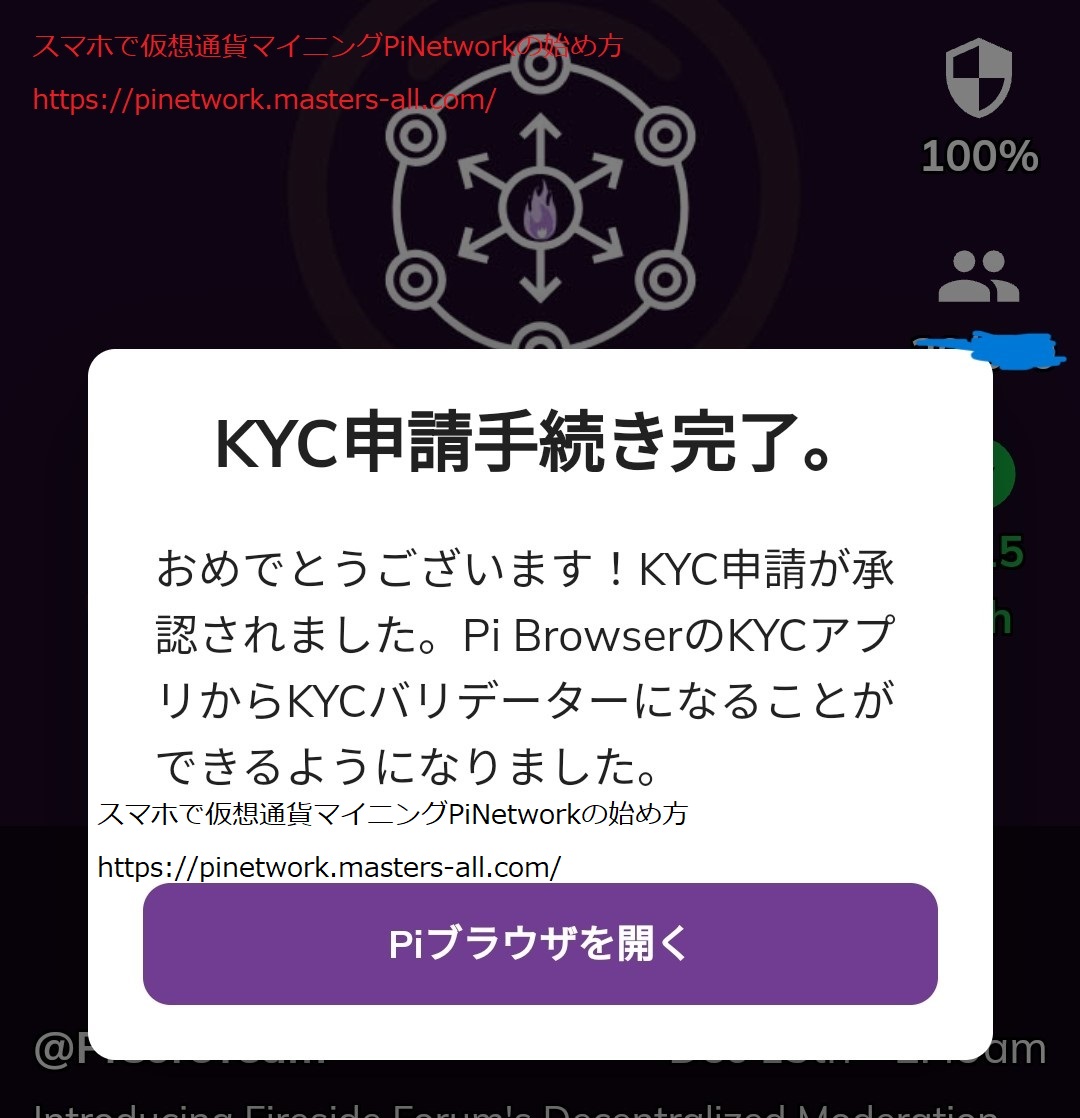
On December 15, 2023, the administrator’s account finally passed (was approved for) the KYC review, so I am writing this article. Around October last year, I received a notification that KYC review was possible, submitted the necessary items for review on the same day, and approximately 1 year and 2 months have passed. When I pressed the mining button, which is my daily routine, a notification suddenly appeared stating that the KYC application process was complete. I was surprised by the suddenness.

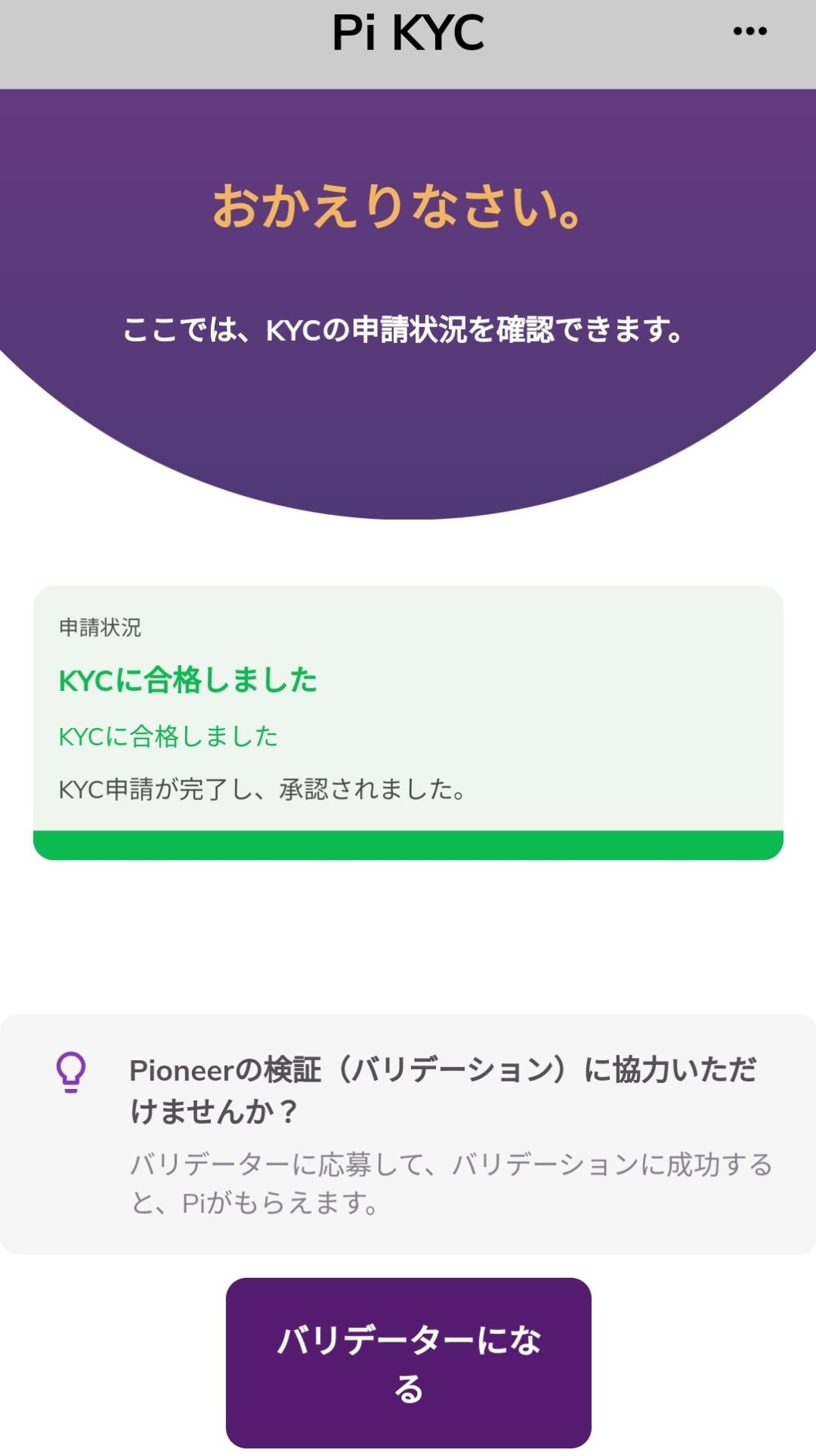
When I opened the Pi Browser, the application status changed from the screen that was always under review to “KYC Approved. KYC application is complete and approved.”

・Application Status at the Time of Application
Application Period: Around October 2022
Submitted Document: Driver’s License
The driver’s license expired after submission.
Also, I moved, so the address is still old.

・For an overview of KYC, please see this article.
https://pinetwork.masters-all.com/pinetwork-kyc%ef%bc%88%e6%9c%ac%e4%ba%ba%e7%a2%e8%aa%8d%ef%bc%89%e3%81%ae%e6%96%b9%e6%b3%95%e3%81%ab%e3%81%a4%e3%81%84%e3%81%a6/

It seems that the KYC requirements have changed, and applications cannot be made unless mining is performed a specified number of times. There are rumors that applying with a passport makes it easier to pass, but there are also people who have been waiting for a long time with a passport, so I don’t think it’s necessary to get a passport just for KYC.

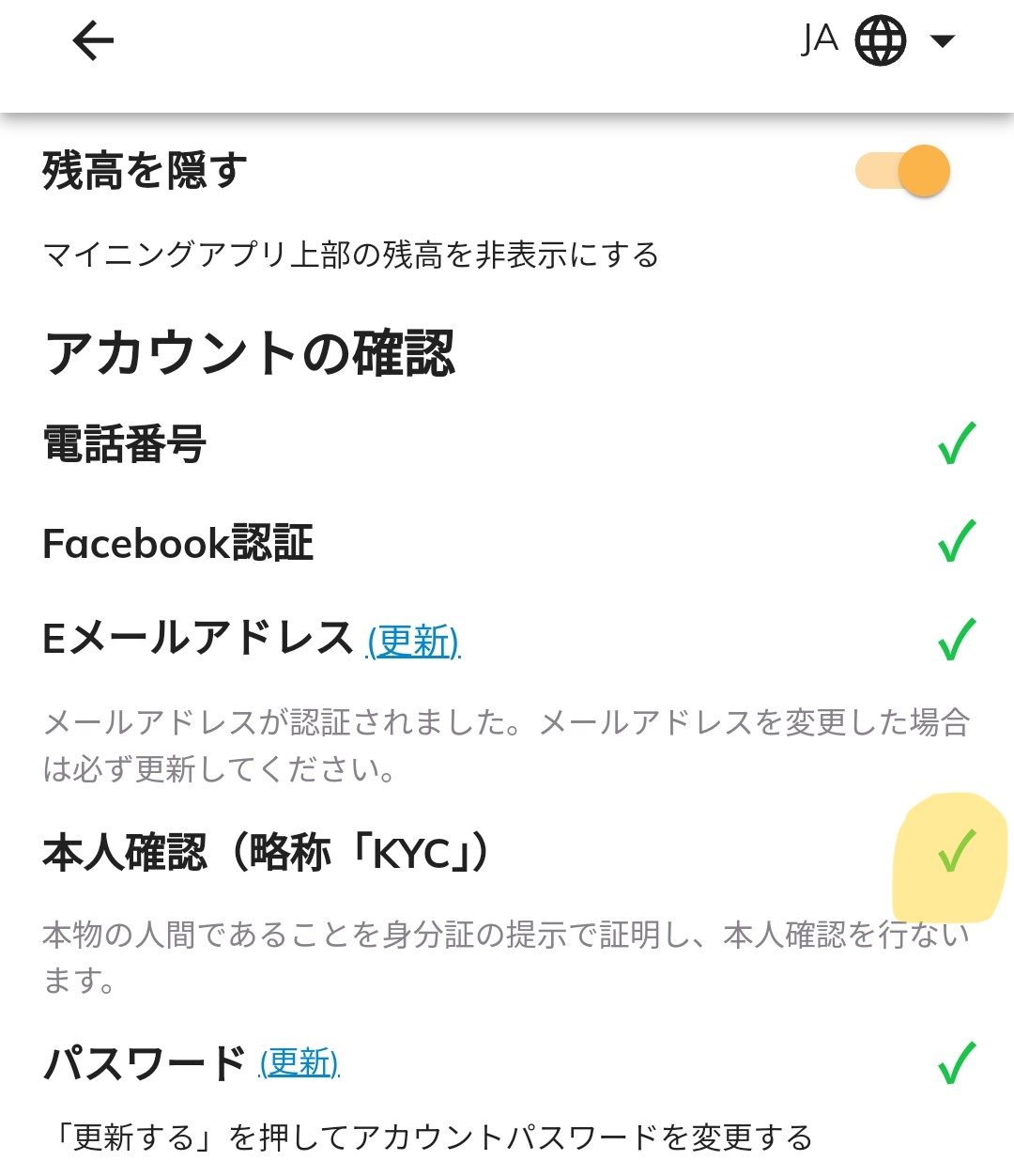
Identity verification (abbreviated as “KYC”) on the profile screen of the main app also has a checkmark.

Actions to Take After Completing KYC (Complete Mainnet Checklist 7)

You must not leave it as is after passing KYC. You need to complete the Mainnet Checklist to the end. If you don’t do this, currency will never enter your main wallet. Checklist 7 involves linking your wallet and account.

Step ① Confirm Wallet Address
Check if you can access your wallet. If the wallet has been left unused for a long time, you may have lost your password phrase and be unable to access it. In the current state, you can re-issue the password phrase even if you lose it, so as a final check, try to see if you can open your wallet address. If there are no problems, proceed to Step ②. If you proceed with the re-issuance procedure, you will never be able to open it again, so be sure to keep your passphrase recorded.

Step ② Process (Sign) the Mainnet Checklist.
Launch the Pinetwork app → Three lines in the upper left → Mainnet → Go to Mainnet Checklist.

The screen will switch, and you will move to a page with a signature field containing a lot of English text. Read through the content and tap the approval button at the bottom of the page to complete the signature.

This “Confirmation of Receipt of Pi Tokens” explains the terms and conditions for receiving Pi tokens. The main points are summarized below:

  1. Use of Tokens: Tokens are intended for use in your own account. They are not intended for resale or speculation. Also, tokens do not represent a right to financial rewards or profits.
  2. Prohibited Participants: Individuals or entities listed on certain sanctions lists are prohibited from receiving tokens.
  3. Transfer Restrictions: Although tokens are not intended to be securities, if they are deemed to be securities, resale restrictions and other requirements may be imposed.
  4. Recipient Sophistication and Access to Information: The recipient understands the risks and implications of acquiring tokens and makes the decision to acquire tokens with sufficient information.
  5. Compliance with Laws: The recipient will comply with legal requirements related to the receipt, use, sale, or transfer of tokens.
  6. Taxes: The recipient is solely responsible for taxes related to the tokens.
  7. Release: The recipient releases Pi Community Company, SocialChain Inc., Pi Network, and others from any claims.

If you agree to these terms, click the “Agree” button. If you do not agree, select the “Reject” button. If you do not agree to these terms, you will not be able to receive Pi on the Pi Mainnet blockchain. The above is a summary of the Pi Token Receipt Confirmation. For specific details, it is recommended to consult with a professional. (The full text translated into Japanese by DEEPL is written here.)
https://pinetwork.masters-all.com/confirmation-of-receipt/

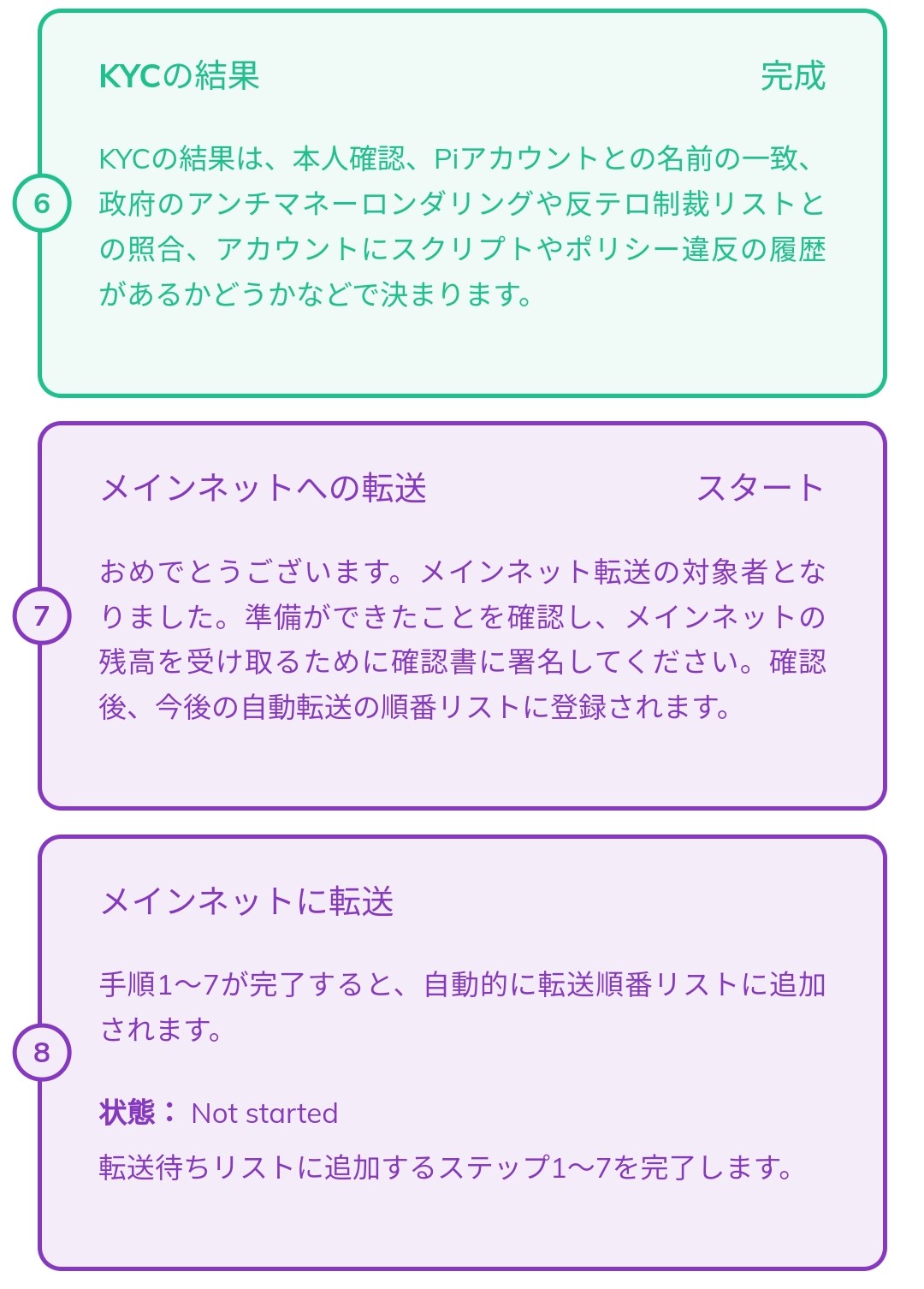
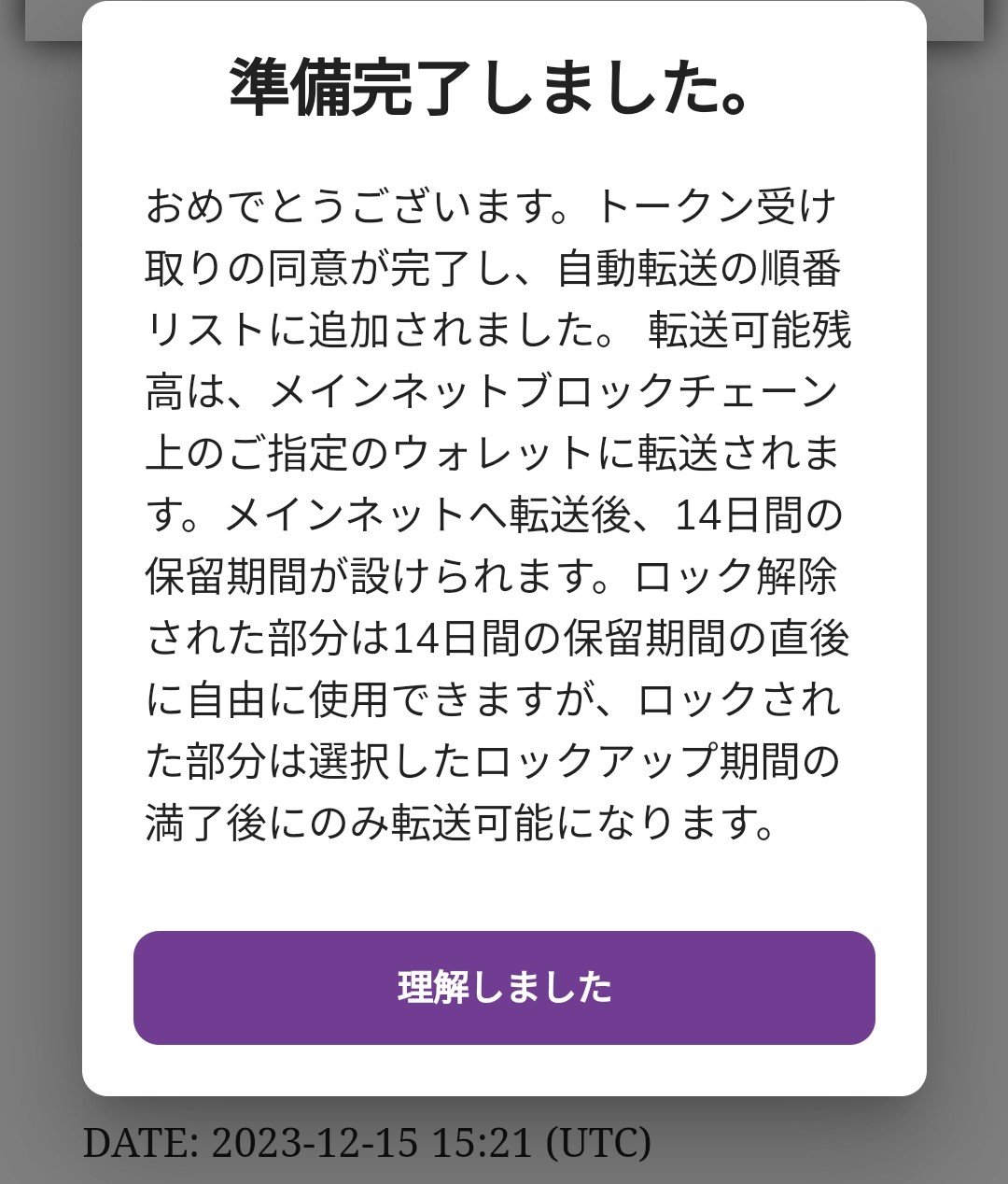
After that, you enter your wallet phrase and it is complete. It will be transferred after the holding period shown in the image below expires. However, if you have locked up, it will be released after the lock-up period expires. The lock-up starts from here. I locked up 100% for 3 years. It seems that many people on the internet have chosen 90% for 3 years. I don’t know which is correct, but I am a little worried because I made a different choice from everyone else. I am expecting to receive some bonus from referrals.

Actions to Take After Completing Mainnet Check

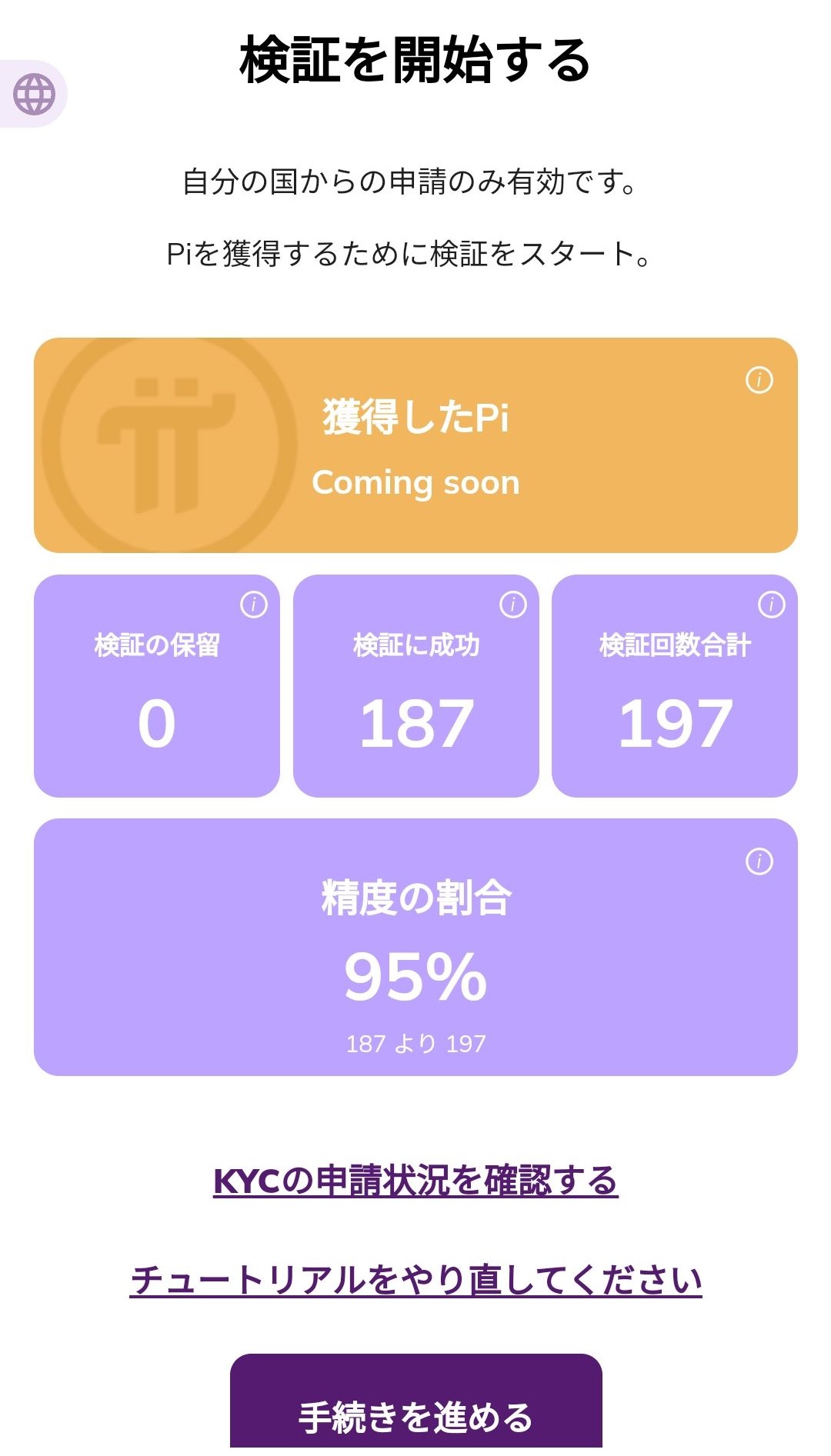
This completes the actions related to KYC. Later, once the currency is in your wallet, you can freely use it for buying and selling goods. (It is not yet listed on exchanges.) After this, the only things to do are to continue mining, post comments on FireSide, and witness the Pi Network project. If you are interested and want to help with KYC and earn Pi, I recommend participating in validation. You can receive currency by doing simple reviews. As soon as I passed KYC, I applied to participate in validation and have been doing validation processing little by little. I was able to process nearly 200 cases in two days. I will write more details in another article.

Finally

I was happy to receive many reactions when I posted about passing KYC on X. It was the first time I received so many reactions. It’s a little embarrassing that I rushed the post and made a typo. Since many users have not yet passed, I will work hard on validation so that as many people as possible can complete the mainnet check.