Web3」タグアーカイブ

Pi Network’s Pi Node (Pi Desktop) Explained: Roles, Setup, Selection Criteria, and Future

Recently, the term “decentralization” has gained significant attention alongside the concept of Web3. Pi Network, a smartphone mining app gaining global popularity, is a project striving to realize this decentralized network vision.

In Pi Network’s envisioned decentralized future, the Pi Node (now Pi Desktop) plays a crucial role. Alongside mobile app mining, Pi Nodes serve as the backbone, maintaining network security and integrity.

This article provides a comprehensive explanation of Pi Node (renamed Pi Desktop in the latest Pi Network update), covering its role, participation levels, selection criteria, and future roadmap. Even without specialized knowledge, you’ll gain a deep and accurate understanding.

How will you contribute to Pi Network’s future? Through this article, gain insight into the importance and potential of Pi Nodes and take the next step in your engagement with the Pi Network ecosystem.

What is a Pi Node? Its Role in Supporting the Decentralized Network

A Pi Node is a crucial computer application that validates and records transactions on Pi Network’s decentralized ledger (blockchain). Similar to other blockchains, consensus among all nodes on the transaction order solves the challenges of maintaining a decentralized currency.

Pi Network’s Stellar Consensus Protocol (SCP)

Unlike Bitcoin and Ethereum, which use the energy-intensive “Proof-of-Work (PoW)” consensus algorithm, Pi Nodes utilize the Stellar Consensus Protocol (SCP), a different approach.

SCP involves nodes forming groups of trusted nodes (called “quorum slices”), agreeing only on transactions approved by these trusted nodes. This mechanism works in conjunction with the “security circles” formed by mobile miners, creating Pi Network’s unique global trust graph to determine who can and cannot validate transactions on the shared ledger.

This allows Pi Network to be more environmentally friendly and accessible, avoiding the massive energy consumption of typical PoW systems.

User-Centric Design Philosophy

Unlike many crypto projects, Pi Node prioritizes a “user-centric” design. Instead of requiring deep technical expertise for node setup, it’s designed for ease of participation; users simply install the desktop application on their computer. This approach aims for a truly decentralized ecosystem.

Three Pi Node Participation Levels: Find Your Contribution

The Pi Node software (Pi Desktop) offers three participation levels based on technical involvement. Each level has different roles and requirements, allowing users to contribute according to their capabilities.

1. Pi Desktop (formerly Computer App): Easily Connect with Pi Network

  • Role & Function: This level uses only the desktop app interface of the Pi Node software, providing similar functionality to the Pi Network mobile app on your PC. For example, view your Pi balance on a larger screen, use the chat function, or view media content.
  • Technical Requirements: No special technical knowledge or configuration is needed; it’s as easy as installing a typical PC app.
  • Features & Contribution: Improves accessibility to the Pi Network ecosystem and increases user engagement. However, this level doesn’t provide mining bonuses.

2. Pi Node: Become a Blockchain Validator

  • Role & Function: Access the Pi Node interface and follow instructions to complete necessary technical preparations (e.g., port forwarding). This allows your computer to run blockchain components, validating transaction validity and submitting transactions to be recorded on the blockchain. It doesn’t directly participate in consensus formation.
  • Technical Requirements:
    • Port forwarding
    • Suitable processor and memory (recommended specifications available)
    • Stable, high-speed internet connection
  • Features & Contribution: Contributes to network health and security, promoting Pi Network’s decentralization. Mining bonuses are possible at this level.

3. Pi Super Node: Supporting the Network’s Backbone

  • Role & Function: The most crucial role, forming the backbone of the Pi blockchain. In addition to all Pi Node responsibilities, it’s responsible for forming consensus to write appropriate transactions to the ledger and ensuring other Super Nodes and Nodes receive the latest blockchain state.
  • Technical Requirements: In addition to Pi Node requirements, a constant connection and highly reliable internet connection are necessary.
  • Features & Contribution: Essential for maintaining network stability and decentralization; selected by the core team. Offers the highest potential rewards due to its advanced contribution.

These three participation levels are further compared in the table below:

Participation Level Role & Function Technical Requirements (Main) Features & Contribution
Pi Desktop Use similar functions of the Pi Network mobile app on a PC (chat, balance check, etc.) No special technical knowledge required Easy access to Pi Network
Pi Node Transaction validation, submission, and recording on the decentralized ledger Port forwarding, appropriate PC specifications, stable internet connection Verifies blockchain integrity, contributes to network decentralization
Pi Super Node Pi blockchain backbone. Consensus formation, state synchronization Node requirements plus constant connection, high reliability, excellent internet connection Maintains network stability and decentralization

Security warnings like Microsoft Defender SmartScreen may appear when installing the Pi Node software, a common occurrence with new apps being installed by many users. As Pi Network’s user base grows, these warnings tend to disappear.

Pi Node/Super Node Selection Process and Criteria

To function as a Pi Node or Pi Super Node in Pi Network’s Testnet, download and install the Pi Node software on your computer. Follow the instructions within the Pi Node application, install the necessary technical packages, and keep the software running continuously. There isn’t a separate “application” screen; the process of correctly setting up and stably running the software is considered the application process itself.

The Pi Network core team then selects Nodes and Super Nodes based on the following criteria. Nodes and Super Nodes are evaluated using similar criteria, but the threshold for Nodes is set lower than for Super Nodes.

Selection Criteria

  • Uptime: Online 24/7 as much as possible.
  • Good Internet Connection: Fast and stable internet access.
  • Port Forwarding Capability on Local Router: Configuration enabling external communication.
  • Appropriate Processor and Memory: PC hardware specifications necessary for smooth node operation. At least 250MB of free disk space is recommended, but older PCs may lack sufficient performance.
  • Prior Community Contributions: Active participation in the Pi Network community.
  • Security Circle and Trust Score: Indicators of trustworthiness within Pi Network.
  • KYC (Know Your Customer) Completion: The process verifying the participant is a real person.

Selected Node and Super Node applicants are typically notified through the Pi Node interface over a period of about three months. Pi Network aims to be as inclusive as possible and plans to develop additional ways for more pioneers to access the Node role in the future.

Pi Network Testnet Roadmap: The Path to Decentralization

Pi Network presents a three-stage Testnet roadmap towards building a fully decentralized Mainnet. This roadmap is crucial for ensuring network stability, security, and scalability.

1. Selection Phase

  • Purpose: The core team runs the consensus algorithm on pioneers’ computers who have applied to be Nodes and successfully installed the necessary packages. This allows them to understand individual Node requirements (hardware, uptime, bandwidth, connection stability, etc.) and define appropriate thresholds to balance network security and activity.

2. Revision Stage

  • Purpose: Scenario testing and iterative improvement of the consensus algorithm. Stress tests simulating various scenarios (e.g., half the network is isolated, a Node suddenly stops/is compromised) are conducted to determine algorithm modifications and application methods for ensuring security, improving activity, and achieving scalability.
  • This stage includes a centralized layer to allow the core team to assign simulated data of the network graph and configuration to different Nodes, enabling efficient testing of a wide range of scenarios. This centralized layer will be removed in the Mainnet after serving its testing purpose.

3. Live Testnet

  • Purpose: After the selection and revision stages, various Node types actively fulfill their responsibilities. The network’s performance is tested using real data from security circles generated by mobile miners and the actual activities of network participants. This stage also includes an iterative process of testing, data analysis, debugging, and revision, continuing the pursuit of security, liveness, and scalability.

Through these stages, Pi Network addresses unique challenges (a large number of participants, decentralization of PCs as Nodes, integration of trust graphs from mobile miners, etc.) and advances the adaptation and expansion of SCP tailored to the needs of the Pi blockchain.

Frequently Asked Questions (FAQ) about Pi Node

Q. What’s the relationship between Pi Node software and the Pi Network mobile application?

A. The Node software and the mobile app are not mutually exclusive but complementary. You log in to the Node software using your mobile app account, linking them to the same Pi account. Mobile mining can only be started from the mobile app, but the Node’s Pi Desktop interface allows you to check your balance, chat, and view media content on the home screen.

Q. How does running a Node affect my device? Does it consume CPU or battery power?

A. When using only Pi Desktop (with Node or Super Node functions “off”), CPU, memory, and network traffic consumption is minimal, with little impact on the device. When running with Node or Super Node functions “on,” CPU, memory, hard drive, and network resources are used. Data is being collected during the Testnet period to better determine the specific impact on devices.

Q. Are there rewards for running a Node?

A. One goal of the Pi Testnet is to determine what rewards should be given for running a Node. The core team is gathering relevant data to determine the most appropriate incentive mechanism, but there are currently no direct mining rewards for Testnet Nodes. A reward mechanism based on Node contributions may be introduced in the future.

Q. Is the Pi Node software open source?

A. The blockchain components of the Node are planned to be open-sourced. Currently, the core team is organizing the GitHub repository and aims to maintain an open issue list for community members to contribute as needed.

Conclusion: Accelerate Pi Network’s Future by Running a Pi Node

The latest update to Pi Network’s Pi Node (Pi Desktop) demonstrates the steady progress in the project’s decentralization efforts. Pi Nodes are not just mining tools but essential pillars supporting Pi Network’s security, stability, and decentralization.

With three participation levels—Pi Desktop, Pi Node, and Pi Super Node—users can deeply engage with the Pi Network ecosystem according to their technical skills and willingness to contribute. Participating as a Pi Node or Super Node is crucial for maintaining network health and building the foundation of the future decentralized Web3.

While the project is currently in the Testnet phase and direct rewards for running Nodes are not yet confirmed, from a long-term perspective, the value of running a Node may increase with Pi Network’s growth. Always check the Pi Network official website and in-app notifications for the latest information, as official announcements are constantly updated.

Hopefully, this article has answered your questions about Pi Nodes and deepened your understanding of Pi Network. Let’s participate in building Pi Network’s decentralized ecosystem and create the future together.

Pi App Studio: A Revolutionary No-Code AI App Development Platform on Pi Network

In today’s world, smartphone and web applications are indispensable parts of our lives. However, even if you have a brilliant app idea, realizing it has been incredibly difficult without programming knowledge or specialized skills.

Furthermore, the recent rise of Web3 (decentralized web) is fundamentally changing how applications are developed. Decentralized applications (dApps) based on blockchain technology offer a new digital experience where users directly own their data and assets, without the need for a centralized administrator.

Are you giving up on your amazing ideas simply because you lack programming skills? Are you intrigued by the potential of Web3 but hesitant due to the development hurdles?

This article delves into a groundbreaking platform that addresses these challenges: Pi App Studio. Pi App Studio is a revolutionary tool on the Pi Network Web3 ecosystem that allows you to develop AI-powered applications without any programming knowledge. By the end of this article, you’ll have a clear understanding of how to turn your ideas into reality and the potential future Pi App Studio unlocks.

Pi App Studio: No-Code AI Development in a Decentralized Ecosystem

This section explores what Pi App Studio is and why it’s attracting so much attention.

Pi Network has built a massive community of tens of millions of users worldwide, aiming to make cryptocurrency mining accessible to everyone through their smartphones. Central to this ecosystem is the Pi Browser, acting as the gateway to Web3 applications.

Pi App Studio is a no-code AI assistant platform built within the Pi Browser. Its most significant feature is the ability to build functional applications using AI without specialized programming skills. Like assembling Lego blocks, you can bring your ideas to life with intuitive controls and instructions in plain language.

Pi App Studio’s importance within the Web3 context goes beyond being a simple app creation tool. It’s the gateway to creating applications, or dApps, that run within Pi Network’s decentralized ecosystem. This ensures app ownership and data management aren’t dependent on centralized corporations, leading to a more transparent and user-centric experience and potentially contributing to the overall growth of the Pi ecosystem.

Build Your Own AI Chatbot: Key Features of App Studio (1)

Let’s delve into one of the most intuitive features of Pi App Studio: building an AI chatbot.

What if you could teach your expertise to an AI and make it accessible to everyone? Pi App Studio makes it possible. This platform allows you to train AI chatbots specializing in specific topics based on your knowledge and instructions.

Specific Chatbot Creation Steps

  1. Topic Selection and Knowledge Sharing
    First, choose a topic you’re knowledgeable about. This could be anything—coffee brewing, gardening, your profession—anything at all. This is the first step in giving your chatbot an expert “brain.” Once ready, submit it for approval.
  2. Chatbot Overview Description
    Write a general description of the chatbot that will be displayed when a user opens the app. This description will also be used when the app is published in the Pi Browser. Switch between the “Edit” and “Preview” tabs at the top of the Pi App Studio interface to preview the chatbot’s operation in real time.
  3. Behavioral Guideline Setting
    Instruct how your chatbot should respond, defining its “personality” and “tone.” For example, you might instruct it to “always use polite language,” “be humorous,” or “answer expert questions in detail but avoid personal opinions.” This may require iterative adjustments to train the chatbot effectively.
  4. Knowledge Input and Training
    This is the source of the chatbot’s “knowledge.” You can add up to 50,000 characters of information here. This section contains all the knowledge the chatbot will refer to when answering user questions. For coffee brewing, this would include details such as bean types, grind size, temperature, water-to-bean ratio, necessary tools, and quality.
    Using the Pi Desktop app is helpful for pasting large amounts of knowledge from a PC.
  5. Design Customization
    Freely adjust the app’s main colors (header, AI icon, send button color) and background color. Choose a visually appealing and readable color scheme to match the chatbot’s theme and purpose.
  6. Welcome Message Creation
    Set the message users will see when they first open the app. Choose a welcoming message that is user-friendly and consistent with the chatbot’s purpose.
  7. App Name Decision and Publication
    Give your chatbot a memorable and relevant name. Once all customizations are complete, pay 0.25 Pi to publish the app. Note that an additional 1 Pi will be deducted, and the remainder will be kept in your App Studio account for future republishing or new app creation. The published chatbot will be immediately available in the “App Studio” category of the Pi Browser and can be shared on the Fireside Forum, etc.

In this way, the AI learns from the knowledge provided and can optimally respond to user questions.

Shape Your Ideas with Human Language: Creating Custom AI Applications (2)

Next, we’ll explain the more versatile custom AI application creation feature. See how your ideas, inputted in plain language, can become functional apps.

Pi App Studio uses AI to transform your specific ideas into applications without programming code. It’s like your words become magic spells that generate apps. Please note that this is currently in beta, and access may be limited, and the user experience is still under development.

Specific Custom App Creation Steps

  1. Simple Concept Conception
    First, conceive a simple application concept. You need a clear idea of what functions the app will have.
  2. App Name and Detailed Feature Description
    Name the app and describe its features in as much detail as possible. This information will be used by the AI to generate the app. For example, if creating a classic “Snake” game, describe its appearance, operation, and user interface in detail.
  3. App Generation and Publication
    Once the description is complete, pay 0.25 Pi to start generating the app. Similar to chatbots, 1 Pi will be deducted, and the remaining 0.75 Pi can be used for future updates or new apps. App generation may take a few seconds to up to 5 minutes. Once generation is complete, a fully functional app will be ready, without any coding, and you can immediately publish it for Pi Network pioneers to use.
  4. Edit Function and Customization Completion
    If adjustments are needed, you can edit the app by giving additional instructions to the AI. Each edit costs 0.25 Pi. Note that this editing function is still under development and may not be available to everyone at this time. Once editing is complete, tap “Complete Customization” to publish it as a fully functional app with a URL. Similar to chatbots, it can be shared on the Fireside Forum or checked in the “App Studio” category of the Pi Browser.

What sets Pi App Studio apart is its guided app creation workflow and access to a vast number of potential app developers and users. It’s not just about making apps; it’s about actually building online products that function within a Web3 environment. This is a significant strength of the platform.

The Unique Value and Future Outlook of Pi App Studio

Pi App Studio is more than just a development tool. Here, we delve into the unique value this platform brings to Web3 app development and its future prospects.

Improved Accessibility Through No-Code Development

  • Democratization of Development: Individuals and small teams without programming skills can quickly materialize their ideas. This expands the potential for diverse perspectives and expertise to be reflected in applications within the Pi ecosystem.
  • Rapid Prototyping: Quickly prototype ideas, get feedback, and improve the cycle. This promotes innovation and makes it easier to create applications that meet user needs.

Intelligent Features Through AI Utilization

  • Implementation of Advanced Features: AI simplifies improving chatbot responsiveness and implementing complex logic in custom apps. This improves the user experience and allows for more sophisticated applications.
  • Sharing and Utilizing Specialized Knowledge: Individuals can teach their unique expertise to AI and offer it as a widely shareable service, promoting knowledge dissemination and creating new value.

Synergy Through Integration with the Pi Ecosystem

  • Access to a Vast User Base: Pi Network’s enormous user base provides a significant potential audience for apps developed with Pi App Studio from the start. This significantly boosts app adoption and growth.
  • Utilization of Decentralized Infrastructure: Operating on the Pi ecosystem’s decentralized network reduces concerns about centralized data control, enabling more robust and reliable service provision.

Pi App Studio is currently in beta, and its features are constantly evolving. Future enhancements and improvements in ease of use are expected, and it will likely become a significant pillar in Web3 application development alongside the progress of Pi Network.

Conclusion: The Future of Web3 and Your Next Step with Pi App Studio

This article detailed the innovative potential of Pi App Studio for no-code AI app development. This platform allows you to materialize your ideas and expertise as AI chatbots and custom applications on the Pi ecosystem, even without programming knowledge, opening up new avenues for Web3 creators.

Pi App Studio removes technological barriers and promotes the “democratization of development,” enabling everyone to participate in digital product creation. This enriches the Pi Network’s decentralized ecosystem with diverse applications, making our digital lives more interactive and user-centric.

Don’t let your ideas sleep! Join the ranks of Web3 pioneers by building your own AI chatbot or custom application with Pi App Studio. Exploring Pi App Studio’s features and participating in this new digital frontier will take your intellectual curiosity to new heights.

Open your Pi Browser now and try out the App Studio demo. The day your future application is born may be closer than you think.

Pi Network Task Force: Unveiling the ‘Sweet Traps’ Lurking in the Pi Network Community and Tips to Avoid Them

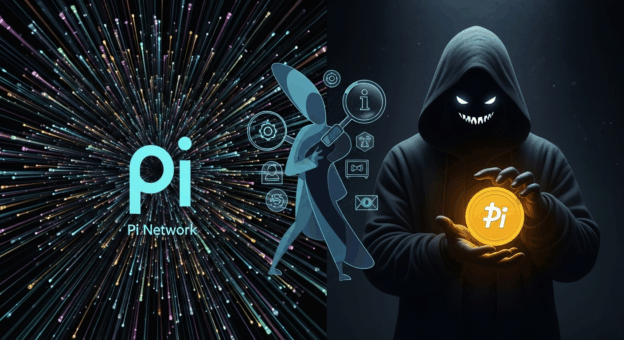
Pi Network, boasting tens of millions of users worldwide, holds immense promise for the future. Its accessibility—mining cryptocurrency with just a smartphone—has attracted a large community. However, this growth unfortunately shadows a reality of fraudulent solicitations that exploit information gaps and a lack of expertise, endangering users.

This article objectively examines Pi Network’s ambitious vision while delving into specific examples of ‘sweet traps’ within the community. We’ll provide concrete ways to identify and defend against these dangers, enabling you to understand Pi Network’s true potential and protect yourself.

Pi Network’s Current State and the Core Team’s Steadfast Approach

Pi Network attracts global attention. Unlike many cryptocurrency projects susceptible to market fluctuations, its Core Team maintains a unique and consistent path. We explore their robust roadmap and the grand vision behind it.

A Solid Roadmap and Strict KYC (Know Your Customer) Implementation

The Pi Core Team appears unwavering in its commitment to its roadmap, unaffected by short-term market volatility or community trends. Noteworthy is their strict KYC (Know Your Customer) process.

  • While many cryptocurrency projects prioritize rapid market entry, Pi Network imposes rigorous KYC requirements on its users. This builds a crucial foundation for increased network transparency and trust, facilitating future collaboration with financial institutions and major corporations.
  • These requirements are so stringent that some established exchanges reportedly fail to meet the Pi Core Team’s standards. This suggests the Core Team prioritizes creating ‘true value’ over short-term profits, emphasizing a long-term perspective.

Anticipation of Pi’s Future as a ‘Means of Payment’

Pi Network aims to be more than just a speculative cryptocurrency; it aspires to be a practical ‘means of payment’ for daily life, aiming for stability and reduced volatility compared to existing fiat currencies.

  • The future introduction of Pi Cards could enable 2.5 billion people worldwide lacking access to traditional banking systems to participate in the digital economy through Pi Network. This represents a vast potential market, potentially integrating with major e-commerce platforms like Amazon and Alibaba.
  • Furthermore, the envisioned Pi Browser aims to integrate the Web3.0 world within Pi’s ecosystem. This indicates that Pi Network seeks to be a comprehensive platform encompassing extensive digital services and financial infrastructure, beyond a simple cryptocurrency project.

Beware! The ‘Sweet Traps’ Lurking in the Pi Network Community

While many oversell Pi Network’s vision and potential, fraudulent solicitations aiming to lure users into risky transactions are prevalent. We’ll expose the tactics of these scams and highlight their unrealism, providing tips to identify the true intentions hidden behind deceptive language.

The Reality of ‘Pi Coin Trading Services’: The Flip Side of Unrealistic Principal Guarantees

A common solicitation within the community promises high returns by offering to trade Pi Coin on users’ behalf. For example, solicitations may use phrases like, “Invest $X, and we’ll give you Y Pi daily. Your principal is completely secure; I guarantee it.”

  • Unrealistic Returns: Consider a hypothetical offer: “Invest $500, and receive 1 Pi daily.” Assuming a typical market price of $0.07 per Pi, recovering the $500 principal would take approximately 714 days (around two years). This is extremely unrealistic considering cryptocurrency price volatility and the uncertainty surrounding mainnet launch and open network commencement, making it highly likely to be a scam.
  • Legal Risks of ‘Principal Guarantees’: In many jurisdictions, guaranteeing investment principal without the proper registration as a financial services provider is illegal. Such ‘principal guarantees’ are a major warning sign.

The Dangers of ‘Pi Coin Purchase’ Solicitations: The Risks of Direct, Non-Exchange Transactions

Some solicitations promote direct person-to-person Pi Coin purchases or ‘presales’ of specific tokens, citing reasons like high exchange fees or early-mover advantages.

  • Risk of Fraud: Direct transactions carry a high risk of fraud, such as non-delivery of Pi after payment or the sale of fictitious Pi. Moreover, resolving payment disputes or legal issues becomes significantly more challenging.
  • Learning from Past Examples: The ‘OneCoin’ scam, involving direct purchases via a specific organization and MLM (multi-level marketing), serves as a cautionary tale. Be wary of opaque token purchase schemes outside of regulated exchanges.

Checklist for Identifying Deceptive Scammers

Why do people fall prey to these unrealistic offers? Scammers exploit desires and knowledge gaps using sophisticated language. Stay vigilant and exercise sound judgment by noting these points:

  • “Guaranteed Principal,” “High Returns,” “Guaranteed Profits”: There are no absolute guarantees in investing. Promises of high returns without risk are almost always scams.
  • Unverified “Exclusive Information,” “Pre-Sales”: Scrutinize the reliability of sources for information not officially released or available through specific channels.
  • Pressure for Immediate Decisions: Be wary of tactics that rush you into a contract with phrases like “limited-time offer” or “first-come, first-served.”
  • Complex Schemes and Opaque Business Models: Avoid schemes with unclear, complicated details or ambiguous revenue models.

For the Healthy Development of Pi Network: What We Can Do

For Pi Network to become a truly valuable ecosystem, the efforts of the development team alone are insufficient; individual information literacy and ethical behavior are essential.

Emphasis on Personal Responsibility and Improved Information Literacy

Always remember that participating in and investing in cryptocurrencies is your own responsibility. Minimizing risk involves the following:

  • Verifying Official Sources: Always confirm Pi Network information through official sources such as the website, whitepaper, and official social media accounts. Treat information from unofficial communities or individuals with a critical eye and use it only as a reference.
  • Reporting and Sharing Suspicious Solicitations: If you encounter suspicious solicitations, do not respond; share the information with others and report it to the appropriate authorities to prevent further victimization.

Contributing to a Healthy Community

We can all contribute to the healthy growth of the Pi Network community:

  • It’s crucial to address misinformation and fraudulent activities with reasoned, constructive criticism, and to correct inaccuracies.
  • Cultivating a culture of multifaceted perspectives and calm discourse improves community-wide information literacy.

Conclusion: Looking to the Future of Pi Network and Making Wise Decisions

Pi Network, with its innovative vision and extensive user base, aims to unlock new potential for cryptocurrencies. However, this bright future is shadowed by scams exploiting knowledge gaps.

This article aims to provide you with an objective understanding of Pi Network’s current state and the ability to clearly identify the tactics of ‘sweet traps’ within the community. Avoid being misled by promises of ‘guaranteed principal’ or ‘high returns.’ Constantly verify information, hone your judgment, and contribute to Pi Network’s healthy development—this is your most important defense. Believe in Pi’s potential, but prioritize wise information gathering and actions for a safe Pi Network experience.

Always consult the official Pi Network website (minepi.com) and whitepaper for the most up-to-date information. If you encounter suspicious solicitations, do not respond and consider contacting your local consumer protection agency.

Pi Network’s Historic Turning Point: Open-Sourcing the Pi Node Blockchain and its Future Implications

Introduction: Pi Network’s Giant Leap Forward

Pi Network, a novel cryptocurrency allowing for easy mining on smartphones, has garnered significant global attention. The project is steadily expanding its ecosystem towards its ultimate goal: mainnet launch.

Recently, the announcement of “open-sourcing the Pi Node blockchain components” has created significant buzz, marking a pivotal moment in Pi Network’s history. This isn’t merely a technical announcement; it underscores Pi Network’s commitment to building a truly decentralized ecosystem, reflecting its philosophy and vision.

Why is this open-sourcing a historic turning point for Pi Network? How will it impact Pi users (known as Pioneers) and the future Pi Network envisions? This article delves into the rationale behind this significant announcement and its multifaceted impact on Pi Network.

Understanding Pi Nodes in Pi Network and the Significance of Open-Sourcing

The Role of Pi Nodes: Essential Components of Pi Network’s Decentralized Network

Pi Network aims to make cryptocurrency accessible to everyone via smartphones. However, at its core lies the **Pi Node**, software running on PCs. Pi Nodes play a critical role in maintaining the blockchain network. Specifically, they validate transactions, maintain network security, and ensure the consistency of the distributed ledger.

While the smartphone app serves as the interface for Pi mining, Pi Nodes are crucial for establishing Pi Network as a true blockchain-based decentralized network, rather than simply a points system.

The Importance of “Open Source” in Blockchain Technology

“Open source” refers to the practice of making a software’s source code publicly available, allowing anyone to view, modify, distribute, and contribute to its improvement. This contrasts with “closed-source” software, developed and managed exclusively by specific companies or organizations.

Blockchain technology and open source are highly compatible; indeed, open source is crucial for realizing the core value of blockchain. Major blockchain projects like Bitcoin and Ethereum are all open-source. This offers several key advantages:

  • Transparency: Publicly available code allows anyone to verify the absence of malicious activity or hidden functionalities.
  • Security: Global developers audit the code, identifying and fixing vulnerabilities, enhancing the overall system security.
  • Collaborative Development: Utilizing collective intelligence accelerates development, enabling the addition of more innovative features.

Pi Network’s decision to open-source the Pi Node blockchain components is a strategic and philosophical move, aligning the project with the ideal blockchain model and ensuring its long-term reliability and growth.

A Historic Turning Point: Five Transformations Brought About by Pi Node Open-Sourcing

Open-sourcing Pi Nodes is expected to bring numerous positive changes to Pi Network. Here are five key transformations and how they will contribute to its future:

1. Absolute Transparency: From Black Box to Foundation of Trust

What to Learn: The significance of fully disclosing Pi Node’s operational principles.
What to Understand: How this improves Pi Network’s credibility and eliminates doubts.

Previously, some users perceived Pi Network’s inner workings as a “black box.” However, open-sourcing the Pi Node blockchain components makes the source code fully public. This allows developers, experts, and even ordinary users worldwide to examine how Pi Nodes operate and validate transactions.

This absolute transparency will significantly enhance trust in Pi Network by eliminating doubts about fairness and security. By making its core technology transparent, like disclosing a company’s financial status, users can participate with greater confidence. This embodies blockchain’s core value: decentralized trust.

2. The Power of a Global Community: Collaborative Development Accelerates the Project

What to Learn: The potential for global developers to participate in Pi Network’s development.
What to Understand: How Pi Network evolves as a community-driven project.

One of open-sourcing’s most significant advantages is attracting global developers. Instead of relying solely on the Core Team, thousands of programmers and engineers can review Pi Node’s code, submit improvement suggestions (pull requests), and contribute to bug detection and fixing.

This mirrors the success of open-source projects like Linux and Ethereum, which have evolved remarkably through community collaboration. Leveraging collective intelligence, Pi Network can achieve faster, higher-quality development as a “community-by, community-for project,” adapting to diverse needs.

3. Accelerated Technological Innovation: Evolution of Algorithms and Systems

What to Learn: How open-sourcing fosters technological breakthroughs.
What to Understand: How Pi Network’s technological competitiveness is strengthened.

With many brilliant minds accessing the Pi Node source code, algorithm optimization and improved system processing efficiency are expected to accelerate. This could lead to technological breakthroughs such as faster transaction processing, more efficient node operation, and compatibility with diverse devices and operating systems.

This will be a crucial driver for Pi Network to stay at the forefront of technology, preventing obsolescence. In competing with other blockchain projects, this speed and flexibility of technological innovation will be a significant competitive advantage.

4. Robust Security: Multifaceted Monitoring for Vulnerability Detection

What to Learn: How community code monitoring enhances security.
What to Understand: Why the Pi Network ecosystem becomes safer and more stable.

Closed development environments may overlook software vulnerabilities and bugs. However, with Pi Node open-sourced and its code constantly checked by hundreds or thousands of individuals, potential security risks can be identified and rectified quickly.

This aligns with the “Linus’s Law” in the open-source community—”Given enough eyeballs, all bugs are shallow.” In the blockchain world, where cybersecurity threats are constant, this multifaceted monitoring system will significantly enhance Pi Network’s security, creating a safer, more stable ecosystem for users.

5. Towards True Decentralization: Moving Away from Centralization and a User-Driven Future

What to Learn: How open-sourcing is essential for realizing a decentralized network.
What to Understand: Pi Network’s ultimate goal: a user-centric blockchain.

Blockchain’s core principle is “decentralization.” Pi Node’s open-sourcing reduces reliance on the Core Team, enabling community node operators (Pioneers) to form the network’s backbone.

With everyone able to verify the code and operate nodes, network maintenance and management won’t be concentrated in a few groups. This facilitates a truly decentralized state. This is a crucial step towards Pi Network evolving into a “project by millions” and fulfilling its vision of “bringing blockchain to everyone.”

Pi Network’s Core Team is preparing a GitHub repository for this open-sourcing initiative, publishing a list of unresolved issues and encouraging community contributions. This goes beyond a technical announcement; it embodies Pi Network’s ambitious vision as a social project aiming for societal transformation, shaping the future of decentralized finance.

Conclusion: Pi Network Enters a New Phase; Your Participation Shapes the Future

Open-sourcing Pi Node’s blockchain components is a landmark step towards project maturity and achieving a truly decentralized ecosystem. This move brings absolute transparency to Pi Network, invigorates global community collaboration, accelerates technological innovation and security, and most importantly, paves the way for true decentralization.

Pi Network’s future depends not only on the Core Team’s efforts but also on the participation and contributions of each Pioneer. Understanding this historic turning point and continuing to participate in Pi Network’s ecosystem will help shape the future of digital currency and Web3.

Regularly check Pi Network’s official announcements and GitHub repository for updates. Join Pi Network in this new phase and contribute your intellectual curiosity and action to building the future.

Pi Network Mainnet Migration Checklist: 8 Steps to Activate Your Pi

Pi Network has captivated millions of Pioneers worldwide as a groundbreaking cryptocurrency project allowing easy mining from smartphones. A common question among users is: “How can I actually use the Pi I’ve mined?”

The answer lies in the final stage of Pi Network: migration to the mainnet. A crucial tool for this smooth transition is the “Pi Network Mainnet Migration Checklist.” This article provides a detailed explanation of each step, ensuring you have a solid foundation for utilizing your Pi.

Understanding the Pi Network Mainnet Migration Checklist and Its Importance

This section explains what the Pi Network mainnet is and why this migration process is crucial. By the end, the significance of the checklist and the vision behind Pi Network will be clear.

What is Pi’s “Mainnet?”

In blockchain technology, the mainnet is the production environment where cryptocurrency transactions and applications operate. Unlike the “testnet” (testing environment), transactions on the mainnet have real-world value.

Pi Network is currently in a phase called the “Enclosed Mainnet.” This period facilitates Pi usage within the Pi ecosystem before direct exchange with external blockchains or fiat currencies. Pioneers who complete mainnet migration can transfer their Pi to a Pi Wallet and use it to purchase goods and services within this enclosed ecosystem.

Checklist Purpose and Overview

The mainnet migration checklist outlines the process of transforming your mined Pi into “transferable Pi balance” ready for mainnet migration.

This checklist consists of eight main steps. Completing step 7 prepares your transferable Pi balance for the mainnet migration queue. Following each step ensures a smooth transition and participation in the Pi ecosystem.

Accessing the Mainnet Migration Checklist

This section explains how to access the mainnet migration checklist through the Pi app, allowing you to check your migration status and proceed to the next steps.

  • Tap the “Mainnet Info” shortcut in the bottom right corner of the Pi app’s home screen.
  • Alternatively, tap the hamburger menu icon (three lines) in the top left corner to open the Pi menu, select “Mainnet,” and then tap “Mainnet Checklist.”

Either method will lead you to the checklist page.

Pi Network Mainnet Migration Checklist: 8 Steps Explained

This section details the eight steps required to complete the mainnet migration. Understand the significance and specific actions of each step to ensure a successful migration.

Step 1: Download the Pi Browser App

Pi Browser is the core Web3.0 browser for the Pi ecosystem. Key Pi apps, including the Pi Wallet and Pi KYC, are accessible through Pi Browser, serving as the access point to the Pi ecosystem. Download the Pi Browser app from the App Store (iOS) or Google Play Store (Android) if you haven’t already.

This app will be used to utilize goods and services with Pi and access decentralized applications (dApps) linked to the Pi mainnet in the future.

Step 2: Create a Pi Wallet

The Pi Wallet is a digital wallet for storing your migrated Pi. Pi Network uses a “Non-Custodial Wallet,” meaning you manage your assets.

A non-custodial wallet means Pi Network doesn’t store your wallet passphrase (private key); you are responsible. This enhances security as only you can access your Pi. The official Pi Network YouTube channel provides detailed tutorial videos on creating and using a Pi Wallet.

Step 3: Approve Your Pi Wallet

This crucial step confirms you know your Pi Wallet passphrase. You’ll re-enter it for approval.

Losing your passphrase means losing all your Pi. Pi Network doesn’t record your passphrase; it cannot be recovered if lost. Store it securely and confidentially.

Step 4: Finalize Your Lockup Settings

Finalizing Pi lockup settings allows for higher mining rates before mainnet migration. Lockup supports healthy ecosystem growth and encourages long-term contributions.

Lockup Mechanism:

  • Longer lockup periods and higher Pi percentages result in higher mining rewards.
  • This reward is a crucial decentralized macroeconomic mechanism in the initial stages of ecosystem launch and demand creation.
  • Lockup is optional, but you must finalize your initial settings to complete step 4.
  • Once finalized, lockup settings (amount and duration) cannot be changed (reduced) until your first mainnet migration is complete.

After the first mainnet migration, your previous lockup settings are automatically applied for subsequent migrations. However, you can adjust the settings between mainnet migrations. These changes apply to future migrations and don’t affect already migrated lockups.

For more detailed information on Pi lockup rewards, refer to the updated chapter in the whitepaper released on December 28, 2021.

Step 5: Submit Your KYC Application

KYC (Know Your Customer) verifies that Pioneers are real individuals, meeting regulatory requirements. This prevents fraud and multiple accounts, maintaining network integrity.

The Pi KYC app within Pi Browser uses a decentralized solution combining automated machine processes and human verification through crowdsourcing from Pioneers worldwide. This makes KYC scalable and cost-effective. Submit your Pi KYC application when a slot becomes available. Currently, slots are open for a majority of the network, with the remainder to receive invitations as work progresses.

Step 6: Await KYC Results

This step is complete upon successful KYC application approval.

In rare cases, additional network checks just before mainnet migration might revert your verified status to unverified. If this happens, you might be offered re-application options. Regularly check your KYC application status and next steps in the Pi KYC app. KYC-approved Pioneers can apply to be KYC validators. While not mandatory for mainnet migration, this contributes to the scaling and speed of the overall KYC solution, and the work is rewarded in Pi.

Step 7: Approve Mainnet Migration

Completing all previous steps allows you to add your transferable Pi balance to the mainnet migration queue. This involves using your Pi Wallet passphrase to execute an approval document. This passphrase must be the same as in Step 3.

If you can’t access your current passphrase or want to change your wallet, repeat steps 2 and 3 to create and approve a new wallet, then re-confirm the new wallet passphrase in step 7.

Completing step 7 queues your transferable Pi balance for transfer to your mainnet Pi Wallet address (this is the mainnet migration), unless your KYC-approved status is revoked due to pre-migration checks.

Step 8: Await Mainnet Migration Completion

After queuing, a 14-day holding period exists before your Pi balance reflects in your mainnet wallet. During this period, Pioneers cannot use their mainnet Pi balance for transfers.

This holding period allows the network to perform additional checks and corrections, ensuring secure transfers. After the holding period, Pioneers can freely use their Pi within the current enclosed Pi mainnet.

Post-Mainnet Migration Outlook and Usage

Pioneers who have completed the checklist and migrated their Pi balance to their Pi Wallet can begin participating in the Pi ecosystem. In the enclosed mainnet, you can use Pi to buy various goods and services and use Pi-based Web3.0 applications.

This marks a significant step in Pi Network’s evolution from a mobile mining app to a functional blockchain ecosystem with actual value exchange. As the Pi ecosystem grows, more utility will emerge, expanding Pi’s value and usage.

Conclusion: Act Now for the Future of Pi Network

Since its inception, Pi Network has shown remarkable growth in scale and enthusiasm. The start of mainnet migration and the development of a fully functional and thriving ecosystem on the mainnet blockchain is a great achievement for the Pi Network development team.

Completing this mainnet migration checklist is crucial for all Pioneers to activate their Pi. Use the knowledge gained in this article to complete the checklist and contribute to the future development of Pi Network. For further learning, regularly check the official Pi Network whitepaper, updates within the Pi app, and official announcements.

Pi Network’s Partnership with PCM and Deganverse: Breaking Down Web3 Barriers

While blockchain and Web3 technologies are rapidly evolving, their complexity presents a significant barrier to entry for average users. Managing private keys, setting up wallets, and navigating complex terminology have prevented many from reaping the benefits. Pi Network, aiming to democratize cryptocurrency and achieve widespread adoption, is taking a unique approach. A crucial step toward this goal is its recently announced strategic partnership with Pi Chain Mall (PCM) and Deganverse.

**Pi Network’s Foundation and the Strategic Partnership**

**Pi Network’s Vision: Democratizing Cryptocurrency**

Pi Network is known for its smartphone-based mining, boasting tens of millions of users (Pioneers) worldwide. Its core objective is to create an environment where users without specialized knowledge can easily use cryptocurrency daily, democratizing Web3. Pi Network’s mainnet is currently in the Enclosed Mainnet phase, allowing Pi coin transactions under specific conditions. A full transition to an open network depends on KYC (Know Your Customer) progress and ecosystem development.

**The Tripartite Partnership: Collaboration with PCM and Deganverse**

This partnership unites Pi Network, the e-commerce platform Pi Chain Mall (PCM), and the decentralized game platform Deganverse. By combining their strengths, they aim to enhance user experience and activate the entire ecosystem.

**PCM Wallet Revolutionizing Web3 Access: Prioritizing Ease of Use**

**A New Standard for Non-Custodial Wallets**

The PCM wallet aims to significantly improve usability while maintaining the user’s complete control over their assets as a non-custodial wallet (users manage their private keys and own their assets). It seeks to eliminate the complex setup and seed phrase management issues associated with traditional cryptocurrency wallets, making Web3 accessible with the ease of Web2 services.

**Seamless Integration with Web2 Logins**

A key feature is the support for Web2 login methods, such as social media accounts, familiar to many users. This significantly lowers the psychological and technical barriers to cryptocurrency access for new users, aligning perfectly with Pi Network’s vision of making cryptocurrency accessible to everyone.

**Integration with Deganverse: Games Driving Web3 Utility**

**The Fusion of Decentralized Games and the Pi Ecosystem**

Deganverse, a cutting-edge decentralized game platform (blockchain-based games), will be fully integrated into the Pi ecosystem. This allows Pi Network’s vast user base to access various decentralized games directly through the PCM wallet without additional accounts or complex setups.

**Fruity Pi: Showcasing the Potential of Games and the Economy**

“Fruity Pi” is a game highlighted as a concrete result of the Deganverse integration. This game offers more than just entertainment; players can earn real Pi coins as rewards. This demonstrates the utility of Pi coin within the ecosystem, rather than just being a speculative asset. In-game Pi coin circulation is expected to activate the entire ecosystem and contribute to long-term value creation.

**Innovation in Advertising Models and Benefits for Developers**

Fruity Pi is also notable for its attempt at a decentralized advertising model that respects user privacy while generating revenue. This offers a Web3 solution to the challenges of user data usage in traditional games. Pi Network’s active user base of over 60 million, accessing mining from their smartphones, provides developers with direct access to a massive market. This allows for the creation and deployment of innovative applications without the high user acquisition costs of saturated existing markets.

**Pi Network’s Comprehensive Web3 Infrastructure**

**Trust and Convenience through KYC and P2P Payments**

Pi Network aims to build a comprehensive Web3 infrastructure, not just a cryptocurrency project. This includes establishing user identification through a rigorous KYC process and a peer-to-peer (P2P) payment system using Pi coin. This enhances transaction reliability and transparency within the ecosystem, fostering a more secure digital economy.

**New Wealth Creation Opportunities: DeFi, NFTs, and Play-to-Earn**

The integration of the PCM wallet and Deganverse is expected to create new economic opportunities for Pi Network users. These include:

* Passive income generation through Decentralized Finance (DeFi) services: conducting financial transactions directly on the blockchain without intermediaries.
* Creation and trading of digital assets on an NFT (Non-Fungible Token) marketplace: blockchain-based certificates that give unique value to digital data.
* Asset building within games through Play-to-Earn models: earning cryptocurrency and NFTs by playing games.

These opportunities aim to extend the benefits of Web3, previously limited to experts and early adopters, to a wider audience. With all these features accessible through the PCM wallet’s simple interface, anyone can enjoy the potential of Web3 without technical expertise.

**Conclusion: The Future of Web3 as Envisioned by Pi Network’s Partnership**

The strategic partnership between Pi Network, Pi Chain Mall, and Deganverse has the potential to mark a significant milestone in the mainstream adoption of Web3 technology. By dramatically lowering the barrier to entry for cryptocurrency and providing a user-friendly Web3 experience, this partnership aims to draw more people into the digital economy.

Amidst the increasing instability of traditional financial systems, Pi Network is offering more than just a cryptocurrency wallet – it’s a comprehensive financial ecosystem. A future where gaming, investment, and social connections converge in one secure environment may fundamentally change how we interact with our digital assets.

The extent to which this partnership is realized and Pi Network’s vision becomes a reality depends on future development and community involvement. However, their commitment to user-friendliness and accessibility in Web3 is a crucial step toward the widespread adoption of blockchain technology by society.

**To learn more about Pi Network:**

We recommend continuously checking official announcements and reliable specialist media for the latest information on Pi Network and Web3, as well as specific implementation progress. Blockchain technology is constantly evolving, and understanding based on accurate information is key to participating in the future digital economy.

The Complete Guide to Pi App Studio: Build AI Chatbots and Custom Apps with No-Code

For years, bringing your app ideas to life required specialized programming knowledge and advanced development skills. But what if that barrier disappeared, and everyone could become an app creator? How would your knowledge and ideas reach people worldwide?

Pi Network’s “Pi App Studio” is an innovative platform making this future a reality. This tool lets you build AI-powered chatbots and custom apps without writing a single line of code, redefining Web3 app development.

This article provides a comprehensive guide to Pi App Studio, covering its overview, step-by-step creation procedures for AI chatbots and custom apps, and its pricing structure. Even without prior technical knowledge, you’ll gain a deep understanding of Pi App Studio and build a solid foundation for further learning.

Pi App Studio: Revolutionizing App Development with No-Code

Pi App Studio is an AI-assisted no-code platform within Pi Network’s decentralized ecosystem. It eliminates complex coding, enabling anyone to build and own functional applications through intuitive operations and simple instructions.

A decentralized ecosystem means there’s no central authority; it’s run by all participants. Leveraging Pi Network’s large user base, apps developed with Pi App Studio have access to millions of potential users from the start – a major advantage.

The platform offers two primary workflows:

* **Knowledge-Sharing AI Chatbot App:** An app where your AI, trained on your expertise, answers user questions.
* **Idea-Realization Custom App:** An original app created from scratch by AI based on your instructions (prompts).

Let’s explore each creation process in detail.

Sharing Knowledge with AI: Creating a Specialized Chatbot App

This section details creating an AI chatbot app leveraging your expertise to answer user queries. We’ll guide you through the entire process using Pi App Studio.

Step 1: Access App Studio via the Pi Browser

Start with the Pi Network’s dedicated web browser, the “Pi Browser.” Open it, and tap “App Studio” on the homepage for easy access.

Step 2: Selecting the Chatbot Workflow and Defining the Theme

In App Studio, choose the “Chatbot” workflow. Then, define the chatbot’s theme – your profession, hobby, or area of expertise. The demo uses “Coffee Making.”

Confirm you’re ready to share your knowledge and proceed.

Step 3: Setting up the Chatbot’s Overview and Behavior
The Importance of Custom Instructions (Personality, Tone)

The “Custom Instructions” section lets you set the AI’s response guidelines, like instructing a teacher on their demeanor. Specify the chatbot’s personality, tone of voice, and phrases to avoid; this significantly impacts the user experience.

Examples:

* “Always be kind and use clear language.”
* “Avoid jargon; use metaphors if necessary.”
* “If unsure, don’t guess; state that you don’t know.”
Adding Knowledge Information (Utilizing up to 50,000 Characters)

Crucially, add the information you want the chatbot to learn in the “Knowledge Information” section. Up to 50,000 characters are allowed – like feeding the AI several textbooks. The more detailed and comprehensive your input, the more accurate and insightful the chatbot’s responses will be. For a “Coffee Making” chatbot, include water temperature, bean types, grinding methods, equipment, and extraction techniques. You can copy and paste from your PC using the Pi desktop app for efficient input.

Step 4: Customizing the Design and Welcome Message

Customize the user interface (UI). Choose the “primary color” for the app header, AI icon, and send button, setting the mood. Select a “background color” that harmonizes with the primary color for readability.

Create a welcoming message – user-friendly and aligned with the chatbot’s purpose.

Step 5: Naming and Publishing the App (0.25 Pi Cost)

Name your app – memorable, clear, and relevant to the theme. Once customized, publish for 0.25 Pi. 1 Pi will be deducted from your account; the remaining 0.75 Pi is added to your App Studio balance for future use.

Post-Publication Deployment: Sharing and Usage

Share your app on the Fireside Forum or access it directly via the “Pi Apps” tab in the Pi Browser’s bottom navigation bar under the “App Studio” category.

Your chatbot combines your expertise with the AI’s background knowledge to provide the best answers.

Shaping Your Ideas: Developing Custom Apps with AI

This workflow lets you create custom applications with more freedom. The AI generates custom apps with specific features using no-code.

Beta Version Potential and Considerations

This workflow is currently in beta and may have limited access. The user experience is also constantly improving, but the potential is significant.

Step 1: App Concept and Detailed Description

Develop a simple, clear concept. Name the app and describe how it should look and function in detail using natural language. This is the blueprint for the AI.

For a classic “Snake Game,” the description could include: “A snake moves on the screen, growing longer when it eats food. Game over if it hits a wall or itself. A score is displayed.”

Step 2: App Generation and Initial Cost (0.25 Pi)

Start generation after describing the app. Like chatbot creation, it costs 0.25 Pi. If you don’t have enough, 1 Pi will be deducted, and 0.75 Pi is added to your account for future updates.

Generation takes seconds to five minutes. You get a fully functional app without writing code.

Step 3: Fine-Tuning the App with Additional AI Instructions

Further refine the app with additional instructions to the AI (0.25 Pi per edit). This is still under development and may not be available to everyone. For the Snake Game, you could instruct the AI to “add eyes to the snake.”

After editing, tap “Finish Customization.” The app is published with a functional URL. Share it on the Fireside Forum or via the Pi Browser’s App Studio category.

The Future Pi App Studio Forges: Its Unique Value

Pi App Studio isn’t just about no-code app creation. It offers:

* **Guided Workflow Strengths:** The app development process is presented in clear steps, guiding users without technical knowledge.
* **Access to Pi Network’s Vast User Base:** Pi Network has millions of users. Apps built with Pi App Studio can directly access this huge potential audience.
* **Creating Functional Online Products:** Pi App Studio enables creating functional, valuable online products, not just prototypes. Your ideas become useful tools and services within the Pi ecosystem.

Pi App Studio Q&A
Q1: Where are apps developed with Pi App Studio usable?

They’re accessible via the Pi Browser. Pi Network users can find and use them within the browser. They can also be shared on the Fireside Forum or via their own URLs.

Q2: Are Pi coins necessary for development?

Yes, currently, app creation and editing require Pi coins. However, the low cost of 0.25 Pi per app makes it accessible to Pi Network users.

Q3: Is technical knowledge truly unnecessary?

As a “no-code” platform, no complex programming is needed. You only need to express your ideas and expertise using language.

Conclusion: The Era of Everyman Creators

Pi App Studio symbolizes a new era of app development merging Web3 and AI. It democratizes app development, empowering many to build functional apps based on their knowledge and ideas.

Whether it’s an AI chatbot leveraging your expertise or a custom app based on your unique ideas, Pi App Studio simplifies the process. Your creativity can generate new value within the Pi Network ecosystem.

Join the wave and become a next-generation app creator! Learn more about Pi App Studio and Pi Network on the official Pi Network blog.

Pi Network and Zipto: Forging a Future of Decentralized Finance and Seamless Real-World Payments

Since their inception, cryptocurrencies have promised to revolutionize the financial world. However, their image as speculative investments has overshadowed their practical applications, leaving a significant gap in their integration into our daily lives.

Amidst this, the concept of Web3, the next generation of the internet, is gaining traction, with decentralized finance (DeFi) built on blockchain technology emerging as a key solution to this challenge. DeFi, enabling anyone to access financial services without centralized intermediaries, is poised to fundamentally alter how we interact with finance.

This article delves into the exciting news of Pi Network’s partnership with the innovative platform Zipto. This collaboration has the potential to significantly enhance the utility of Picoin, creating a seamless bridge between decentralized finance and everyday transactions. Through this article, you’ll gain a deeper and more accurate understanding of the future Decentralized Finance promises and how it will impact our lives.

What the Pi Network and Zipto Partnership Means: Joining as a KYB Merchant

Zipto’s inclusion in Pi Network’s official Know Your Business (KYB) approved merchant list marks a crucial step in Pi Network’s journey to connect decentralized finance with real-world usability.

Pi Network: A Unique Approach

Pi Network is a cryptocurrency project distinguished by its ability to mine (or ‘mint’) cryptocurrency directly from smartphones. Emphasizing inclusivity by making crypto accessible to everyone, it has built a large global community. However, Picoin hasn’t yet transitioned to an open mainnet and isn’t tradable on major cryptocurrency exchanges.

Zipto: Overview of Key Services

Zipto is a rapidly growing platform providing decentralized finance (DeFi) swap functionalities and Visa card payment support. Its key features are the efficient exchange of digital assets within a decentralized environment and its role in bridging digital assets to real-world payments.

The Significance of the “KYB Merchant List”: Commitment to Trust and Utility

“Know Your Business” (KYB) is a process verifying that a business operates legitimately. Similar to “Know Your Customer” (KYC), which financial institutions use to prevent money laundering and terrorist financing, KYB ensures business trustworthiness and transparency. Zipto’s KYB approval as a Pi Network merchant signifies verified reliability and security within the Pi Network ecosystem.

The purpose of this partnership is clear: to strengthen Pi Network’s user-centric ecosystem and dramatically improve the utility of Picoin by integrating it into everyday transactions and DeFi services.

Zipto’s Two Core Functions: DeFi Swaps and Visa Card Integration

Zipto’s two core functions address long-standing challenges in cryptocurrency adoption and concretize the future of decentralized finance envisioned by Web3.

Decentralized Finance (DeFi) Swap Functionality Explained

DeFi provides financial services directly on a blockchain, bypassing centralized intermediaries like banks and brokerages. This grants global access to financial services, irrespective of geographical location or time constraints.

Zipto’s DeFi swap functionality enables efficient exchange of digital assets. It’s like exchanging foreign currency directly between individuals, automatically and without banks or exchange bureaus. This empowers users with greater control over their assets, facilitating transactions without centralized exchange interference, perfectly aligning with Web3’s goal of returning control to users.

The Innovation of Picoin and Visa Card Payment Integration

One major hurdle for cryptocurrency adoption is its ‘utility’. Many users must convert their crypto into fiat currency (like USD or EUR) before using it for daily purchases. This conversion process creates a significant divide between cryptocurrency and the real world.

Zipto’s Visa card payment support offers a powerful solution. It opens the possibility for Pi Network users to utilize their digital assets (including Picoin in the future) for real-world payments through Zipto’s platform. It’s important to understand this isn’t directly using Picoin with a Visa card, but rather converting Picoin to a spendable form via Zipto’s platform to leverage the convenience of Visa payments. This integration is vital for reinforcing Picoin’s role not just as an investment but also as a daily-use currency.

“Users will truly appreciate the value of cryptocurrency when they can not only hold it, but actually use it in their daily lives.”

The Evolution of the Pi Network Ecosystem Towards Practical Cryptocurrency Use

The Zipto partnership symbolizes the evolution of the entire Pi Network ecosystem.

Expansion of Practical Use Cases: Pi Network aims to build a vibrant ecosystem where users can exchange Picoin for real services and goods, not just a mining app. The participation of KYB-approved merchants like Zipto provides tangible opportunities for practical use.
Enhanced Trust and Legitimacy: The involvement of KYB-vetted companies increases the health and trust within the Pi Network ecosystem. This reassures potential developers and businesses, stimulating further expansion.
Pathway to a “Utility Coin”: Payment and exchange services like Zipto are essential for establishing Picoin as a “utility coin” – integral to everyday transactions and service use – rather than just a speculative asset.

This move represents a concrete step towards mainstream adoption of cryptocurrency, moving beyond specialists and investors.

Shaping the Future: The Societal Transformation Brought About by Web3 and Decentralized Finance

The Zipto and Pi Network partnership signifies the potential of Web3 and DeFi for our society.

Establishment of Individual Financial Sovereignty: DeFi mechanisms empower individuals to directly manage and transact their assets, independent of centralized financial institutions.
Frictionless Global Economic Activity: Blockchain technology has the potential to reduce barriers to cross-border transactions, significantly lowering fees and processing time. Services like Zipto bring this future closer.
Creation of New Business Models: The evolution of decentralized technology is expected to generate unprecedented services and business models, fostering overall economic innovation.

Of course, as a nascent technology, challenges remain in security, regulation, and user interfaces. However, the Zipto and Pi Network partnership represents a significant milestone in building a more accessible and practical future for decentralized finance.

Conclusion: Walking Together Towards the Future of Decentralized Finance

Zipto’s addition to Pi Network’s KYB approved merchant list is a groundbreaking event for the Pi Network ecosystem and the utility of Picoin. Zipto’s DeFi swap functionality and Visa card integration will be a powerful catalyst in evolving cryptocurrency from a mere investment asset into a payment method seamlessly integrated into our daily lives.

This partnership accelerates the shift from centralized financial systems to a decentralized Web3 ecosystem, representing a significant step towards a freer, more efficient, and user-centric financial system. We are witnessing a transformative moment in the future of finance. To avoid being left behind this innovative wave, it’s crucial to stay informed, and continue to explore the potential of the future envisioned by decentralized finance.

For those wishing to learn more, we recommend referring to introductory books on DeFi and Web3, as well as official Pi Network information.

Datagram: A Complete Guide to Node Mining and Airdrop Opportunities

The world of cryptocurrencies constantly evolves, presenting new opportunities. Among the most attractive are airdrops, where new tokens are distributed for free. Recently, node mining has gained prominence as a more proactive way to contribute to a network and earn airdrops.

This article focuses on the promising project Datagram, exploring why it’s attracting airdrop enthusiasts and technologists. Datagram employs a unique approach: automatic claim node mining, setting it apart from traditional airdrops. Its sound tokenomics and vibrant community build strong project credibility.

We’ll cover Datagram’s fundamental mechanisms, how to earn airdrops through node operation, and efficient mining using VPS (Virtual Private Servers). Even without prior technical knowledge, you’ll gain a deep understanding of Datagram and build a solid foundation for participating in the future digital economy.

Understanding Datagram: What is Automatic Claim Node Mining?

Datagram aims to build a new decentralized network. At its core is node mining, where users provide their computing resources to earn rewards.

Datagram: Basic Information and Overview

The name “Datagram” evokes digital communication services like Instagram and Telegram, suggesting an intention to create a new paradigm for data and message exchange. This project is particularly notable for its “automatic claim” airdrop system.

The Difference from Traditional Airdrops: Advantages of Automatic Claiming

Many airdrops require participants to manually “claim” rewards daily by opening an application or performing specific actions. Datagram, however, automatically awards rewards as long as the node is operational. This is a key differentiator.

Node mining acts like an “accountant” or “administrator” for the blockchain network. By contributing to transaction verification and record maintenance, nodes ensure the overall security and stability of the network.

This automatic claim feature significantly reduces user effort, enabling more efficient reward acquisition.

The Role of Node Mining: The Foundation of a Decentralized Network

In Datagram, node mining is more than just a means of earning tokens. Operating a node is crucial for the decentralization and robustness of the Datagram network. Many nodes make the network less reliant on central points of failure, creating a safer and more censorship-resistant system.

Analyzing Datagram’s Health: Innovative Tokenomics and High Engagement

A project’s long-term success and trustworthiness depend heavily on its tokenomics (token economic model) and community activity. Datagram excels in both areas.

A Striking 50% Miner Reward Rate: Detailed Datagram Tokenomics

The most striking aspect of Datagram’s tokenomics is its token distribution. Of the total supply of 10 billion tokens, a remarkable 50% is allocated as rewards for node operators (miners). This clearly prioritizes community rewards and network decentralization.

Here’s a breakdown of Datagram’s main token allocation:

Item Percentage Description
Node Operator Rewards 50% Primary rewards for participants contributing to network maintenance
Investors 10% Early investors (36-month vesting period)
Team 12% Project development and operations team
Market Makers/Exchanges 10% Liquidity provision and facilitating major exchange listings
Advisors 3% Compensation for external experts
Key Opinion Leaders (KOLs) 1.5% Rewards for influential community leaders

※ While the allocation for ecosystem development isn’t explicitly stated, it’s estimated to be approximately 13.5% of the remaining tokens.

The allocation to investors is limited to 10%, with a significant 36-month vesting period. This mitigates the risk of investors dumping tokens for short-term gains, promoting long-term stability and growth.

A Testament to Trust: High Community Engagement and Strategic Funding

Datagram’s official X (formerly Twitter) account currently (at the time of writing) boasts approximately 162,000 followers. However, it’s not just the follower count; the engagement rate (likes, retweets, and comments) on individual posts is exceptionally high. This suggests a large number of genuine, highly engaged followers, rather than bots or fake accounts.

Furthermore, Datagram has secured $4 million in pre-funding from notable investors like Avax Blizzard Fund, Abrand, and Pin X. The support from Avax Blizzard Fund is particularly significant, given Datagram’s infrastructure on the Avalanche blockchain, showcasing technical credibility and potential future collaboration.

Datagram Node Mining Practical Guide: From Setup to Optimization

Datagram’s node mining is relatively easy to start, even without extensive technical knowledge. Here’s a guide to setup and tips for maximizing rewards.

Step-by-Step Node Setup: From Account Creation to Software Installation

The basic steps for running a Datagram node are:

  1. Account Creation on the Official Website: Visit the official Datagram website and create an account using your email address and password.
  2. Software Download and Installation: Download the dedicated software to run the Datagram node. It supports major operating systems (Windows, macOS, Linux), so choose according to your environment. Follow the instructions to install it.
  3. License Key Acquisition and Configuration: Obtain your “license key” from your account dashboard. This alphanumeric key is needed to start the installed software. Entering the key will start your node.

These steps are similar to typical software installation processes and don’t require complex command-line operations.

The Key to Maximizing Uptime: Using a VPS

For maximizing rewards in Datagram node mining, uptime is key. The longer your node runs, the more points (potential future tokens) you earn.

Comparing PC Operation and VPS Operation: Advantages and Disadvantages

You can run a node on your PC, but power outages or internet disruptions will stop the node, losing earning opportunities. Keeping a PC running 24/7 is often impractical due to electricity costs and PC lifespan.

A VPS (Virtual Private Server) is highly recommended.

A VPS is like a “rented office” on the internet, running stably 24/7. Your node continues to operate even if your PC is offline.

VPS maximizes node uptime, leading to more efficient reward generation.

VPS Cost and Efficient Usage

VPS plans range from a few dollars to around $20 per month. Start with cheaper plans if budget is a concern. Sharing a VPS with friends can also reduce costs.

Accelerating Point Acquisition: Synergistic Effects of Node Operation and Referral Programs

Datagram offers more than just node operation for earning points; there’s also a referral program. Combining both maximizes point accumulation.

  • Point Acquisition through Node Operation: The primary method; stable node operation automatically accumulates points.
  • Referral Program Mechanism: Referring friends who register and start activities through your referral link earns you additional points. This program is reportedly multi-tiered (up to level 3), meaning you could potentially earn rewards even if the people you referred also refer others.

Combining these methods increases the potential rewards when the Datagram token launches on the mainnet.

Datagram Project Status and Future Outlook: An Early Adopter’s Opportunity

The Datagram project is rapidly expanding its community, attracting significant attention despite being in its early stages.

Current Miner Count Trend and Project Growth

The number of Datagram node miners is steadily increasing. From approximately 55,000 miners about three weeks ago, it’s now over 82,000 worldwide. This clearly indicates growing interest and anticipation.

Reports show significant participation from Nigeria and specific US states, highlighting broad community formation across different regions.

Potential Mainnet Launch and Timing

Current analysis suggests a potential Datagram mainnet launch as early as this month or next. Actively operating nodes and accumulating points during the testnet stage directly translates to greater rewards after the mainnet launch.

Advantages and Considerations of Early Participation

Datagram is in its very early stages, offering an early adopter opportunity for potentially large future returns. However, like any airdrop project, success isn’t guaranteed.

Before participating, thorough research and careful consideration of your risk tolerance are essential.

Conclusion: Contribute to the Web3 Future with Datagram and Seize New Earning Opportunities

Datagram, with its novel approach of automatic claim node mining, is shaping the Web3 future. Its sound tokenomics, vibrant community, and strategic funding are strong indicators of its potential.

Node mining isn’t just about earning tokens; it’s about contributing to a decentralized network and supporting Web3 ecosystem growth. Use the knowledge gained here to explore this opportunity further by visiting the official Datagram website and reading the whitepaper.

In this early stage, participating in Datagram node mining allows you to seize new income opportunities at the forefront of the digital economy and contribute to the future of Web3.

Maximize this opportunity to enhance your digital asset portfolio.

Complete Guide to the Minian Lab (Minion Lab) Airdrop: Contribute to the Future of AI Decentralized Networks and Earn Rewards

In recent years, the concept of “airdrops” has gained widespread recognition alongside the evolution of Web3. This is a strategy employed by new blockchain projects to acquire early users and build communities by distributing their tokens for free. The convergence of artificial intelligence (AI) and blockchain is particularly fertile ground for new possibilities. Among the projects attracting attention is Minian Lab (Minion Lab), which aims to build a decentralized AI infrastructure.

This article delves into what Minian Lab is, why it’s garnering attention, and, most importantly, how its airdrop mechanism works, how to participate, and strategies for efficient point accumulation. All this is explained objectively and logically, ensuring understanding even without prior specialized knowledge. Are you ready to ride the new wave of Web3?

Understanding the Basics and Mechanics of the Minian Lab (Minion Lab) Airdrop

Minian Lab (also referred to as Minion Lab) aims to build an infrastructure for decentralized AI computation. This enables the massive computational resources required for AI development to be provided by globally distributed computers (nodes) without reliance on centralized providers. Users contribute to this network by providing their computing resources and receive rewards (points) based on their contribution.

What is Minian Lab (Minion Lab)? Contributing to the Future of Decentralized AI Ecosystems

Minian Lab provides a foundation for performing advanced computational processes, such as AI model training and inference, on a decentralized P2P (peer-to-peer) network. This allows AI developers to leverage AI more affordably and in a censorship-resistant environment. Ordinary participants can contribute to the project as “node runners” by providing the excess computing power of their PCs or servers, receiving Minian Lab points in return. These points could potentially be exchanged for the project’s native token in the future, a quintessential Web3 model of “contribution equals reward.”

Reward Mechanism in Airdrop Participation: Points and the Tier System

In the Minian Lab airdrop, points are primarily earned through:

  • Contribution through Device Connection: Continuously earn points by connecting your device to the Minian Lab network and providing computing resources. Connecting multiple devices increases point accumulation.
  • Epoch-Based Aggregation: Points are aggregated at the end of specific periods (called Epochs), and rankings and rewards are determined based on contribution during that period.
  • Tier System: Participants are ranked based on their contribution and points earned. Reaching higher tiers may unlock more advantageous rewards and benefits. For instance, Tier 2 participants may need a specific number of points and referrals to advance to the next tier.

One participant’s data shows the following progress:

  • Total Points Earned: 452
  • Total Points Earned in Epoch 6: 852
  • Ranking in Epoch 6: Below 999th
  • Current Tier: Tier 2
  • Points Needed for Next Tier (Tier 3): 2551 points
  • Referrals Needed for Next Tier (Tier 3): 1

This data suggests that consistent contribution and strategic referral activities are crucial for advancing to higher tiers and maximizing rewards.

Minian Lab (Minion Lab) Operational Status: Online Status and the Prospect of Daily Tasks

The Minian Lab network status is typically “online,” aiming for stable operation. Future enhancements, including “daily tasks,” are anticipated. Daily tasks are expected to offer more diverse contribution methods, increasing opportunities for participants to easily earn points daily.

How to Participate in the Minian Lab (Minion Lab) Airdrop and Strategies for Efficient Point Accumulation

Participating in the Minian Lab airdrop is relatively straightforward, but understanding a few key points can significantly improve reward efficiency.

First Steps: Account Registration and Device Connection

Participation in Minian Lab begins with account registration through the official website. Using a referral link from an existing participant often streamlines registration and may provide referral bonuses. Once registered, connect your computing devices to the Minian Lab network. Owning multiple devices allows for increased contribution and higher point accumulation.

Maximizing Points: Leveraging the Referral Program

Similar to many Web3 projects, Minian Lab offers a referral program. Existing participants earn additional points and benefits by inviting new users. Even with zero referrals, actively promoting the project among friends and acquaintances accelerates point accumulation and helps meet tier advancement requirements (e.g., “one more referral needed”).

Looking Ahead: Anticipation for Daily Tasks and Community Activities

The “Coming Soon” daily tasks will be a key element in future point earning. Completing simple daily tasks allows for the continuous accumulation of points. Active participation in the Minian Lab community is also crucial for deepening project understanding, accessing the latest information, and networking with other participants. Contributing to a vibrant community may yield intangible rewards and future opportunities.

Precautions and Risks Associated with Participating in the Minian Lab (Minion Lab) Airdrop

While the Minian Lab airdrop offers attractive opportunities, it’s crucial to consider the general precautions and risks common to all Web3 projects. Before participating, carefully consider:

  • Early Project Stage: Minian Lab is a relatively new project; its technology and business model are still under development. The future value of its token and the project’s ability to meet its goals involve uncertainty.
  • Risk of Fraud: The attractiveness of airdrops unfortunately attracts fraudulent schemes. Be cautious of phishing websites mimicking the official site and suspicious links; never enter personal information or private keys.
  • DYOR (Do Your Own Research) Principle: Always adhere to the “Do Your Own Research” principle before investing or participating. Thoroughly investigate Minian Lab’s whitepaper, roadmap, team members, and community reputation before committing.

Conclusion: Will the Minian Lab (Minion Lab) Airdrop Be a New Beginning?

The Minian Lab (Minion Lab) airdrop provides an opportunity to contribute to a future-oriented decentralized AI infrastructure project while earning rewards. By participating as a “node runner” providing computing resources and leveraging the referral program, you can steadily accumulate points and aim for higher tiers. Anticipated daily tasks will further enhance consistent reward opportunities.

Web3 is rapidly evolving, and early participation in emerging technological trends can yield significant benefits. Projects like Minian Lab have the potential to contribute significantly to the future of decentralized AI. Consider this opportunity not merely as a way to earn something for free, but as a step towards deepening your understanding of the Web3 ecosystem, satisfying your intellectual curiosity, and contributing to the future of digital society.

If you’re interested in Minian Lab (Minion Lab), we recommend visiting the official website to gain a deeper understanding of its vision and mechanisms. Your new challenge at the frontier of decentralized AI might just begin here.