Mining」タグアーカイブ

Pi Network’s Pi Node (Pi Desktop) Explained: Roles, Setup, Selection Criteria, and Future

Recently, the term “decentralization” has gained significant attention alongside the concept of Web3. Pi Network, a smartphone mining app gaining global popularity, is a project striving to realize this decentralized network vision.

In Pi Network’s envisioned decentralized future, the Pi Node (now Pi Desktop) plays a crucial role. Alongside mobile app mining, Pi Nodes serve as the backbone, maintaining network security and integrity.

This article provides a comprehensive explanation of Pi Node (renamed Pi Desktop in the latest Pi Network update), covering its role, participation levels, selection criteria, and future roadmap. Even without specialized knowledge, you’ll gain a deep and accurate understanding.

How will you contribute to Pi Network’s future? Through this article, gain insight into the importance and potential of Pi Nodes and take the next step in your engagement with the Pi Network ecosystem.

What is a Pi Node? Its Role in Supporting the Decentralized Network

A Pi Node is a crucial computer application that validates and records transactions on Pi Network’s decentralized ledger (blockchain). Similar to other blockchains, consensus among all nodes on the transaction order solves the challenges of maintaining a decentralized currency.

Pi Network’s Stellar Consensus Protocol (SCP)

Unlike Bitcoin and Ethereum, which use the energy-intensive “Proof-of-Work (PoW)” consensus algorithm, Pi Nodes utilize the Stellar Consensus Protocol (SCP), a different approach.

SCP involves nodes forming groups of trusted nodes (called “quorum slices”), agreeing only on transactions approved by these trusted nodes. This mechanism works in conjunction with the “security circles” formed by mobile miners, creating Pi Network’s unique global trust graph to determine who can and cannot validate transactions on the shared ledger.

This allows Pi Network to be more environmentally friendly and accessible, avoiding the massive energy consumption of typical PoW systems.

User-Centric Design Philosophy

Unlike many crypto projects, Pi Node prioritizes a “user-centric” design. Instead of requiring deep technical expertise for node setup, it’s designed for ease of participation; users simply install the desktop application on their computer. This approach aims for a truly decentralized ecosystem.

Three Pi Node Participation Levels: Find Your Contribution

The Pi Node software (Pi Desktop) offers three participation levels based on technical involvement. Each level has different roles and requirements, allowing users to contribute according to their capabilities.

1. Pi Desktop (formerly Computer App): Easily Connect with Pi Network

  • Role & Function: This level uses only the desktop app interface of the Pi Node software, providing similar functionality to the Pi Network mobile app on your PC. For example, view your Pi balance on a larger screen, use the chat function, or view media content.
  • Technical Requirements: No special technical knowledge or configuration is needed; it’s as easy as installing a typical PC app.
  • Features & Contribution: Improves accessibility to the Pi Network ecosystem and increases user engagement. However, this level doesn’t provide mining bonuses.

2. Pi Node: Become a Blockchain Validator

  • Role & Function: Access the Pi Node interface and follow instructions to complete necessary technical preparations (e.g., port forwarding). This allows your computer to run blockchain components, validating transaction validity and submitting transactions to be recorded on the blockchain. It doesn’t directly participate in consensus formation.
  • Technical Requirements:
    • Port forwarding
    • Suitable processor and memory (recommended specifications available)
    • Stable, high-speed internet connection
  • Features & Contribution: Contributes to network health and security, promoting Pi Network’s decentralization. Mining bonuses are possible at this level.

3. Pi Super Node: Supporting the Network’s Backbone

  • Role & Function: The most crucial role, forming the backbone of the Pi blockchain. In addition to all Pi Node responsibilities, it’s responsible for forming consensus to write appropriate transactions to the ledger and ensuring other Super Nodes and Nodes receive the latest blockchain state.
  • Technical Requirements: In addition to Pi Node requirements, a constant connection and highly reliable internet connection are necessary.
  • Features & Contribution: Essential for maintaining network stability and decentralization; selected by the core team. Offers the highest potential rewards due to its advanced contribution.

These three participation levels are further compared in the table below:

Participation Level Role & Function Technical Requirements (Main) Features & Contribution
Pi Desktop Use similar functions of the Pi Network mobile app on a PC (chat, balance check, etc.) No special technical knowledge required Easy access to Pi Network
Pi Node Transaction validation, submission, and recording on the decentralized ledger Port forwarding, appropriate PC specifications, stable internet connection Verifies blockchain integrity, contributes to network decentralization
Pi Super Node Pi blockchain backbone. Consensus formation, state synchronization Node requirements plus constant connection, high reliability, excellent internet connection Maintains network stability and decentralization

Security warnings like Microsoft Defender SmartScreen may appear when installing the Pi Node software, a common occurrence with new apps being installed by many users. As Pi Network’s user base grows, these warnings tend to disappear.

Pi Node/Super Node Selection Process and Criteria

To function as a Pi Node or Pi Super Node in Pi Network’s Testnet, download and install the Pi Node software on your computer. Follow the instructions within the Pi Node application, install the necessary technical packages, and keep the software running continuously. There isn’t a separate “application” screen; the process of correctly setting up and stably running the software is considered the application process itself.

The Pi Network core team then selects Nodes and Super Nodes based on the following criteria. Nodes and Super Nodes are evaluated using similar criteria, but the threshold for Nodes is set lower than for Super Nodes.

Selection Criteria

  • Uptime: Online 24/7 as much as possible.
  • Good Internet Connection: Fast and stable internet access.
  • Port Forwarding Capability on Local Router: Configuration enabling external communication.
  • Appropriate Processor and Memory: PC hardware specifications necessary for smooth node operation. At least 250MB of free disk space is recommended, but older PCs may lack sufficient performance.
  • Prior Community Contributions: Active participation in the Pi Network community.
  • Security Circle and Trust Score: Indicators of trustworthiness within Pi Network.
  • KYC (Know Your Customer) Completion: The process verifying the participant is a real person.

Selected Node and Super Node applicants are typically notified through the Pi Node interface over a period of about three months. Pi Network aims to be as inclusive as possible and plans to develop additional ways for more pioneers to access the Node role in the future.

Pi Network Testnet Roadmap: The Path to Decentralization

Pi Network presents a three-stage Testnet roadmap towards building a fully decentralized Mainnet. This roadmap is crucial for ensuring network stability, security, and scalability.

1. Selection Phase

  • Purpose: The core team runs the consensus algorithm on pioneers’ computers who have applied to be Nodes and successfully installed the necessary packages. This allows them to understand individual Node requirements (hardware, uptime, bandwidth, connection stability, etc.) and define appropriate thresholds to balance network security and activity.

2. Revision Stage

  • Purpose: Scenario testing and iterative improvement of the consensus algorithm. Stress tests simulating various scenarios (e.g., half the network is isolated, a Node suddenly stops/is compromised) are conducted to determine algorithm modifications and application methods for ensuring security, improving activity, and achieving scalability.
  • This stage includes a centralized layer to allow the core team to assign simulated data of the network graph and configuration to different Nodes, enabling efficient testing of a wide range of scenarios. This centralized layer will be removed in the Mainnet after serving its testing purpose.

3. Live Testnet

  • Purpose: After the selection and revision stages, various Node types actively fulfill their responsibilities. The network’s performance is tested using real data from security circles generated by mobile miners and the actual activities of network participants. This stage also includes an iterative process of testing, data analysis, debugging, and revision, continuing the pursuit of security, liveness, and scalability.

Through these stages, Pi Network addresses unique challenges (a large number of participants, decentralization of PCs as Nodes, integration of trust graphs from mobile miners, etc.) and advances the adaptation and expansion of SCP tailored to the needs of the Pi blockchain.

Frequently Asked Questions (FAQ) about Pi Node

Q. What’s the relationship between Pi Node software and the Pi Network mobile application?

A. The Node software and the mobile app are not mutually exclusive but complementary. You log in to the Node software using your mobile app account, linking them to the same Pi account. Mobile mining can only be started from the mobile app, but the Node’s Pi Desktop interface allows you to check your balance, chat, and view media content on the home screen.

Q. How does running a Node affect my device? Does it consume CPU or battery power?

A. When using only Pi Desktop (with Node or Super Node functions “off”), CPU, memory, and network traffic consumption is minimal, with little impact on the device. When running with Node or Super Node functions “on,” CPU, memory, hard drive, and network resources are used. Data is being collected during the Testnet period to better determine the specific impact on devices.

Q. Are there rewards for running a Node?

A. One goal of the Pi Testnet is to determine what rewards should be given for running a Node. The core team is gathering relevant data to determine the most appropriate incentive mechanism, but there are currently no direct mining rewards for Testnet Nodes. A reward mechanism based on Node contributions may be introduced in the future.

Q. Is the Pi Node software open source?

A. The blockchain components of the Node are planned to be open-sourced. Currently, the core team is organizing the GitHub repository and aims to maintain an open issue list for community members to contribute as needed.

Conclusion: Accelerate Pi Network’s Future by Running a Pi Node

The latest update to Pi Network’s Pi Node (Pi Desktop) demonstrates the steady progress in the project’s decentralization efforts. Pi Nodes are not just mining tools but essential pillars supporting Pi Network’s security, stability, and decentralization.

With three participation levels—Pi Desktop, Pi Node, and Pi Super Node—users can deeply engage with the Pi Network ecosystem according to their technical skills and willingness to contribute. Participating as a Pi Node or Super Node is crucial for maintaining network health and building the foundation of the future decentralized Web3.

While the project is currently in the Testnet phase and direct rewards for running Nodes are not yet confirmed, from a long-term perspective, the value of running a Node may increase with Pi Network’s growth. Always check the Pi Network official website and in-app notifications for the latest information, as official announcements are constantly updated.

Hopefully, this article has answered your questions about Pi Nodes and deepened your understanding of Pi Network. Let’s participate in building Pi Network’s decentralized ecosystem and create the future together.
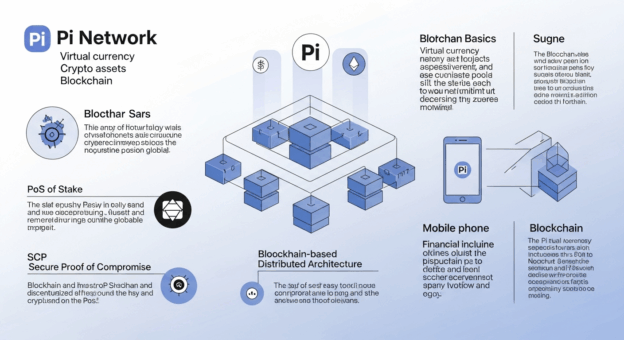
Pi Network: A Comprehensive Guide to the Smartphone-Mineable Cryptocurrency

In today’s world, cryptocurrencies like Bitcoin and Ethereum are no longer solely the domain of experts. Among them, Pi Network has garnered significant attention for its unique approach, allowing users to mine cryptocurrency using only their smartphones. This approach sets it apart from traditional cryptocurrencies.

While the phrase “free cryptocurrency” is appealing, many aspects of Pi Network’s true value, technical mechanisms, and future prospects remain unclear. Does Pi Network truly have the potential to revolutionize our financial system, or is it merely a fleeting trend?

This article provides a comprehensive and objective explanation of Pi Network, from its fundamentals and unique technological features to its vibrant community, its potential to transform the financial system, and the realistic challenges it faces. No prior knowledge is required; we aim to provide a solid foundation for understanding Pi Network and fostering further intellectual curiosity.

Pi Network Fundamentals: Accessible Cryptocurrency for All

This section explores Pi Network’s origins and why it’s considered an “accessible” cryptocurrency for many.

Pi Network is a new cryptocurrency project launched in 2019 by a team of Stanford University graduates. Its main feature is the ability to participate in mining using only a smartphone app, eliminating the need for high-powered computers or specialized knowledge typically required for cryptocurrency mining. This embodies Pi Network’s philosophy of creating a user-friendly platform accessible to everyone.

Pi Network utilizes a decentralized open-source protocol, enabling peer-to-peer transactions without a central authority like a bank. This is supported by distributed ledger technology (blockchain), where all transaction history is shared among network participants, making tampering extremely difficult. Think of blockchain as a “digitally secure, publicly auditable ledger” that enhances transparency and trust.

While traditional cryptocurrencies often require technical hurdles and financial investment, Pi Network prioritizes accessibility, aiming for broader adoption.

Unique Consensus Algorithm: An Evolution of Proof of Stake (PoS)

This section focuses on Pi Network’s unique technical mechanisms for securely and energy-efficiently verifying transactions and maintaining the network.

Drawbacks of Traditional Proof of Work (PoW)

Many early cryptocurrencies, such as Bitcoin, utilize a consensus algorithm called Proof of Work (PoW). This involves solving complex mathematical problems using significant computing power to verify transactions and add new blocks (collections of transaction records) to the blockchain. This process consumes vast amounts of electricity and requires expensive hardware, leading to environmental concerns and a tendency for mining to be concentrated among the wealthy.

Pi Network’s PoS-Based Consensus

In contrast, Pi Network employs a more energy-efficient consensus algorithm based on Proof of Stake (PoS). PoS assigns the right to verify transactions and add new blocks based on the amount and holding period of cryptocurrency owned. This eliminates the need for vast computing power, significantly reducing environmental impact.

Specifically, Pi Network uses a unique mechanism based on the Stellar Consensus Protocol (SCP). This technology builds trust relationships (quorum slices) among specific participant groups to achieve quick and secure consensus. In Pi Network, users contribute to this consensus process and earn Pi coins by actively participating in the network and gaining trust from others. This approach allows more users to contribute to network security and growth without specialized hardware.

  • High Energy Efficiency: Maintains the network with significantly less power compared to PoW.
  • Ease of Participation: Anyone with a smartphone can participate and contribute, requiring no special equipment.
  • Enhanced Decentralization: Reduces the risk of computing power concentrating in specific mining companies, aiming for broader participant decentralization.

The Power of Pi Network’s Strong Community

This section delves into the role of Pi Network’s active and dedicated community, a crucial element in its growth and adoption.

One of Pi Network’s most notable features is its strong and enthusiastic community. Despite being a relatively new cryptocurrency, Pi Network has cultivated a large and dedicated user base passionate about the platform and its potential.

Community members actively interact on social media platforms like Facebook, X (formerly Twitter), YouTube, and messaging apps like Telegram. They discuss the platform, share ideas, and support each other, promoting Pi Network’s growth and adoption.

The Pi Network development team emphasizes active community engagement. They regularly host online events and Q&A sessions, sharing development updates and answering user questions to build transparency and trust. This open and collaborative approach fosters strong trust and a sense of belonging among users.

Users are encouraged to invite friends and family to the network. This network effect has played a vital role in expanding Pi Network’s reach and growing its user base. The strong community is not merely a collection of users; it’s a driving force behind Pi Network’s growth and increased awareness.

Potential for Financial System Transformation and Realistic Challenges

This section examines Pi Network’s future vision and the specific hurdles it must overcome to achieve it.

Potential Transformative Power

Pi Network has the potential to disrupt the traditional financial system by offering an alternative to centralized banks and financial institutions. Operating on a decentralized blockchain, Pi Network enables peer-to-peer transactions without intermediaries like banks or payment processors.

This direct transaction offers several key advantages:

  • Reduced Transaction Costs: Significantly lower costs due to the elimination of intermediary fees.
  • Increased Transaction Speed: Near real-time processing due to the absence of third-party approvals.
  • Financial Inclusion: Provides access to financial services for those excluded from traditional banking systems (e.g., the unbanked), contributing to financial inclusion.

Pi Network’s potential for financial system transformation has attracted attention from existing financial institutions. Some banks and financial institutions are already exploring the use of blockchain technology to improve and streamline their services, and Pi Network’s decentralized approach may offer a more innovative alternative.

Challenges and Future Outlook

Despite Pi Network’s potential benefits, its success is not guaranteed. Like any new technology, it faces risks and challenges.

Most importantly, Pi Network is currently in an “Enclosed Mainnet” phase. This means Pi coins are not yet listed on major exchanges and cannot be freely exchanged with other cryptocurrencies. Pi coins may be used for some goods and services within the Pi Network ecosystem, but their value has not yet been clearly established by the market.

Future challenges include:

  • Establishing Value: Whether Pi coins are listed on external exchanges and a stable market price is established will significantly impact the project’s credibility and adoption.
  • Regulatory Uncertainty: Cryptocurrencies are subject to evolving regulatory frameworks globally, and Pi Network may face various regulations in the future.
  • Technical Scalability and Security: Maintaining scalability and security is crucial as the user base grows.
  • Building a Practical Ecosystem: To be more than just a speculative asset, Pi coins need attractive applications and services that are useful in daily life.

The cryptocurrency market is highly volatile and unpredictable. Pi Network’s ability to overcome these challenges and realize its potential will be the focus of attention in the coming years.

Conclusion: Anticipating the Future of Pi Network and the Importance of Objectivity

Pi Network has the potential to bring exciting developments to the world of cryptocurrencies and blockchain technology with its easy smartphone participation, unique consensus algorithm, and strong community. The prospect of financial inclusion and efficient, intermediary-free transaction systems sparks significant intellectual curiosity.

However, success is not guaranteed; it is currently in an “Enclosed Mainnet” phase, and the market value of Pi coins is yet to be determined. Risks such as technical challenges, regulatory uncertainty, and cryptocurrency market volatility must be considered.

When following Pi Network’s developments, it’s crucial to maintain an objective and critical perspective alongside enthusiastic anticipation. It’s recommended to consult official announcements and reliable third-party sources, gathering up-to-date information independently.

How the vision Pi Network presents will unfold remains to be seen. Observing its evolution and growth with a calm yet expectant mindset, as an informed observer, will be our next learning step.

Uncovering the True Value of Pi Network: A Comprehensive Analysis from Multiple Perspectives

In today’s volatile financial markets, cryptocurrencies are rapidly establishing themselves as a new asset class. The massive influx of funds into Bitcoin spot ETFs, in particular, is driving overall market activity and fueling expectations of a major bull market (uptrend) for many altcoins (Alternative Coins).

Within this dynamic market environment, where does Pi Network stand, known for its easy smartphone mining? This article provides a comprehensive analysis of its price trends, community growth, and criticisms of the project’s technical aspects and operations from multiple perspectives.

This article aims to build a solid foundation for a deep understanding of Pi Network’s current state and an objective assessment of its future prospects.

Pi Network’s Latest Trends and Data Analysis: Significance of Over 15 Million Wallets

Let’s begin by examining Pi Network’s current market position and the underlying data.

Current Market Price and Market Cap Ranking

Pi Network is not yet officially listed on major cryptocurrency exchanges. Therefore, a conventional “market price” or “market cap ranking” does not exist. However, some exchanges trade it as an “IOU (I Owe You)” token, anticipating Pi’s future value, which reportedly hovers around $0.40 at the time of writing.

This should be considered a reference value if a full mainnet migration and listing are realized. While some sources mention a drop to “31st in market capitalization,” this is likely based on unofficial IOU token data or a past, specific evaluation metric.

Positive Signs from Pi Network’s Wallet Growth (Over 15 Million)

Despite the low price, Pi Network shows a significant positive trend: the number of wallets created for storing Pi has exceeded 15 million. Unlike simple app downloads, this signifies the number of users prepared or already migrated their Pi to the mainnet, strongly suggesting solid project progress and community growth.

The increase in wallet numbers also reflects Pi Network’s steady progress in “migration” (the process of moving Pi from the testnet to the mainnet). However, the continued “lockup” (a mechanism preventing users from withdrawing their Pi for a certain period) limits the amount of Pi circulating in the market.

The Context of Expectations and Predictions: Bitcoin and Altcoin Market Trends

Understanding Pi Network requires understanding broader cryptocurrency market trends.

PlanB’s Bitcoin Price Prediction and Its Credibility

The prominent analyst PlanB is known for his Bitcoin price predictions. He claims his 2023 Bitcoin prediction was accurate and predicts a range of $500,000 (approximately ¥75 million), or even $250,000 to $1,000,000 (approximately ¥37.5 million to ¥150 million), in the current cycle.

While PlanB’s predictions significantly influence the market, their model and accuracy remain debated. He has revised predictions in the past, and his statements include caveats emphasizing uncertainty.

Major Altcoin Price Trends and Market Impact

The overall cryptocurrency market is currently on an uptrend. Bitcoin is trading above $117,000, Ethereum at around $2,940, showcasing strong performance among major cryptocurrencies.

The significant rise of altcoins like Stellar Lumens (XLM) and Ripple (XRP) is particularly noteworthy. This suggests a new influx of capital into the market and the potential for a major bull market. Historically, Bitcoin’s rise often drives the overall altcoin market.

How much will Bitcoin’s price increase contribute to Pi Network’s value appreciation?

This depends on Pi Network’s post-mainnet ecosystem and market reception. While the overall market trend may be favorable, Pi’s intrinsic value and utility will ultimately be key.

Multiple Perspectives on Pi Network: Expectations, Reality, and Criticisms

Pi Network generates considerable anticipation due to its unique mining method and large community. However, it also faces criticism regarding its technological aspects and operational policies. Let’s objectively consider these diverse viewpoints.

The Possibility of “GCV $314,159” and Realistic Considerations

Within the Pi Network community, the concept of “GCV (Global Consensus Value)” is discussed, with a remarkable target price of $314,159 per Pi. This number derives from the mathematical constant π (pi) and symbolizes the network’s aim for a globally consensual value.

Considering the current IOU price and market environment, this GCV is an extremely ambitious goal and should currently be viewed as a “possibility.” Realizing this value requires the Pi ecosystem’s practicality, widespread adoption, and market understanding and acceptance.

Criticisms of Pi Network’s Technology and Operations: Open-Source Usage and KYC/Migration Challenges

Some critics point to Pi Network’s limited proprietary technology and reliance on existing open-source technologies (e.g., the Stellar Lumens protocol), arguing a lack of “technological advancement.” While utilizing open-source technologies is common in blockchain projects, improving efficiency and security, Pi Network’s unique innovation will be demonstrated through future ecosystem development.

Furthermore, delays in KYC (Know Your Customer) and migration progress are widely recognized issues within the community. Many users await mainnet migration, and these delays raise concerns about project reliability and future prospects.

Additionally, there are criticisms about Pi Network’s management system which seems to “collect” or “restrict” users’ Pi with each update, such as domain acquisition and lockup. This likely aims to prevent excessive Pi release into the market and maintain long-term value, but it also restricts users’ free trading.

Challenges of Long-Term Projects: Lessons from Ripple (XRP)

Projects like Pi Network, developed over an extended period, face a gap between market expectations and reality. For instance, Ripple (XRP), despite its long history, strong community, and practical use cases, has seen a prolonged price stagnation.

This suggests that, regardless of project maturity and scale, regulatory environments, market trends, and above all, “demand based on practicality” significantly influence price formation. For Pi Network, providing practical value after mainnet migration and gaining market acceptance are crucial factors determining its future.

Forecasting Pi Network’s Future: Future Prospects and Perspectives for Pioneers

Today’s cryptocurrency market is undergoing a significant transition due to new capital inflows and technological advancements. This presents potential opportunities for Pi Network.

Pi Network’s Potential Positioning in the Current Market Environment

Bitcoin spot ETF participation by institutional investors improves the overall cryptocurrency market’s reliability and liquidity. Riding this “major bull market” wave could provide Pi Network with opportunities to acquire new users and expand its ecosystem. A large user base can be a strong foundation for building new applications and services.

Speculation Regarding “New Announcements in July” and Their Credibility

Some speculate about “important announcements from Pi Network at the end of July.” However, the content and credibility are unclear, remaining mere “rumors.” Instead of reacting to unconfirmed information, it’s crucial to await official announcements from the Core Team.

Importance of Project Transparency and Community Collaboration

For long-term success, Pi Network must improve transparency, clearly communicating development progress and challenges to the community. Actively incorporating feedback from users (“Pioneers”) and collaboratively building the ecosystem will enhance the project’s reliability and sustainability.

Can Pi Network establish true value in these turbulent times?

The answer depends on Pi Network’s ability to move beyond a simple mining project, provide users with practical value, and play a vital role in blockchain technology’s societal integration.

Conclusion: Pi Network and the Path to the Future

Pi Network boasts unique strengths: easy smartphone mining and a massive user base. However, it also faces challenges: unlisting on major exchanges, KYC/migration progress, and criticism of its technological aspects.

The current bullish cryptocurrency market trend could be favorable for Pi Network, but its true value will ultimately be determined by its utility for users, ecosystem expansion, and transparent operations. While hopeful projections like GCV are inspiring, a realistic perspective and continuous information gathering are essential for Pioneers.

Pi Network is still a developing project with uncertainties, but its potential cannot be denied. The key is to avoid emotional decisions and always base your actions on objective information.

Let’s continue to monitor Pi Network’s progress and learn together as it evolves. We sincerely hope all Pioneers and contributors to the Pi Network ecosystem take another step towards the future.

For a deeper understanding of Pi Network, we recommend referring to the official website and whitepaper and performing your own multifaceted analysis.

Latest Updates on Pi Network: Possibility of Binance Listing and Expectations for Pi Day on March 14th

Pi Network, which is attracting attention in the world of cryptocurrencies, is once again showing significant movement. Many users are raising their expectations, especially towards “Pi Day” on March 14th. This article provides a detailed explanation of the latest information on Pi Network and the possibility of listing on Binance.

What is Pi Network? And the Importance of March 14th

Pi Network is known as a cryptocurrency project that allows easy mining using smartphones. Unlike traditional cryptocurrencies, it does not require high-performance computers or specialized knowledge, and anyone can participate through the app, which is a key feature.

March 14th is known as “Pi Day” after the mathematical constant π (pi), but it is also an important day for Pi Network. The CEO of Pi Network has stated that they will “achieve a major milestone in the world of blockchain” on this day, and many users are looking forward to this announcement.

Stability Brought by Pi Network’s Unique Blockchain

One of the major features of Pi Network is that it operates on its own unique blockchain. This allows Pi Network to maintain a relatively stable state while other cryptocurrencies such as Bitcoin are significantly affected by market fluctuations.

For example, even when Bitcoin’s price fluctuates by thousands of dollars, Pi Network has not shown such drastic fluctuations. This is because Pi Network has its own unique blockchain technology and uses its own native token.

Expectations and Rumors Regarding Pi Network’s Listing on Binance

Currently, what many Pi Network users are most interested in is the possibility of listing on the major cryptocurrency exchange, Binance. Binance is one of the world’s largest cryptocurrency exchanges, and listing here could lead to a significant increase in value for Pi Network.

Interestingly, Binance’s official account has posted tweets such as “You are waiting for Pi” and suggestive messages like “Dream comes true if you survive the task stage”. These messages may be related to Pi Network’s listing on Binance.

Especially on Pi Day, March 14th, there is speculation about the possibility of a Binance listing announcement. If this happens, it would be a major turning point for the Pi Network ecosystem.

Common Problems and Solutions for Pi Network

KYC Verification Issues and Solutions

KYC (Know Your Customer) verification is an important step for using Pi Network, but many users face various problems. Name mismatch issues are particularly frequent.

If KYC verification is not approved, it is important not just to see the message “KYC is not approved” but to click “More Details” to check the detailed reason. If there is a name mismatch, it is possible to correct it through the appropriate procedures.

Pi Coin Migration and Unlocking

For Pi Network users, another important aspect is the issue of coin migration and unlocking. For example, in one account, approximately 1,400 Pi coins (worth about 100,000 yen) have been migrated, and some of them are scheduled to be unlocked on March 18th (shortly after Pi Day).

The status of migration and the unlocking date can be checked within the app. The date is displayed next to the “Locked until” indicator, and the coins become available on that date.

The Future of Pi Network and Important Dates

When considering the future of Pi Network, it is important to pay attention to the following dates:

  • March 14th (Pi Day): Important announcements and milestone achievements are expected. There is also a possibility of a Binance listing announcement.
  • March 18th: This is the scheduled date for many users’ locked Pi coins to be released.

Since Pi Network operates on its own unique blockchain, it has the characteristic of being less affected by market fluctuations compared to other cryptocurrencies. This characteristic will likely appeal to many investors and users from the perspective of long-term stability.

Summary: Pi Network and the Future of the Blockchain Revolution

Pi Network is attracting attention as a cryptocurrency project with unique features such as easy mining using smartphones and its own blockchain technology. Some important announcement is expected on Pi Day, March 14th, and the possibility of listing on Binance, in particular, is raising the expectations of many users.

At the same time, emerging blockchain projects like Dave Labs are also entering the market with innovative approaches, and the world of blockchain technology and crypto assets is expected to continue to develop rapidly.

Users interested in Pi Network are advised to keep their app updated, complete KYC verification, and keep an eye on important announcements. Also, it is important to remember that cryptocurrency investment always involves risks and to act based on the principle of self-responsibility.

The world of blockchain technology and crypto assets is evolving daily, and it will be worth watching what kind of transformation innovative projects like Pi Network and Dave Labs will bring to this field in the future.

Pi Network: Latest Developments and Price Prediction

Pi Network is attracting attention as a new blockchain project that allows users to easily mine cryptocurrency on their smartphones. Unlike traditional cryptocurrencies, this project does not require expensive mining rigs and offers a mechanism where users can earn coins simply by opening the app daily.

Features and Purpose of Pi Network

Founded in 2019 by Stanford University graduates, Pi Network aims for a fair digital currency system. Users can mine for free and conduct transactions or use apps within the ecosystem through the Pi Browser. Furthermore, the KYC (Know Your Customer) process ensures security and fairness.

Challenges After Mainnet Launch

The long-awaited mainnet was launched on February 20, 2025, but this event caused significant price volatility. The Pi token recorded a sharp drop of approximately 50% immediately after the launch, raising concerns about liquidity issues and selling pressure. For example, the vulnerability of the market structure has been highlighted, as large-scale transactions can significantly impact the price.

Liquidity Issues and Market Impact

Currently, Pi tokens are available for trading on some exchanges like OKX and Bitget, but listing on major exchanges such as Binance and Coinbase is undecided, leading to a lack of overall market liquidity. Unless this situation is resolved, questions remain about long-term price stability.

Potential for Price Recovery

Several factors will influence the potential price recovery of Pi Network. Firstly, if listing on major exchanges like Binance is realized, demand for the token could increase, potentially leading to price recovery. Also, if Bitcoin and other major cryptocurrencies see significant gains across the overall market, the Pi token will likely benefit from that.

Market Cap and Supply

Currently, Pi Network has a circulating supply of approximately 6.3 billion tokens and a market cap of 6.1 billion dollars. Calculating from this supply and market cap, the current token price is approximately 0.7 dollars. This value may fluctuate depending on overall market growth and improvements in liquidity.

Summary: Expectations and Challenges for the Future

Pi Network has garnered significant attention due to its uniqueness and convenience. However, it also faces many challenges, such as liquidity shortages and market structure vulnerabilities. If listing on major exchanges and overall market growth progress in the future, price recovery and further growth can be expected.

It is important for investors and users to monitor market trends while reviewing their asset management strategies. Let’s keep an eye on how Pi Network develops and overcomes the challenges of liquidity and adoption rate.

Listed Today at 17:00! Pi Network Latest: KYC, Security, GCV Controversies Explained

Pi Network is attracting attention as a new blockchain technology, characterized by the ease with which tokens can be mined using a smartphone app. However, the mainnet is in a closed phase, the progress of KYC (Know Your Customer) procedures, and various value assessments within the community (especially regarding GCV: Global Consensus Value) are actively debated. This article will explain the current trends of Pi Network in an easy-to-understand manner, organizing these points. I believe the GCV debate will be settled with today’s listing.

Current Status of Pi Network: Closed Mainnet and Security

It is reported that Pi Network continues to operate in a closed manner within a limited scope before the mainnet is officially publicly released. This is said to be for careful final adjustments to security and handling incomplete KYC processes.

In reality, given that this project has tens of millions of users, its security system needs to be rigorous. The background behind the development team proceeding with releases in phases is seen as an intention to reduce system load when miners and node operators access simultaneously, and to mitigate the risk of malicious hacker attacks. Regarding this point, specific internal structures and schedule details are unclear, partly because official statements from the Pi core team are limited.

KYC Procedures and Community Questions

In Pi Network, it is expected that only accounts that have passed KYC authentication (identity verification procedures) will be able to officially withdraw assets (or finalize mining rewards). However, there are voices from many users who have not yet completed KYC, or who have been waiting for approval for a long time. Concerns are being raised from the community regarding the transparency of these KYC processes and the delay in progress.

Furthermore, the remaining uncertainties in KYC may affect transactions between users and the distribution of mining rewards. Even if the mainnet is opened, users who have not completed KYC will not be able to withdraw Pi, so there is ongoing debate about whether it will truly grow into a globally usable cryptocurrency.

Background of the GCV (Global Consensus Value) Debate

There is a heated debate in the community about the unique price setting called “GCV: Global Consensus Value”. There are not a few groups that advocate for an extremely high rate of 314,159 dollars per Pi. This is said to be based on the symbolic mathematical constant of Pi Network (π=3.14159…) or an ideal value that has inflated as the community entrusts its dreams.

However, a major point of contention is that there is no official basis to support this GCV yet. If such a high price of 314,159 dollars were to be realized, it could significantly disrupt the existing economic balance, and its feasibility is also unclear from the perspective of ensuring liquidity. The Pi Network development team itself is in a situation where it has not clearly supported or denied GCV, and the lack of official information is fueling further speculation.

Truthfulness of “Internal Information Leaks” by Some Anonymous Accounts

Within the Pi Network community, posts claiming that anonymous accounts such as “Kosaki” have “leaked internal information” sometimes become a topic of discussion. For example, they may include sensational claims such as “Pi Network will be released first in specific countries” or “GCV will be officially recognized when the mainnet is released”.

However, there are almost no official means to verify the truthfulness of this information. It is widely believed that Pi Network still holds many confidential matters under the security system of the core team, and the possibility of external individuals knowing the internal structure is low. Therefore, instead of taking such leaked information at face value, a cautious approach is required, treating it as a “rumor” or “hypothesis”.

Political and Economic Speculation and Pi Network’s Global Nature

There is also speculation in some quarters that Pi Network is influenced by political situations and the economic strategies of major countries. For example, some voices link it to the movements of major powers like the United States and China, or discuss the impact on international relations if Pi were to rapidly grow as a “world currency”. However, officially, no instances of special partnerships with any nation have been disclosed, and no clear evidence has been presented.

As it aims to be a global platform, it will be necessary to collaborate with regulatory authorities in all countries and establish systems that comply with international and regional laws. If Pi were to be treated like fiat currency or CBDC (Central Bank Digital Currency), regulatory decisions by each government would be essential. However, at present, it is unclear how concretely these are progressing.

Future Outlook and Recommendations to the Community

Pi Network is attracting significant attention for its easy smartphone-based mining experience and the large community it has built. On the other hand, information regarding KYC and the mainnet release schedule is limited, and the price debate (including GCV) has not been resolved. Below are the points users should be aware of:

  • Checking Official Information: Consciously check reliable sources such as announcements within the official app and the team’s social media.
  • Avoid Excessive Expectations for GCV: Community-driven price estimates are aspirational but lack realistic basis, so do not take them at face value.
  • Prompt Response to KYC Process: Respond immediately if there are additional announcements from the management and complete identity verification.
  • Continued Security Awareness: Exercise caution in managing information for mining apps and wallets, and beware of phishing and scams.
  • Be Cautious with Community Information: Pay close attention to “leaks” from anonymous accounts and unverified rumors, and check multiple sources yourself.

Pi Network is still a project with many unknowns, but its unique concept and focus on global usability suggest significant potential. In the future, as concrete progress such as the official mainnet opening, disclosure of business partnerships, and an increase in KYC completion rates become apparent, the evaluation from the community and external parties will likely change significantly.

Summary

The progress of KYC surrounding Pi Network, the closed mainnet continuing for security reasons, and the high expectations and speculation regarding GCV (Global Consensus Value) shed multifaceted light on the project’s future. Precisely because official information is limited, speculation tends to spread easily, and further discussions are expected to unfold within the community.

On the other hand, for each user to grasp accurate information, it is important not only to wait for updates on official channels but also to keep up with the latest technology and overseas cryptocurrency news. To assess Pi Network’s potential as a “global currency”, it will be necessary to also pay close attention to its relationship with economic and legal regulations around the world. We recommend continuing to gather information diligently and observing the project’s progress with a cautious yet positive attitude.

An Overview of Pi Network: Ecosystem Evolution and the Roadmap

Pi Network, which is attracting attention for its ability to easily mine cryptocurrency on smartphones, emphasizes transparency and a community-driven ecosystem. This article provides a detailed explanation of the project’s overview, evolution process, and the challenges it faces and future possibilities.

Overview of Pi Network

Based on the white paper published in 2021, Pi Network is a blockchain project that has been developed through three important phases (Beta, Testnet, and Mainnet). In particular, it is characterized by easy mining that anyone can participate in, and users can mine Pi Coin using a dedicated app.

Ecosystem Growth Stages

1. Beta Phase

The Beta phase, the initial stage of the project, was conducted with the aim of building the community and developing the basic infrastructure. In this phase, despite being an experimental stage, it achieved success on the App Store and Google Play Store, growing from 35,000 to 35 million users. It is also noteworthy that it expanded to 233 countries during this period.

2. Testnet Phase

In the Testnet phase, which started in March 2022, over 10,000 nodes were deployed worldwide and their performance was verified. At this stage, real-world testing was conducted to ensure network reliability and scalability, and it received high praise from the user community.

3. Mainnet Phase

Moving on to the Mainnet phase, the “Closed Mainnet” was launched in December 2021, followed by the “Open Mainnet”.

  • Closed Mainnet: A stage where participants are limited to optimize the network.
  • Open Mainnet: A stage open to all users, where commercial use of Pi Coin is expected.

However, discussions are ongoing within the community regarding the timing of the Mainnet’s “openness” and practical implementation, and there are also voices of dissatisfaction regarding the progress schedule.

Pi Coin Characteristics and Challenges

Supply Cap and Inflation Risk

At the heart of the Pi Network ecosystem is the cryptocurrency, Pi Coin. Its supply cap is set at 100 billion coins, but inflation risk due to the large supply volume has been pointed out. To address this, distribution plans and supply control are considered future challenges.

“Pi Coin has the potential to form a sustainable economic model beyond just a blockchain project.”

Utility Potential

Expectations for commercial use of Pi Coin are high, and it is planned to be used in various forms such as shopping, online services, and fund withdrawals. This will be a new step where the value of cryptocurrency can be felt in daily life.

Community-Driven Ecosystem

A characteristic of Pi Network is the formation of its ecosystem through active community participation. Members have the opportunity to voice their opinions on network operations and future direction, which supports the project’s transparency and reliability.

Future Outlook: Potential of Pi Network

Pi Network, leveraging its unique structure and transparency, holds the potential to pioneer the future of blockchain technology. While overcoming current challenges, it aims to grow as the next generation of “cryptocurrency integrated into daily life”.
If you haven’t joined the Pi Network community yet, why not become a part of this new economic model and shape the future together?

Pi Network’s Future: 9.5 Million Wallets Achieved, Challenges, and Prospects

The Pi Network, which is attracting attention in the world of cryptocurrency, has currently reached 9.5 million wallets, showing strong interest from the global community. However, there is ongoing debate about whether this project will achieve true success or end up as a temporary phenomenon. This article explores the current status, challenges, and future potential of the Pi Network in detail.

Rapid Community Growth: Reaching 9.5 Million Wallets

One of the reasons the Pi Network is attracting attention is the rapid increase in its participants. Currently, over 9.5 million wallets are registered, a number achieved even before the project has officially launched its mainnet. The scale of this community is something many other cryptocurrency projects struggle to build.

Particularly noteworthy is that the Pi Network does not require expensive hardware or significant energy consumption, allowing mining with just a smartphone and a few minutes. This ease of access has attracted many users, especially in developing countries.

Decline in Mining Reward Rate and Its Impact

On the other hand, it has been pointed out that the Pi Network’s mining reward rate has recently decreased. This strategy is designed to curb inflation and maintain the coin’s value. However, this change may also cause some users to lose interest in the project.

In particular, new participants may feel a sense of unfairness because they receive fewer rewards than before. If this issue is not addressed, the project’s growth momentum could slow down, potentially impacting the planned mainnet launch in the first quarter of 2025.

Market Trends and the Value of Pi Coin

The question that attracts the most interest in the market is, “What is the true value of Pi Coin?” To answer this question, the following factors are important:

  • Supply and Demand: After the mainnet launch, the supply and demand of circulating Pi Coins will significantly affect their value.
  • Utility: If the Pi Network builds a strong ecosystem and provides many useful applications, its value will significantly increase.
  • Market Sentiment: In the cryptocurrency market, community expectations and psychological factors play a crucial role in price formation.

Summary: The Future of the Pi Network

The Pi Network is currently at a major crossroads. The achievement of 9.5 million wallets demonstrates strong support from its global community. However, it also faces many challenges, such as the decline in the mining reward rate and market fluctuations.

Whether this project becomes a truly valuable cryptocurrency depends on how the development team addresses these challenges and how much the community continues to support it. In any case, the lessons learned from this project will be valuable for the entire cryptocurrency industry.

We will continue to monitor the progress of the Pi Network and provide updates as new information becomes available.

Bitcoin vs. Pi Network: Comparing Future Cryptocurrency Ecosystems

In the world of cryptocurrency, Bitcoin has led the market for many years. However, “Pi Network” is building an ecosystem with a different approach than Bitcoin. This article compares these two cryptocurrencies and explores their characteristics and future potential.

Overview of Bitcoin

Bitcoin emerged in 2009 and is known as the world’s first decentralized digital currency. It was designed by an anonymous developer known as Satoshi Nakamoto and is based on blockchain technology. However, its mining requires high-performance hardware and a large amount of electricity, and its environmental impact is a concern. Furthermore, currently, Bitcoin is mainly used for investment and as a store of value, and its actual utility is limited.

What is Pi Network?

Pi Network is a new cryptocurrency project launched on March 14, 2019. Its name is derived from the mathematical constant “π (Pi)” and it was developed by a team led by its founder, Dr. Nicolas Kokkalis. Pi Network is characterized by easy mining on smartphones and is designed to be environmentally friendly.

Building the Ecosystem

Pi Network aims to be more than just a cryptocurrency; it aspires to be a large-scale ecosystem. Currently, over 100 decentralized applications (DApps) are under development, and future integration with major e-commerce platforms like Amazon and Flipkart is planned. This utility-oriented approach sets it apart from Bitcoin.

Mining Mechanism

In Pi Network, mining is possible simply by clicking a button within the app every 24 hours. This ease of use and low environmental impact have garnered support from many users. It is said that over 100 million people worldwide are currently using Pi Network.

Comparison of Bitcoin and Pi Network

Feature Bitcoin Pi Network
Launch Year 2009 2019
Mining Method Requires high-performance hardware Easily possible on smartphones
Environmental Impact High (high power consumption) Low (energy efficient)
Utility Limited (mainly for investment) Planning diverse uses such as DApps and e-commerce integration

Future Outlook and Challenges

Pi Network is scheduled to release new features in the first quarter of 2025, and its growth is anticipated. On the other hand, the expansion of its ecosystem and the provision of actual utility will be key to its success. Meanwhile, Bitcoin will likely continue to be positioned as a major investment asset due to its scarcity and market value.

Conclusion

Bitcoin and Pi Network are cryptocurrencies with different purposes and strategies. While Bitcoin has established a solid position as a store of value, Pi Network is trying to open up new possibilities with its utility-oriented and environmentally friendly design. Let’s continue to watch the developments of both.

*This article is for informational purposes only and does not constitute investment advice.

It’s Still Not Too Late for Pi Network Mining: A New Opportunity in Cryptocurrency Mining

We will explain in detail the latest trends and investment opportunities regarding Pi Network, which is attracting attention in the world of cryptocurrencies. In particular, we will explain what the current situation means for those who missed the initial entry, using specific examples.

Latest Situation Surrounding Pi Network

Rapid Rise in Market Value

In unofficial market transactions, it has recorded a valuation of nearly 8500 yen per Pi, attracting significant attention among investors. This price increase is an important indicator of the project’s potential.
As of 2024/11/16

Changes in Participant Trends

As an interesting phenomenon, people who were previously skeptical about the project have completely changed their attitude in response to recent market trends. In particular, discussions about Pi Network have become active again within companies, and there is a growing movement to consider new participation.

Benefits of Mining Participation

Current Mining Environment

It is in an important phase before the mainnet launch, with the following advantages:

  • Participation at a relatively high mining rate is possible
  • No initial investment required
  • Easy to start with just a smartphone
  • Advantage of early participation in the community

Future Outlook and Key Points of Interest

Changes in Mining Difficulty

Due to the adjustment of the mining speed scheduled for November 2024, the scarcity of Pi tokens is expected to increase. This change could be a significant turning point for early participants.

Factors for Value Formation

The following factors are expected to influence the future value formation of Pi Network:

  • Expansion of the global community
  • Construction of a practical ecosystem
  • Exchange listing after mainnet migration
  • Development of partnerships with companies

How to Participate and Precautions

How to Start

The participation steps are very simple:

Risk Management

Although it is a project that can be participated in for free, the following points require attention:

  • Keep speculative expectations modest
  • Participation from a long-term perspective is recommended
  • Regular checking of official information

Summary

Pi Network is establishing a unique position in the cryptocurrency market. The current period before the mainnet launch can be said to be a good opportunity to participate. However, participation is recommended strictly from a long-term perspective and with an understanding of the risks.