KYC」タグアーカイブ

Pi Network Task Force: Unveiling the ‘Sweet Traps’ Lurking in the Pi Network Community and Tips to Avoid Them

Pi Network, boasting tens of millions of users worldwide, holds immense promise for the future. Its accessibility—mining cryptocurrency with just a smartphone—has attracted a large community. However, this growth unfortunately shadows a reality of fraudulent solicitations that exploit information gaps and a lack of expertise, endangering users.

This article objectively examines Pi Network’s ambitious vision while delving into specific examples of ‘sweet traps’ within the community. We’ll provide concrete ways to identify and defend against these dangers, enabling you to understand Pi Network’s true potential and protect yourself.

Pi Network’s Current State and the Core Team’s Steadfast Approach

Pi Network attracts global attention. Unlike many cryptocurrency projects susceptible to market fluctuations, its Core Team maintains a unique and consistent path. We explore their robust roadmap and the grand vision behind it.

A Solid Roadmap and Strict KYC (Know Your Customer) Implementation

The Pi Core Team appears unwavering in its commitment to its roadmap, unaffected by short-term market volatility or community trends. Noteworthy is their strict KYC (Know Your Customer) process.

  • While many cryptocurrency projects prioritize rapid market entry, Pi Network imposes rigorous KYC requirements on its users. This builds a crucial foundation for increased network transparency and trust, facilitating future collaboration with financial institutions and major corporations.
  • These requirements are so stringent that some established exchanges reportedly fail to meet the Pi Core Team’s standards. This suggests the Core Team prioritizes creating ‘true value’ over short-term profits, emphasizing a long-term perspective.

Anticipation of Pi’s Future as a ‘Means of Payment’

Pi Network aims to be more than just a speculative cryptocurrency; it aspires to be a practical ‘means of payment’ for daily life, aiming for stability and reduced volatility compared to existing fiat currencies.

  • The future introduction of Pi Cards could enable 2.5 billion people worldwide lacking access to traditional banking systems to participate in the digital economy through Pi Network. This represents a vast potential market, potentially integrating with major e-commerce platforms like Amazon and Alibaba.
  • Furthermore, the envisioned Pi Browser aims to integrate the Web3.0 world within Pi’s ecosystem. This indicates that Pi Network seeks to be a comprehensive platform encompassing extensive digital services and financial infrastructure, beyond a simple cryptocurrency project.

Beware! The ‘Sweet Traps’ Lurking in the Pi Network Community

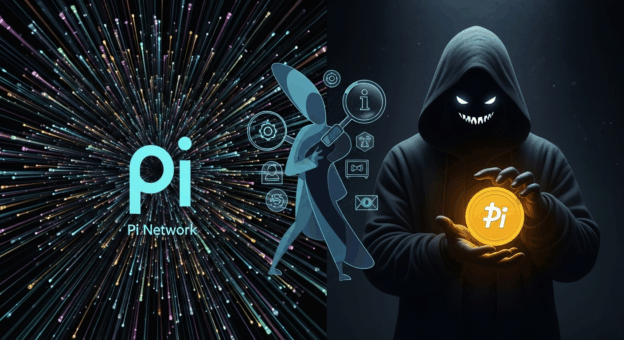
While many oversell Pi Network’s vision and potential, fraudulent solicitations aiming to lure users into risky transactions are prevalent. We’ll expose the tactics of these scams and highlight their unrealism, providing tips to identify the true intentions hidden behind deceptive language.

The Reality of ‘Pi Coin Trading Services’: The Flip Side of Unrealistic Principal Guarantees

A common solicitation within the community promises high returns by offering to trade Pi Coin on users’ behalf. For example, solicitations may use phrases like, “Invest $X, and we’ll give you Y Pi daily. Your principal is completely secure; I guarantee it.”

  • Unrealistic Returns: Consider a hypothetical offer: “Invest $500, and receive 1 Pi daily.” Assuming a typical market price of $0.07 per Pi, recovering the $500 principal would take approximately 714 days (around two years). This is extremely unrealistic considering cryptocurrency price volatility and the uncertainty surrounding mainnet launch and open network commencement, making it highly likely to be a scam.
  • Legal Risks of ‘Principal Guarantees’: In many jurisdictions, guaranteeing investment principal without the proper registration as a financial services provider is illegal. Such ‘principal guarantees’ are a major warning sign.

The Dangers of ‘Pi Coin Purchase’ Solicitations: The Risks of Direct, Non-Exchange Transactions

Some solicitations promote direct person-to-person Pi Coin purchases or ‘presales’ of specific tokens, citing reasons like high exchange fees or early-mover advantages.

  • Risk of Fraud: Direct transactions carry a high risk of fraud, such as non-delivery of Pi after payment or the sale of fictitious Pi. Moreover, resolving payment disputes or legal issues becomes significantly more challenging.
  • Learning from Past Examples: The ‘OneCoin’ scam, involving direct purchases via a specific organization and MLM (multi-level marketing), serves as a cautionary tale. Be wary of opaque token purchase schemes outside of regulated exchanges.

Checklist for Identifying Deceptive Scammers

Why do people fall prey to these unrealistic offers? Scammers exploit desires and knowledge gaps using sophisticated language. Stay vigilant and exercise sound judgment by noting these points:

  • “Guaranteed Principal,” “High Returns,” “Guaranteed Profits”: There are no absolute guarantees in investing. Promises of high returns without risk are almost always scams.
  • Unverified “Exclusive Information,” “Pre-Sales”: Scrutinize the reliability of sources for information not officially released or available through specific channels.
  • Pressure for Immediate Decisions: Be wary of tactics that rush you into a contract with phrases like “limited-time offer” or “first-come, first-served.”
  • Complex Schemes and Opaque Business Models: Avoid schemes with unclear, complicated details or ambiguous revenue models.

For the Healthy Development of Pi Network: What We Can Do

For Pi Network to become a truly valuable ecosystem, the efforts of the development team alone are insufficient; individual information literacy and ethical behavior are essential.

Emphasis on Personal Responsibility and Improved Information Literacy

Always remember that participating in and investing in cryptocurrencies is your own responsibility. Minimizing risk involves the following:

  • Verifying Official Sources: Always confirm Pi Network information through official sources such as the website, whitepaper, and official social media accounts. Treat information from unofficial communities or individuals with a critical eye and use it only as a reference.
  • Reporting and Sharing Suspicious Solicitations: If you encounter suspicious solicitations, do not respond; share the information with others and report it to the appropriate authorities to prevent further victimization.

Contributing to a Healthy Community

We can all contribute to the healthy growth of the Pi Network community:

  • It’s crucial to address misinformation and fraudulent activities with reasoned, constructive criticism, and to correct inaccuracies.
  • Cultivating a culture of multifaceted perspectives and calm discourse improves community-wide information literacy.

Conclusion: Looking to the Future of Pi Network and Making Wise Decisions

Pi Network, with its innovative vision and extensive user base, aims to unlock new potential for cryptocurrencies. However, this bright future is shadowed by scams exploiting knowledge gaps.

This article aims to provide you with an objective understanding of Pi Network’s current state and the ability to clearly identify the tactics of ‘sweet traps’ within the community. Avoid being misled by promises of ‘guaranteed principal’ or ‘high returns.’ Constantly verify information, hone your judgment, and contribute to Pi Network’s healthy development—this is your most important defense. Believe in Pi’s potential, but prioritize wise information gathering and actions for a safe Pi Network experience.

Always consult the official Pi Network website (minepi.com) and whitepaper for the most up-to-date information. If you encounter suspicious solicitations, do not respond and consider contacting your local consumer protection agency.


Pi Network Mainnet Migration Checklist: 8 Steps to Activate Your Pi

Pi Network has captivated millions of Pioneers worldwide as a groundbreaking cryptocurrency project allowing easy mining from smartphones. A common question among users is: “How can I actually use the Pi I’ve mined?”

The answer lies in the final stage of Pi Network: migration to the mainnet. A crucial tool for this smooth transition is the “Pi Network Mainnet Migration Checklist.” This article provides a detailed explanation of each step, ensuring you have a solid foundation for utilizing your Pi.

Understanding the Pi Network Mainnet Migration Checklist and Its Importance

This section explains what the Pi Network mainnet is and why this migration process is crucial. By the end, the significance of the checklist and the vision behind Pi Network will be clear.

What is Pi’s “Mainnet?”

In blockchain technology, the mainnet is the production environment where cryptocurrency transactions and applications operate. Unlike the “testnet” (testing environment), transactions on the mainnet have real-world value.

Pi Network is currently in a phase called the “Enclosed Mainnet.” This period facilitates Pi usage within the Pi ecosystem before direct exchange with external blockchains or fiat currencies. Pioneers who complete mainnet migration can transfer their Pi to a Pi Wallet and use it to purchase goods and services within this enclosed ecosystem.

Checklist Purpose and Overview

The mainnet migration checklist outlines the process of transforming your mined Pi into “transferable Pi balance” ready for mainnet migration.

This checklist consists of eight main steps. Completing step 7 prepares your transferable Pi balance for the mainnet migration queue. Following each step ensures a smooth transition and participation in the Pi ecosystem.

Accessing the Mainnet Migration Checklist

This section explains how to access the mainnet migration checklist through the Pi app, allowing you to check your migration status and proceed to the next steps.

  • Tap the “Mainnet Info” shortcut in the bottom right corner of the Pi app’s home screen.
  • Alternatively, tap the hamburger menu icon (three lines) in the top left corner to open the Pi menu, select “Mainnet,” and then tap “Mainnet Checklist.”

Either method will lead you to the checklist page.

Pi Network Mainnet Migration Checklist: 8 Steps Explained

This section details the eight steps required to complete the mainnet migration. Understand the significance and specific actions of each step to ensure a successful migration.

Step 1: Download the Pi Browser App

Pi Browser is the core Web3.0 browser for the Pi ecosystem. Key Pi apps, including the Pi Wallet and Pi KYC, are accessible through Pi Browser, serving as the access point to the Pi ecosystem. Download the Pi Browser app from the App Store (iOS) or Google Play Store (Android) if you haven’t already.

This app will be used to utilize goods and services with Pi and access decentralized applications (dApps) linked to the Pi mainnet in the future.

Step 2: Create a Pi Wallet

The Pi Wallet is a digital wallet for storing your migrated Pi. Pi Network uses a “Non-Custodial Wallet,” meaning you manage your assets.

A non-custodial wallet means Pi Network doesn’t store your wallet passphrase (private key); you are responsible. This enhances security as only you can access your Pi. The official Pi Network YouTube channel provides detailed tutorial videos on creating and using a Pi Wallet.

Step 3: Approve Your Pi Wallet

This crucial step confirms you know your Pi Wallet passphrase. You’ll re-enter it for approval.

Losing your passphrase means losing all your Pi. Pi Network doesn’t record your passphrase; it cannot be recovered if lost. Store it securely and confidentially.

Step 4: Finalize Your Lockup Settings

Finalizing Pi lockup settings allows for higher mining rates before mainnet migration. Lockup supports healthy ecosystem growth and encourages long-term contributions.

Lockup Mechanism:

  • Longer lockup periods and higher Pi percentages result in higher mining rewards.
  • This reward is a crucial decentralized macroeconomic mechanism in the initial stages of ecosystem launch and demand creation.
  • Lockup is optional, but you must finalize your initial settings to complete step 4.
  • Once finalized, lockup settings (amount and duration) cannot be changed (reduced) until your first mainnet migration is complete.

After the first mainnet migration, your previous lockup settings are automatically applied for subsequent migrations. However, you can adjust the settings between mainnet migrations. These changes apply to future migrations and don’t affect already migrated lockups.

For more detailed information on Pi lockup rewards, refer to the updated chapter in the whitepaper released on December 28, 2021.

Step 5: Submit Your KYC Application

KYC (Know Your Customer) verifies that Pioneers are real individuals, meeting regulatory requirements. This prevents fraud and multiple accounts, maintaining network integrity.

The Pi KYC app within Pi Browser uses a decentralized solution combining automated machine processes and human verification through crowdsourcing from Pioneers worldwide. This makes KYC scalable and cost-effective. Submit your Pi KYC application when a slot becomes available. Currently, slots are open for a majority of the network, with the remainder to receive invitations as work progresses.

Step 6: Await KYC Results

This step is complete upon successful KYC application approval.

In rare cases, additional network checks just before mainnet migration might revert your verified status to unverified. If this happens, you might be offered re-application options. Regularly check your KYC application status and next steps in the Pi KYC app. KYC-approved Pioneers can apply to be KYC validators. While not mandatory for mainnet migration, this contributes to the scaling and speed of the overall KYC solution, and the work is rewarded in Pi.

Step 7: Approve Mainnet Migration

Completing all previous steps allows you to add your transferable Pi balance to the mainnet migration queue. This involves using your Pi Wallet passphrase to execute an approval document. This passphrase must be the same as in Step 3.

If you can’t access your current passphrase or want to change your wallet, repeat steps 2 and 3 to create and approve a new wallet, then re-confirm the new wallet passphrase in step 7.

Completing step 7 queues your transferable Pi balance for transfer to your mainnet Pi Wallet address (this is the mainnet migration), unless your KYC-approved status is revoked due to pre-migration checks.

Step 8: Await Mainnet Migration Completion

After queuing, a 14-day holding period exists before your Pi balance reflects in your mainnet wallet. During this period, Pioneers cannot use their mainnet Pi balance for transfers.

This holding period allows the network to perform additional checks and corrections, ensuring secure transfers. After the holding period, Pioneers can freely use their Pi within the current enclosed Pi mainnet.

Post-Mainnet Migration Outlook and Usage

Pioneers who have completed the checklist and migrated their Pi balance to their Pi Wallet can begin participating in the Pi ecosystem. In the enclosed mainnet, you can use Pi to buy various goods and services and use Pi-based Web3.0 applications.

This marks a significant step in Pi Network’s evolution from a mobile mining app to a functional blockchain ecosystem with actual value exchange. As the Pi ecosystem grows, more utility will emerge, expanding Pi’s value and usage.

Conclusion: Act Now for the Future of Pi Network

Since its inception, Pi Network has shown remarkable growth in scale and enthusiasm. The start of mainnet migration and the development of a fully functional and thriving ecosystem on the mainnet blockchain is a great achievement for the Pi Network development team.

Completing this mainnet migration checklist is crucial for all Pioneers to activate their Pi. Use the knowledge gained in this article to complete the checklist and contribute to the future development of Pi Network. For further learning, regularly check the official Pi Network whitepaper, updates within the Pi app, and official announcements.

Complete Guide to Pi Network’s Second Migration: Wallet Verification, KYC, and Secure Email

# Complete Guide to Pi Network’s Second Migration: Wallet Verification, KYC, and Secure Email

Pi Network has garnered global attention as a groundbreaking project enabling anyone to easily mine cryptocurrency on their smartphones. Its ecosystem is steadily evolving, reaching the crucial ‘migration’ stage where users transfer their earned Pi coins to their wallets.

You’re at the forefront of Pi Network’s evolution. Are you ready to safely guide your Pi coins to the next stage?

This article provides a comprehensive guide to the essential steps required by the latest Pi Network app update, particularly adding a secure email, completing the KYC ‘liveness test,’ and the wallet verification process. Understanding and correctly executing these steps will secure your Pi coins and build a strong foundation for participating in the future of the Pi ecosystem.

## Understanding Pi Network’s Second Migration

This section explains the concept of ‘migration’ in Pi Network and why the ‘second migration’ is currently a hot topic.

The Pi Network project has evolved through several phases. Currently, it’s in the ‘Enclosed Mainnet’ phase, focusing on verifying Pi coin utility and building the ecosystem. Pi coins are not yet listed on external exchanges but are starting to be used within the Pi app and Pi-based DApps (decentralized applications).

The ‘second migration’ refers to the process of transferring mined Pi coins from your mining balance in the Pi app to your personal mainnet wallet (Pi Wallet). This is a crucial step, transforming Pi coins from mere numbers into digital assets under your control. This migration is expected to unlock more opportunities to utilize Pi coins within the Pi ecosystem.

Wallet migration is also preparation for Pi Network’s ultimate goal: an ‘Open Mainnet,’ where Pi coins can be freely traded and used in a wider range of applications.

## Essential Steps for Securing Your Pi Coins and Migrating Your Wallet

This section details the specific actions required by the latest Pi Network app update and the steps to safely migrate your Pi coins to your wallet. Follow the in-app instructions and complete the following steps:

**Step 1: Add Your Secure Email**

You may see an ‘Add your secure email’ prompt on your Pi Network app dashboard. This is crucial for enhancing the security of your Pi account and wallet and ensuring future Pi coin migration.

* **Purpose:** Email verification enhances account security, improves account recovery, and increases the accuracy of identity verification. This is your first step in protecting your digital assets.
* **Action:** Clicking this prompt usually requires you to enter and verify your email address. Follow the instructions, enter your secure email address, and complete the verification process.

**Step 2: Complete the KYC ‘Liveness Test’**

Pi Network uses KYC (Know Your Customer) processes, including the ‘liveness test,’ to verify human users and prevent bots and fraudulent accounts.

* **Liveness Test:** This biometric test uses AI to verify you’re a real person via your camera. Record a short video following specific instructions (e.g., moving your face, blinking) to prevent fraud.
* **Importance:** Essential for maintaining the fairness and integrity of Pi Network, enhancing community trust, and building a more valuable ecosystem. Complete this test promptly if you haven’t already.

**Step 3: Verify Your Pi Wallet and Enable 2FA**

The Pi Network mainnet checklist includes ‘Pi Wallet Verification.’ You need to prove your Pi wallet is correctly set up and accessible.

* **Importance:** This establishes your Pi coin receiving location and ownership.
* **Two-Factor Authentication (2FA):** Adds an extra layer of security using a second verification method (email, etc.) in addition to your password, preventing unauthorized access.
* **Action:** Click ‘Start’ or a similar button to begin the wallet verification process. You’ll likely be prompted to enter your passphrase in the next step.

**Step 4: Manually Unlock Your Wallet with Your Passphrase**

You may be asked to manually unlock your wallet using your passphrase as part of the wallet verification process.

* **Passphrase Role and Importance:** Your Pi wallet passphrase is equivalent to a private key in other crypto wallets. It’s your sole access method and proves ownership of your Pi coins. Keep it secure and never share it.
* **Manual Unlock Meaning:** Manually unlocking with your passphrase shows the system you have full access to your Pi wallet and confirms your mainnet balance will be transferred there.
* **Action:** Accurately enter your Pi wallet passphrase and click ‘Confirm’.

**Step 5: Final Confirmation: Click the Email Verification Link**

After passphrase verification, a final confirmation link will be sent to your registered email address.

* **Email Confirmation:** A message like ‘Email confirmation sent’ will appear, and a confirmation email will be sent. Find the email from Pi Network in your inbox.
* **Final Meaning:** Clicking the link (like ‘Verify your migration wallet’) approves the wallet migration process and verifies that the associated email address is secure. You’ll see a ‘Secure email add successfully’ message upon completion.

Completing these steps doesn’t automatically migrate your Pi coins. However, it signifies the crucial preparation for safely and securely migrating them to your wallet within the Pi Network ecosystem.

## Why Are These Steps Important? The Future of the Pi Ecosystem and Security

These steps aren’t mere formalities. They’re vital for realizing Pi Network’s decentralized ecosystem and ensuring user asset security.

### Multi-Layered Security for Protecting User Pi Assets

Wallet verification, email authentication, and 2FA are multi-layered security measures protecting your Pi coins from unauthorized access and fraud. Pi Network implements these strict procedures to create a secure environment for managing digital assets.

### Contributing to Pi Network’s Fairness and a Healthy Ecosystem

KYC and liveness tests prevent fraudulent mining from bot and duplicate accounts, ensuring Pi Network is genuinely fair and human-centric. This enhances community trust and strengthens the foundation for long-term Pi coin value.

## Impact of Completing the Second Migration

These preparations allow users to manage Pi coins securely, utilize them in future DApps, and participate in the broader use enabled by the Open Mainnet transition. This process is a significant step towards Pi Network’s vision of a decentralized economy.

Pi Network strives for ease of use and fairness so everyone can benefit from crypto assets. Security and reliability are paramount.

## Conclusion: Building a Decentralized Future with Pi Network

The latest Pi Network app updates, including wallet verification, KYC, and secure email addition, are crucial steps for safely migrating your Pi coins. These aren’t just technical procedures; they’re important preparatory steps encouraging active participation in Pi Network’s decentralized and fair ecosystem.

By correctly completing these steps, you contribute to Pi Network’s evolution, secure your digital assets, and prepare to participate in the future of the Pi ecosystem.

Pi Network’s evolution continues. Stay informed via the official website and announcements, and continue building a decentralized future with your Pi coins.

We’ll continue providing information on further Pi Network usage and ecosystem updates on this blog. Bookmark it for your next learning step.

11 Common Pi Network KYC Problems & Solutions: From Pending Approval to Wallet Migration

# 11 Common Pi Network KYC Problems & Solutions: From Pending Approval to Wallet Migration

Are you a Pi Network user facing hurdles in the KYC (Know Your Customer) process? Experiencing prolonged pending approvals, Pi coin delivery issues to your wallet after approval, or a locked wallet? You’re not alone.

This article addresses 11 specific KYC problems many Pi Network users encounter, providing reliable, practical solutions for each. Consider this your roadmap to navigating KYC challenges and successfully joining the Pi Network ecosystem and migrating your Pi coins to the mainnet.

## Pi Network KYC: 11 Common Problems and Solutions

Pi Network’s KYC process is crucial for network security and fairness. However, it can be complex, leading to confusion and frustration. Here are 11 frequently reported issues and how to address them:

1. **KYC Application Stuck in ‘Pending Approval’ for Weeks or Months**

“My KYC application has been ‘pending’ for weeks or months.” This is a common concern. Some users report waiting for weeks, months, or even longer.

**Why the Delay?**
* **Community Validator Dependency:** Pi Network’s KYC relies on community validators. Validator availability and regional verification capacity are limited, causing application backlogs.
* **Backlogs:** New user influxes and system updates can create temporary backlogs.
* **Manual Verification:** Some cases require manual review, increasing processing time.

**Solutions:**
* **Avoid Resubmissions/Deletions:** Repeated submissions or deletions can worsen delays.
* **Regular App Updates & Checks:** Keep your Pi Network app updated and check your KYC status regularly.
* **Patience:** Many users report approval after prolonged waiting; it’s likely a processing backlog.
* **Check Official Announcements:** Monitor official channels (in-app notifications, social media) for updates.

This delay usually stems from system backlogs, not user error. Remain calm and patient.

2. **Mainnet Checklist Step 9 Remains Orange After KYC Approval**

Even after KYC approval, Mainnet Checklist Step 9 might remain orange. This can be misleading.

**Why is Step 9 Orange?**
* **Wallet Connection Issues:** Step 9 reflects not only KYC approval but also your Pi wallet’s connection to your Pi Network account. An issue here keeps it orange.
* **Synchronization Delays:** A delay may occur after KYC approval as the system synchronizes information.

**Solutions:**
* **Verify Account Login:** Ensure you’re logged into the correct Pi account if you have multiple accounts.
* **Verify Wallet Connection:** Open Pi Browser to confirm your wallet’s creation and connection to your account. Check if the wallet address matches Steps 3 and 9.
* **Try Re-login:** Logging out and back in may trigger synchronization.
* **Wait:** This usually resolves itself over time.

3. **Pi Coins Not Migrating to Mainnet After KYC Approval**

KYC approval doesn’t automatically migrate Pi coins. It’s a separate, complex process.

**Why the Delay?**
* **KYC and Coin Migration are Separate:** KYC proves your identity; coin migration is a different process.
* **Incomplete Mainnet Checklist:** Complete all Mainnet Checklist steps (wallet creation, passphrase storage, lockup settings).
* **Batch Processing System:** Mainnet migration happens in batches for efficiency.
* **Lockup Period:** Locked Pi coins won’t migrate until the lockup period ends.

**Solutions:**
* **Thoroughly Check the Mainnet Checklist:** Ensure all steps are green, especially Steps 3 (wallet creation) and 9 (wallet verification).
* **Verify Wallet Settings:** Ensure your wallet is correctly set up and your passphrase is securely stored.
* **Wait:** Migration takes time; it may take days or weeks.
* **Update App/Re-login:** Update your app and try re-logging in.

Your Pi coins won’t be lost. It’s likely a delay.

4. **KYC Rejection Due to Name Changes or ID Discrepancies**

Discrepancies between your ID and Pi account name (e.g., marriage name change, spelling differences) frequently cause rejections.

**Why are Discrepancies Problematic?**
* **Strict Automated Checks:** The KYC process uses automated ID scanning and facial recognition; even minor discrepancies trigger rejections.
* **Fraud Prevention:** Strict name matching prevents fraudulent accounts.

**Solutions:**
* **Prepare Official Documentation:** Provide official documents (marriage certificate, etc.) for name changes.
* **Submit Through the KYC Appeal Section:** Use the appeal section, attaching updated ID and proof of name change, with a concise explanation.
* **Update Account Name:** Update your Pi account profile to match your official ID before applying.
* **Avoid Creating New Accounts:** Don’t create a new account; this violates Pi Network policy.

Manual validator appeals have succeeded. Provide clear evidence and be patient.

5. **”Application Limit Reached” Message**

This message indicates temporary resource limitations or congestion.

**Why Can’t You Apply?**
* **Temporary Application Limits:** Pi Network limits concurrent applications for stability.
* **System Maintenance:** Maintenance may temporarily halt applications.

**Solutions:**
* **Try Again Later:** Check back periodically; application slots are regularly updated.
* **Check Official Announcements:** Look for announcements regarding application slots or system maintenance.

This is usually temporary.

6. **Locked or Inaccessible Wallet After KYC Approval**

This prevents Pi coin access and transfers.

**Why is the Wallet Locked?**
* **Synchronization Issues:** There may be delays or issues between the KYC and wallet systems.
* **Security Measures:** Suspicious activity may temporarily restrict wallet functionality.

**Solutions:**
* **Check Pi Browser:** Ensure Pi Browser is updated and launched correctly from the Pi app.
* **Reload Wallet:** Reload the wallet page in Pi Browser or restart the browser app.
* **Restart Your Device:** Restart your smartphone or PC.
* **Wait:** If issues persist, wait a few hours or a day.

7. **Repeated “Upload Errors” When Submitting Documents**

This prevents document uploads.

**Why Upload Errors?**
* **Unstable Network Connection:** Unstable Wi-Fi or mobile data leads to upload errors.
* **File Format/Size Issues:** Unsupported file formats or oversized images cause errors.
* **Server Load:** High server load may cause delays or errors.

**Solutions:**
* **Stable Network:** Use a stable Wi-Fi connection.
* **Check Image Files:** Use supported formats (JPEG, PNG) and appropriate sizes; resize if needed.
* **Restart App/Change Device:** Restart the Pi app or try a different device.
* **Change Time of Day:** Try applying during off-peak hours.

8. **Mismatched Wallet Addresses in Mainnet Checklist Steps 3 and 9**

This impacts Pi coin migration.

**Why the Mismatch?**
* **Incorrect Wallet Connection:** This happens with multiple wallets or when using a different wallet than the one linked to your account.
* **System Display Bug:** A rare possibility is a temporary display issue or synchronization delay.

**Solutions:**
* **Verify Wallet Address:** Carefully compare the wallet address in Pi Browser with the addresses in Steps 3 and 9.
* **Verify Correct Wallet Connection:** Ensure the correct wallet is linked to your Pi Network account.
* **Contact Official Support:** If problems persist, report the issue to Pi Network’s official support.

9. **Disabled Transfer Function After KYC Approval**

KYC approval doesn’t mean immediate transfer capability. Further conditions must be met.

**Why is the Transfer Function Unavailable?**
* **Ongoing Mainnet Migration:** The transfer function becomes active upon full mainnet migration.
* **Batch Processing Delays:** Your Pi coins may not yet be “available” due to batch processing.
* **Lockup Period:** You can’t transfer locked Pi coins.

**Solutions:**
* **Final Mainnet Checklist Check:** Verify all steps are completed (especially Steps 7 and 8 related to mainnet migration).
* **Verify Pi Coins in Wallet:** Check your Pi Browser wallet for available Pi coin balance.
* **Wait:** Many functions are available only after complete mainnet migration.

The source suggests the function isn’t actually disabled; it’s likely a misunderstanding or a temporary unavailability.

10. **Lost or Returned Pi Coins After KYC Completion**

This is a panic-inducing situation.

**Why the Apparent Loss?**
* **Temporary Display Issues:** Wallet synchronization issues or app bugs may cause incorrect balance displays.
* **Incorrect Wallet Address:** You might be referencing the wrong wallet or confusing multiple wallets.
* **System Processing:** In rare cases, coins may be temporarily held or returned to a specific wallet due to issues like fraud detection, but this is extremely rare.

**Solutions:**
* **Re-verify Wallet Address:** Check your Pi wallet’s address in Pi Browser and its transaction history.
* **Restart the Pi Network App:** A restart might resolve display issues.
* **Check Pi Network Official Announcements:** Check for information on large-scale system changes or known bugs.
* **Contact Official Support:** Contact Pi Network support if problems persist.

Your Pi coins are unlikely to be permanently lost after KYC completion. It is most often a temporary display issue or a temporary state during system processing.

11. **KYC Completed on the Wrong Pi Account**

Completing KYC on the wrong account leaves your intended wallet empty.

**Why is the Wallet Empty?**
* **Account/Wallet Mismatch:** The KYC-completed account doesn’t match the account holding your Pi coins.
* **Multiple Account KYC Attempts:** Pi Network policy generally allows one account per person. Attempting KYC on multiple accounts can cause issues.

**Solutions:**
* **Identify the KYC-Completed Account:** Pinpoint the account where KYC was completed.
* **Verify Wallet Link:** Check if the wallet linked to the KYC-completed account matches your Pi coin holding wallet.
* **Understanding the Truth:** An empty wallet likely means you’re using the wrong account’s wallet. Multiple account KYC attempts are problematic.

To avoid this, verify your account and wallet linkage and ensure you are using only your primary account before KYC.

## Conclusion: Patience and the Right Approach are Key to Pi Network KYC Success

Pi Network’s KYC process presents unique challenges due to its decentralized and community-driven nature. Many issues resolve through understanding the system and patience. By addressing the problems described here, you can ensure secure Pi Network use and smooth Pi coin migration to the mainnet. Act calmly, using accurate information; this is the surest path to full participation in the Pi Network ecosystem.

## Further Exploration of Pi Network: Using Reliable Information Sources

Information about Pi Network’s KYC and ecosystem is constantly updated. This article aims to help resolve your issues. For more details or the latest guidelines, consult Pi Network’s official website, official announcements, trustworthy community guidelines, and in-depth explanations from experts.

Why is Pi Network Crucial in the AI Era? The ‘Hidden Value’ of KYC and 60 Million Users

While AI advancements enrich our lives, they also pose a serious question: “How do we distinguish between real humans and AI bots?” This article delves into why Pi Network, often recognized as a “smartphone mining app,” is now gaining significant attention as a fundamental solution to this core challenge of the AI era.

### The Genesis: Pi Network’s New Direction in AI Integration

In early summer 2025, a message from Pi Network caused a significant ripple effect across its global community. It all began with a presentation by its founder at an international conference, followed by an official announcement.

This started in May 2025, when Dr. Nicolas Kokkalis, one of Pi Network’s founders, spoke at “Consensus 2024,” a global blockchain conference. Dr. Kokkalis participated in a panel discussion on the future of AI and Web3, clearly articulating Pi Network’s vision for the coming AI era. With the excitement still high, the project further fueled community anticipation by indicating a strategic connection with AI in an in-app announcement leading up to “Pi2Day” on June 28th, its annual anniversary.

### The Fundamental Challenge of the AI Era: “Proof of Humanity”

To understand Pi Network’s strategy, you must first grasp the crucial concept of “Proof of Humanity.” What exactly is it, and why is it essential for the future of our digital society?

#### The Advent of a World Where AI Bots and Humans Are Indistinguishable

Today’s internet is overflowing with AI-generated text and images, including so-called deepfake videos. These are incredibly sophisticated and extremely difficult for humans to distinguish from real content. This situation creates serious risks such as:

* **Spread of misinformation:** Bots automatically generate large amounts of fake news, causing social confusion.
* **Public opinion manipulation:** Bots post numerous comments supporting specific viewpoints on social media, making it appear as if they represent the majority.
* **Abuse of online services:** A single individual can control multiple bot accounts to monopolize campaign prizes or unfairly manipulate service ratings.

To solve these problems, a mechanism to prove, “This account is undeniably operated by one real human being,” is needed. That mechanism is “Proof of Humanity.”

### Why Blockchain and KYC Can Be the Solution

Here, blockchain and KYC play a crucial role. KYC (Know Your Customer) refers to the identity verification procedures required by financial institutions, among others. By applying this to digital IDs and recording it on a blockchain—a “digital ledger that cannot be tampered with by anyone”—reliable “Proof of Humanity” becomes possible. In essence, a “real person named A” and “A’s digital ID” are robustly linked in an unalterable way.

### Pi Network’s AI Strategy: 3 Key Points from the Founder’s Statement

Dr. Nicolas Kokkalis’s statements at “Consensus 2025” unveiled Pi Network’s grand blueprint for the AI era. Its strategy is primarily built upon three pillars:

#### Key Point 1: The World’s Largest Network of “KYC-Verified” Users

Pi Network’s greatest asset is its over 60 million active users as of June 2024, particularly the more than 12 million KYC-verified users among them. From an AI development perspective, this is nothing short of a “treasure trove.” This is because the performance of modern AI heavily depends on the “quality” and “quantity” of its training data. Pure data from real humans, free from bots or misinformation, can serve as the highest quality training data to make AI smarter and fairer.

#### Key Point 2: “Real Human” Utilization and Testing of AI Services

For companies developing new AI applications and services, finding people to test them is a significant challenge. Pi Network’s vast KYC-verified community can serve as the world’s largest “sandbox” (a safe testing environment) for such new AI services. Developers can have millions of real users test their AI services, gather diverse feedback, and improve their offerings.

#### Key Point 3: “Decentralized Redistribution” of Value Generated by AI

Dr. Kokkalis emphasized that “the value generated by AI should not be monopolized by a few giant tech companies.” This aligns with the fundamental philosophy of Web3. Pi Network’s vision aims for the value created by users providing data for AI training or testing AI services to be fairly distributed back to the contributing users themselves through the blockchain mechanism. This proposes a new economic model where users are not just consumers but active participants in creating ecosystem value.

### Analysis: Pi Network’s Challenge and Obstacles to Overcome

The vision outlined is highly ambitious. So, what is its feasibility? Here, we objectively consider Pi Network’s potential and the realistic challenges it must face.

#### Expected Role: A “Bridge of Trust” Connecting Humans and AI

If Pi Network’s AI strategy succeeds, the platform has the potential to serve as a “bridge of trust” connecting AI and human society. A future might arrive where all Web services utilize Pi’s ID system to verify that users are real humans.

#### Remaining Challenges: Transition to Open Mainnet and Ecosystem Maturity

On the other hand, there are objective challenges that must be recognized. The biggest challenge is that Pi Network is currently in a phase called the “Closed Mainnet.” This means that Pi’s blockchain is not yet connected to external blockchains, and Pi Coin is not listed on general cryptocurrency exchanges. The true value of the project will be tested upon its transition to an “Open Mainnet,” where anyone can freely access it, and how many useful apps and services (ecosystem) are built upon Pi.

### Conclusion: Pi Network’s Future Vision, Beyond Just a Cryptocurrency

Recent developments in Pi Network suggest a grand strategic shift from being merely a cryptocurrency project to becoming a social infrastructure that undertakes “Proof of Humanity” in the AI era. The source of its value can be said to lie not in the coin itself, but in the massive “network of humans” whose existence is proven through KYC.

Of course, a major hurdle—the transition to Open Mainnet—remains. However, this grand social experiment holds significant value in observing what answers it will provide for a future digital society coexisting with AI.

For those interested in the fundamentals of this field, researching “Decentralized ID (DID)” and “Web3” will further deepen your understanding.

Pi Network & Generative AI: Full-Scale Integration Begins. Shocking Consensus Appearance and Pi2Day Prospects Explained

A single announcement displayed on the Pi Network mobile app has spread great anticipation and excitement throughout the global community. A major announcement concerning its core strategy, “Generative AI (Gen AI)”, has been teased for “Pi2Day” on June 28, 2025, the project’s anniversary. This move could mark a historic turning point, evolving Pi Network from a mere cryptocurrency project into a broader Web3 ecosystem.

This article will delve deeply into the founders’ movements behind this significant announcement and the possibilities it unlocks, based on the latest objective information, explained in an easy-to-understand manner for everyone.

### The Beginning of Everything: Founder Speaks at Consensus 2025

In 2025, a highly symbolic event indicated Pi Network’s transition to its next stage. Dr. Nicolas Kokkalis, one of the founders, took the stage at “Consensus 2025”, one of the world’s largest blockchain conferences.

Consensus is one of the most prestigious events where industry leaders, developers, and investors from around the globe gather to discuss the future of technology. There, Dr. Kokkalis participated in a panel discussion on “AI and Blockchain Infrastructure,” a theme directly addressing the core of our era. His remarks there held significant meaning, showcasing Pi Network’s grand vision to the world.

“AI, especially Generative AI, has made tremendous progress. We are now at the stage of actually building excellent applications and products using this technology.”

This statement strongly conveyed that Pi Network’s AI strategy is no longer just a concept but has entered a concrete phase aimed at practical implementation, decisively raising expectations for the upcoming “Pi2Day”.

### [Nicholas Kokkalis’s Consensus 2025 Speech] What is the ‘Foundation of Trust in the AI Era’ that Pi Network is Building? KYC, Value Distribution, and Vision for the Future

### Why are ‘Generative AI’ and ‘Blockchain’ the Strongest Tag Team?

To deeply understand its relationship with Pi Network, let’s first briefly outline the fundamental reasons why “Generative AI” and “Blockchain” are considered such a strong combination.

* **Generative AI:** Artificial intelligence that learns from vast amounts of data and creates new content from scratch, such as text, images, and program code. Its capabilities are immeasurable, but it faces challenges like “information veracity” and “opaqueness of decision-making processes”.
* **Blockchain:** A technology that records transactions and data in “blocks” and links them like a “chain,” making tampering extremely difficult. Its essence lies in “ensuring trustworthiness”.

When these two are combined, a powerful synergy emerges. For example, by recording AI’s decision-making processes and training data on a blockchain, anyone can verify their transparency and fairness. Conversely, AI can evolve “smart contracts” that automatically execute complex contractual terms into more advanced and secure ones.

### What is the ‘Foundation of Trust in the AI Era’ that Pi Network is Building?

What Dr. Kokkalis particularly emphasized at Consensus 2025 was the importance of “trust” in the AI era. In a future where AI can create vast numbers of realistic fake accounts (bots), the value of proving that “the entity behind an account is truly a unique human” is immeasurable.

Here, Pi Network’s unique strength, built over many years, plays a decisive role.

Pi Network’s greatest asset is its vast global network of real humans who have completed KYC (Know Your Customer) verification.

This “human-verified” network can be both the best teacher and the best customer for AI. For example, it provides an unshakeable foundation for preventing AI services from being abused by malicious bots, or for fairly distributing the value generated by AI not to a few giant corporations, but to the real people who contributed to the network.

### Ecosystem’s Current Status: Objective Growth of Pi Network with Latest Data

While the vision is grand, the project’s foundation is also steadily solidifying. Let’s look at the objective growth of the Pi Network ecosystem based on the latest publicly available data.

| Metric | Value |
| :——————————— | :—————– |
| Users who completed Mainnet migration | Over 13 million |
| Total Pi migrated to Mainnet | Over 7.4 billion Pi |
| ┗ Of which, Pi voluntarily locked up | 5.2 billion Pi (approx. 70%) |
| ┗ Pi available for ecosystem use | 2.2 billion Pi |
| Number of active nodes operating worldwide | Over 400,000 |

*Numbers fluctuate regularly. Please refer to official announcements for the latest information.

These figures serve as objective evidence that the project is not just a theoretical concept but is supported by an active community and infrastructure geared towards practical implementation.

### Future Outlook: What Will Be Revealed at the Approaching ‘Pi2Day 2025’?

And now, all attention is focused on the upcoming “Pi2Day” on June 28, 2025. The Consensus 2025 announcement can be seen as a grand prelude to this day. The Pi Core Team, the operating body of Pi, alluded to Dr. Kokkalis’s appearance in an official message, clearly indicating that the answers regarding the relationship between Generative AI and Pi Network will be revealed on Pi2Day.

More specific details are expected in this year’s announcement, such as:

* **AI Strategy Roadmap:** Detailed stages and timelines for integrating Generative AI into the Pi ecosystem.
* **Release of Developer Tools:** Announcement of tools (e.g., APIs) for developers to build new AI-powered applications on the Pi platform.
* **Introduction of Specific Use Cases:** Demonstration of the first official application leveraging Generative AI.

These could be the final puzzle pieces for Pi Network’s transition to the long-awaited Open Mainnet (a state where anyone can freely transact).

### Summary: Key Points to Watch as Pi Network Enters its Next Chapter

Dr. Nicolas Kokkalis’s appearance at Consensus 2025 served as a signal that Pi Network has entered a new chapter.

* **Clarification of Vision:** Pi Network’s core strategy, “integration with Generative AI,” was clearly demonstrated on the world’s highest stage.
* **Core of Uniqueness:** The foundation of this strategy lies in maximizing the inherent value of Pi’s “KYC-verified human network” in the AI era.
* **Date to Watch:** “Pi2Day” on June 28, 2025, will be an extremely important date for learning the concrete details of this grand plan.

This could offer a glimpse into a future socio-economic model where decentralized technology and artificial intelligence converge, going beyond the mere framework of cryptocurrency. Without being swayed by speculation, let’s closely watch for official announcements from Pi Network’s official channels and witness this historic step of the project together.

Pi Network: The Truth About ‘KYC Expiration’ and What Happens to Unverified Accounts’ Pi Coins – An Analysis Based on Official Information

Within the Pi Network user community, information is circulating that the “KYC (Know Your Customer) application deadline has passed” and “unverified accounts will lose their coins.” Many may feel anxious about the fate of their assets. Meanwhile, encouraging rumors like “the Open Mainnet has launched” are also being heard.

For those seeking to verify the truth amidst conflicting information, this article objectively analyzes the latest situation regarding Pi Network’s KYC, based on reliable external sources and official announcements. Reading this article will help you accurately understand the current status and build a foundation for calmly deciding what actions to take now.

At the Heart of the Discussion: The Truth Behind the Claim “KYC Ended on March 14, 2025”

First, let’s explain the date “March 14, 2025,” which has garnered significant attention within the community. This date was indeed a crucial milestone for Pi Network. According to multiple sources, this day was widely announced as the “final deadline for the grace period” for KYC and migration procedures, allowing users to transfer their mined Pi to the Mainnet (the live, operational network).

While this is slightly different from a declaration that “no new KYC applications will be accepted ever again after this date,” it is true that completing identity verification by this deadline was extremely important for securely retaining the Pi coins mined up to that point. The setting of this deadline is positioned as a crucial step to advance the project to its next phase.

What Happens to Mined Pi Coins If KYC Is Not Completed?

So, if KYC was not completed by the deadline, will the mined Pi coins truly be “forfeited”?

According to information closely aligned with official policy, Pi remaining in accounts with uncompleted KYC may eventually be invalidated and reallocated as incentives for the active, verified community. This is not merely a punitive “forfeiture.” This measure has clear objectives to protect the project’s integrity, such as:

  • Elimination of Fake Accounts: Prevents one individual from unfairly earning coins through multiple accounts.
  • Maintenance of Network Fairness: Ensures assets are distributed to genuine users (Pioneers) who are actually active and contributing.
  • Ensuring Security: Protects the entire network from misuse and attacks.

In other words, this mechanism is a measure based on logical judgment, intended to maintain the long-term value and trustworthiness of the entire ecosystem.

[By Situation] Your KYC Status and What You Should Check Now

Your future outlook and interpretation will vary depending on your current situation. Here, we organize the current status into three main cases.

Case 1: Applied Before the Deadline, But Still “Pending Approval”

Many may have applied for KYC before March 14, 2025, but their status remains “under review” or “pending approval.” In that case, there might be no need for excessive worry.

Pi Network is a massive community of tens of millions of users, processing an enormous number of applications using a combination of manual and automated systems. Therefore, it is expected that the review process will take time. Although not officially confirmed, it is believed that applications submitted before the deadline are still being processed. The basic stance is to wait patiently for your status to be updated within the app.

Case 2: KYC Already “Approved”

Those who have successfully passed KYC have gained the right to fully participate in the Pi ecosystem. Specifically, by progressing through the items on the “Mainnet Checklist” within the Pi app, you can migrate your Pi to your Mainnet wallet.

Here’s one important point: while there’s information circulating that “the Open Mainnet has launched,” this is not accurate at present. As of 2025, Pi Network is in the “Enclosed Network” phase. This means that while Pi’s blockchain is operational, it is intentionally not connected to external exchanges or other blockchains. Approved users can engage in the following activities within this closed network:

  • Sending and receiving Pi among users.
  • Making payments and using compatible applications (DApps) developed on the Pi Browser.

Listing on external exchanges or exchanging with other cryptocurrencies requires waiting for the next “Open Mainnet” phase.

Case 3: Missed the Opportunity to Apply for KYC

There may be some who missed the KYC application by the deadline or haven’t had the opportunity to apply at all yet. While hopeful speculation about a “second wave of KYC” is whispered within the community, there are currently no such official announcements.

However, it is also suggested that the path is not entirely closed. Pi Network is showing signs of expanding participation in its ecosystem, such as partnering with external KYC service providers (e.g., Banxa) and piloting new wallet creation flows. While there’s a non-zero possibility that additional identity verification opportunities might be provided in some form in the future, it remains uncertain. For now, we can only wait for official announcements from Pi Network.

Is “Open Mainnet” Still Distant? Three Conditions for Migration

The key to the project’s ultimate success lies in the migration to the “Open Mainnet.” This will be the first time Pi connects with external economic spheres, theoretically enabling listing on exchanges. However, the core team has shown a very cautious approach to this transition and has officially announced that the following three conditions must be met for migration:

  1. Readiness of Technology, Product, Business, and Legal Aspects: The network must possess stability and security capable of withstanding external connections, and legal issues must be cleared.
  2. Ecosystem Goal Achievement: The number of KYC-completed users, users migrated to the Mainnet, and practical Pi apps must reach the set targets.
  3. Absence of Unfavorable External Environment: The global situation should not hinder the project’s success, avoiding global economic crises, wars, or the introduction of stringent regulations.

As these conditions indicate, Pi Network prioritizes building a sustainable ecosystem with practical value, rather than merely aiming for speculative price increases. The transition to Open Mainnet will occur only after all these preparations are complete.

Conclusion: What Pi Network Users Should Keep in Mind Now

The series of developments regarding the KYC deadline is a crucial step for Pi Network’s transition to its next phase. Finally, here’s a summary of points for all users to keep in mind to calmly assess this situation.

KYC is an unavoidable “key” to fully participating in the Pi ecosystem. And the most accurate information regarding this key will always be communicated directly from official sources.

Instead of fluctuating between joy and anxiety based on community rumors and unofficial information, prioritizing Pi Network’s official blog, official social media, and in-app announcements as primary sources of information is paramount to protecting your valuable assets.

First, open your Pi app and re-check your current KYC status. And for future developments, let’s carefully monitor announcements from official sources.

Will Pi Network Launch Open Mainnet on June 28, 2025? An Objective Look at the Founder’s Announcement and 5 Key Takeaways

Introduction: Why Pi Network is Gaining Attention Again

Pi Network, a cryptocurrency project long awaited by many participants dubbed ‘Pioneers,’ has recently seen a surge in global anticipation. This follows a statement from one of its co-founders, fueling speculation that the Open Mainnet might finally launch on June 28, 2025.

Why is this announcement significant now? This article delves into the core of the statement, objectively analyzing the five plans indicated by the project. We aim to clarify the ‘present’ and ‘future’ of Pi Network in an easily understandable way.

What is Pi Network, Anyway?

To understand this news, let’s first briefly review what Pi Network is.

Pi Network is a cryptocurrency project launched in 2019 by Stanford University graduates Dr. Nicolas Kokkalis and Dr. Chengdiao Fan. Its most distinctive feature is that it allows users to easily participate in mining (the process of acquiring new coins) through a smartphone app, without the need for high-performance equipment. This accessibility has attracted many participants, but until now, the network has remained in a ‘closed mainnet’ phase, isolated from external blockchains.

The Core: What Will Happen on ‘Pi Day,’ June 28, 2025?

The origin of the buzz was a hint from co-founder Dr. Chengdiao Fan, suggesting that ‘something big will happen on Pi Day, June 28, 2025.’ This date could potentially be a decisive turning point for the project.

The community’s highest expectation is the transition to an ‘Open Mainnet.’ This is an extremely crucial step for Pi Network to advance to its next stage.

【What is an Open Mainnet?】
In short, it means ‘transitioning from a closed testing environment to a public, open production environment accessible to anyone.’ Currently, coin transactions can only occur within the Pi Network. However, an Open Mainnet would open the way for trading Pi on external cryptocurrency exchanges and allow developers to freely build applications (DApps) on the Pi blockchain.

However, it’s important to note that there has been no official confirmation from Pi Network that the Open Mainnet will launch on June 28, 2025. June 28 is an annual community event day known as ‘Pi2Day,’ and the current situation is that anticipation for some significant announcement on this day is high.

The Founder’s ‘Five Major Transformations’: Key Points of the Plan Explained

This announcement hinted at five significant plans associated with the Open Mainnet transition. Each of these is a crucial factor in forecasting Pi Network’s future.

1. Tens of Millions of Pioneers: The Power of a Vast Community

The project claims to have a massive user community (Pioneers) numbering over tens of millions worldwide. This ‘network effect’ is one of the most important assets for increasing the value of a currency or service. On the other hand, there are reports that the actual number of users who have completed Know Your Customer (KYC) verification and migrated to the mainnet is more limited than the total user count publicly stated.

2. Full-Scale Launch of DApps and Nodes: Birth of a Unique Economic Ecosystem

The transition to an Open Mainnet signifies the full-scale operation of DApps (Decentralized Applications) and Nodes (computers supporting the network). This means the ‘foundation’ for various independent services—such as games, finance, and social media—to emerge on the Pi Network will be complete.

3. Integration with the Real Estate Sector: Ambition for Expanded Real-World Use

Particularly noteworthy is the plan for integration with the real estate sector. The concept of enabling real estate transactions using Pi Coin is highly ambitious, but if realized, it would significantly boost Pi’s practical utility.

4. Preparation for Listing on Major Exchanges: Towards Establishing Market Value

What many Pioneers eagerly await is the listing of Pi Coin on major cryptocurrency exchanges. If listed, Pi Coin would gain its first public market value, making it tradable by a wider audience.

5. Strengthening Global Community Cohesion

The project repeatedly emphasizes that the strength of a robust global community is essential for the success of these major transformations.

Objective Perspective: Pi Network’s Current Status and Future Outlook

While strong anticipation surrounds the project, it’s also crucial to calmly assess its current status. Pi Network has been under development for many years, with the community closely watching its progress.

According to information officially provided by Pi Network, the transition to an Open Mainnet requires clearing multiple conditions:

  1. Completion of technical, product, business, and legal preparations
  2. Achievement of network KYC (Know Your Customer), mainnet migration, and utility goals
  3. Stability of the external environment

While ambitious plans are presented, their realization hinges on meeting these stringent conditions.

Conclusion: Will Pi Network Be the ‘Next Crypto Revolution’?

The recent announcement by the founder suggests that Pi Network stands at a critical juncture for the project. There’s a strong possibility that ‘Pi Day,’ June 28, 2025, could become a historic day.

However, its true value depends on how concretely and steadily the announced plans are executed. The term ‘revolution’ only becomes a reality when accompanied by results.

To assess Pi Network’s future potential, it’s crucial to continuously pay attention to primary information officially released in the future, without being swayed by temporary hype. Furthermore, calmly examining what that information means from multiple perspectives and establishing your own criteria for judgment will be the most important stance when engaging with the future of the cryptocurrency world.

Pi Network: An Expert Analysis of its Current Status, Open Mainnet Migration, and True Value

Introduction: The “Hype” Versus “Reality” Surrounding Pi Network

The “Pi Network” has garnered significant attention for allowing users to obtain cryptocurrency with just a smartphone, forming a massive global community. As 2025 unfolds, its trajectory is entering a new phase.

On social media, seemingly miraculous success stories are circulating, such as an Indian farmer buying a smartwatch for his son with saved Pi, or someone acquiring a laptop using Pi. These tales have steadily amplified expectations for the project. Are these truly indicators that Pi Network has finally triggered a “digital revolution” with real-world value?

This article aims to explore what lies behind such fervent expectations, analyzing objective facts based on reliable sources without being swayed by mere rumors or speculation. Our goal is to provide a clear compass for accurately understanding Pi Network’s “now” and envisioning its future.

What Exactly is Pi Network?

To understand Pi Network’s current status, it’s crucial to first grasp its fundamental mechanism and purpose. Here, we will clearly explain its core concepts.

Concept: A Project Aiming for “Cryptocurrency Accessible to Everyone”

Pi Network was launched in 2019 by a team holding PhDs from Stanford University. Its primary vision is to create a decentralized digital currency that anyone in the world can easily participate in with just a smartphone, without requiring specialized knowledge or expensive equipment, unlike Bitcoin.

Mobile Mining Mechanism and Two Network Phases

When you hear “mobile mining,” you might imagine complex calculations that drain your battery. However, Pi Network’s mechanism is different. Unlike Bitcoin’s “Proof of Work” (proof by computation), it employs a unique algorithm based on trust relationships among users (rooted in the Stellar Consensus Protocol). This allows users to contribute to maintaining network security with simple actions, such as tapping a button on the app once a day, and receive Pi as a reward.

The project has progressed through two major phases:

  • Enclosed Mainnet: A “walled garden” network where Pi transactions are restricted to Pi Network’s applications and services. There is no connection to the external world.
  • Open Mainnet: The phase where the “walls” are removed, allowing Pi to connect with external blockchains and exchanges. This enables Pi to be exchanged for other cryptocurrencies or fiat currencies.

Fact Check: The Truth Behind the “Historic Update” in 2025

As 2025 began, Pi Network reached a significant milestone. Let’s examine the claims of a “historic update” circulating within the community, comparing them against objective facts based on official announcements and reliable sources.

Claim ①: Has the Open Mainnet Finally Launched? → Fact: Migration Has Begun, but Challenges Remain

Multiple sources report that Pi Network began its migration to the Open Mainnet around February 20, 2025. This marks the project’s most significant development, signifying that the technical gateway for Pi to break free from its enclosed ecosystem and connect with the external economy has opened. Consequently, Pi trading has commenced on some exchanges.

Claim ②: Is KYC 100% Complete? → Fact: Target Surpassed, but Not All Users Are Verified

KYC (Know Your Customer) is a crucial process for eliminating fraudulent accounts and maintaining network integrity. According to official information, over 18 million users have completed KYC, surpassing the initial target of 15 million. However, this does not mean all users have completed it; many are still awaiting the completion of their KYC process. Issues such as authentication delays and difficulties in completing the procedure remain significant challenges for the community.

Claim ③: Can Real-World Goods Be Purchased with Pi? → Fact: Primarily Limited to P2P Transactions

The claim that “you can buy things with Pi” is not entirely false. However, it’s essential to understand the true situation. Currently, there isn’t an official, large-scale marketplace like Amazon.

Transactions are primarily conducted in the following ways:

  • User-Initiated Marketplaces: Users buy and sell goods or services with Pi on applications developed within the Pi Network ecosystem, such as “PiChain Mall” and “Barter Mall.”
  • P2P (Peer-to-Peer) Transactions: Direct transactions between individuals or at a limited number of local stores that are experimentally implementing Pi payments.

Therefore, it’s an objective assessment to recognize that the project has not yet reached the stage where “anything can be freely purchased,” and transactions remain limited.

Item Official Status (As of June 2025) Community Expectations/Rumors
Open Mainnet Reported migration began around February 2025. Trading possible on some exchanges. Strong expectations of a “historic update” and “start of a revolution.”
KYC (Identity Verification) Over 18 million completed, meeting the target, but not all users are verified; many challenges remain. Increasing reports of completion, but also complaints from unverified users.
Physical Stores/Product Payments No official large-scale marketplace. Primarily user-to-user (P2P) transactions or usage in unofficial malls. Success stories like “buying a car with Pi” or “purchasing daily necessities” seen on social media.

Where Does Pi Network’s “Value” Originate?

What many people most want to know is, “Does Pi truly hold value?” We will delve into the mechanisms by which cryptocurrency value is formed and the ecosystem Pi Network aims to build.

The value of a cryptocurrency is not solely determined by price fluctuations. Its intrinsic value emerges from how “practical” its technology is and how widely it is “utilized” by people and services.

The source of Pi Network’s value can primarily be summarized by the following three elements:

  1. Realization of Open Mainnet Migration: This enabled Pi to connect with external economies for the first time, making it exchangeable with other cryptocurrencies or fiat currencies. This was an absolute prerequisite for Pi to transition from a “closed point system” to an “asset.”
  2. Utility and Ecosystem Development: The key to increasing value will be how many online stores accepting Pi payments and useful applications (DApps) built on Pi emerge in the future. Value is only created when there are attractive use cases that make people think, “I want to do this with Pi.”
  3. Massive Community and Network Effect: The existing active user base of tens of millions is Pi Network’s greatest strength. This immense user base can act as a powerful driving force, attracting new service developers and expanding the ecosystem.

Conclusion: Pi Network’s Future Outlook and Our Recommended Stance

Based on the analysis above, we will conclude on Pi Network’s current status and future.

Undeniably, Pi Network has taken a significant step by migrating to the Open Mainnet in 2025, entering a new stage of its grand social experiment. However, it has not yet reached the stage of a “completed digital revolution where anyone can buy anything,” as often circulated in background information. The project is still under development and faces numerous challenges.

Its future prospects depend on the following points:

  • Improved liquidity and trustworthiness through expanded listings on major cryptocurrency exchanges.
  • Expansion of practical applications and partner services that users genuinely want to use.
  • Smooth resolution of the remaining users’ KYC issues and the ability to encourage overall community participation.

The wisest stance for those interested in this project is to calmly follow official information without being misled by hype or rumors. We strongly recommend checking the latest updates on the official Pi Network app or blog. Engaging with primary sources and monitoring the project’s progress with your own judgment will be the most crucial approach to discerning its future value.