Decentralized finance」タグアーカイブ

Pi Network: A Comprehensive Guide to the Smartphone-Mineable Cryptocurrency

In today’s world, cryptocurrencies like Bitcoin and Ethereum are no longer solely the domain of experts. Among them, Pi Network has garnered significant attention for its unique approach, allowing users to mine cryptocurrency using only their smartphones. This approach sets it apart from traditional cryptocurrencies.

While the phrase “free cryptocurrency” is appealing, many aspects of Pi Network’s true value, technical mechanisms, and future prospects remain unclear. Does Pi Network truly have the potential to revolutionize our financial system, or is it merely a fleeting trend?

This article provides a comprehensive and objective explanation of Pi Network, from its fundamentals and unique technological features to its vibrant community, its potential to transform the financial system, and the realistic challenges it faces. No prior knowledge is required; we aim to provide a solid foundation for understanding Pi Network and fostering further intellectual curiosity.

Pi Network Fundamentals: Accessible Cryptocurrency for All

This section explores Pi Network’s origins and why it’s considered an “accessible” cryptocurrency for many.

Pi Network is a new cryptocurrency project launched in 2019 by a team of Stanford University graduates. Its main feature is the ability to participate in mining using only a smartphone app, eliminating the need for high-powered computers or specialized knowledge typically required for cryptocurrency mining. This embodies Pi Network’s philosophy of creating a user-friendly platform accessible to everyone.

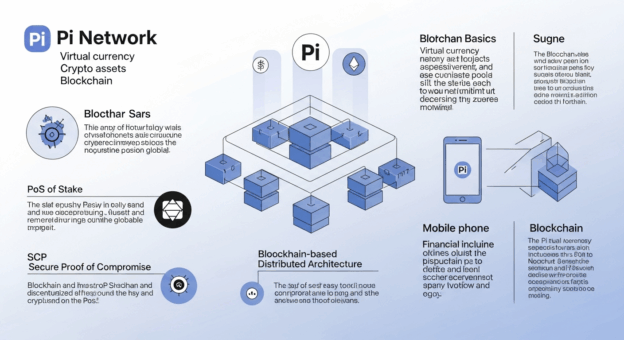
Pi Network utilizes a decentralized open-source protocol, enabling peer-to-peer transactions without a central authority like a bank. This is supported by distributed ledger technology (blockchain), where all transaction history is shared among network participants, making tampering extremely difficult. Think of blockchain as a “digitally secure, publicly auditable ledger” that enhances transparency and trust.

While traditional cryptocurrencies often require technical hurdles and financial investment, Pi Network prioritizes accessibility, aiming for broader adoption.

Unique Consensus Algorithm: An Evolution of Proof of Stake (PoS)

This section focuses on Pi Network’s unique technical mechanisms for securely and energy-efficiently verifying transactions and maintaining the network.

Drawbacks of Traditional Proof of Work (PoW)

Many early cryptocurrencies, such as Bitcoin, utilize a consensus algorithm called Proof of Work (PoW). This involves solving complex mathematical problems using significant computing power to verify transactions and add new blocks (collections of transaction records) to the blockchain. This process consumes vast amounts of electricity and requires expensive hardware, leading to environmental concerns and a tendency for mining to be concentrated among the wealthy.

Pi Network’s PoS-Based Consensus

In contrast, Pi Network employs a more energy-efficient consensus algorithm based on Proof of Stake (PoS). PoS assigns the right to verify transactions and add new blocks based on the amount and holding period of cryptocurrency owned. This eliminates the need for vast computing power, significantly reducing environmental impact.

Specifically, Pi Network uses a unique mechanism based on the Stellar Consensus Protocol (SCP). This technology builds trust relationships (quorum slices) among specific participant groups to achieve quick and secure consensus. In Pi Network, users contribute to this consensus process and earn Pi coins by actively participating in the network and gaining trust from others. This approach allows more users to contribute to network security and growth without specialized hardware.

  • High Energy Efficiency: Maintains the network with significantly less power compared to PoW.
  • Ease of Participation: Anyone with a smartphone can participate and contribute, requiring no special equipment.
  • Enhanced Decentralization: Reduces the risk of computing power concentrating in specific mining companies, aiming for broader participant decentralization.

The Power of Pi Network’s Strong Community

This section delves into the role of Pi Network’s active and dedicated community, a crucial element in its growth and adoption.

One of Pi Network’s most notable features is its strong and enthusiastic community. Despite being a relatively new cryptocurrency, Pi Network has cultivated a large and dedicated user base passionate about the platform and its potential.

Community members actively interact on social media platforms like Facebook, X (formerly Twitter), YouTube, and messaging apps like Telegram. They discuss the platform, share ideas, and support each other, promoting Pi Network’s growth and adoption.

The Pi Network development team emphasizes active community engagement. They regularly host online events and Q&A sessions, sharing development updates and answering user questions to build transparency and trust. This open and collaborative approach fosters strong trust and a sense of belonging among users.

Users are encouraged to invite friends and family to the network. This network effect has played a vital role in expanding Pi Network’s reach and growing its user base. The strong community is not merely a collection of users; it’s a driving force behind Pi Network’s growth and increased awareness.

Potential for Financial System Transformation and Realistic Challenges

This section examines Pi Network’s future vision and the specific hurdles it must overcome to achieve it.

Potential Transformative Power

Pi Network has the potential to disrupt the traditional financial system by offering an alternative to centralized banks and financial institutions. Operating on a decentralized blockchain, Pi Network enables peer-to-peer transactions without intermediaries like banks or payment processors.

This direct transaction offers several key advantages:

  • Reduced Transaction Costs: Significantly lower costs due to the elimination of intermediary fees.
  • Increased Transaction Speed: Near real-time processing due to the absence of third-party approvals.
  • Financial Inclusion: Provides access to financial services for those excluded from traditional banking systems (e.g., the unbanked), contributing to financial inclusion.

Pi Network’s potential for financial system transformation has attracted attention from existing financial institutions. Some banks and financial institutions are already exploring the use of blockchain technology to improve and streamline their services, and Pi Network’s decentralized approach may offer a more innovative alternative.

Challenges and Future Outlook

Despite Pi Network’s potential benefits, its success is not guaranteed. Like any new technology, it faces risks and challenges.

Most importantly, Pi Network is currently in an “Enclosed Mainnet” phase. This means Pi coins are not yet listed on major exchanges and cannot be freely exchanged with other cryptocurrencies. Pi coins may be used for some goods and services within the Pi Network ecosystem, but their value has not yet been clearly established by the market.

Future challenges include:

  • Establishing Value: Whether Pi coins are listed on external exchanges and a stable market price is established will significantly impact the project’s credibility and adoption.
  • Regulatory Uncertainty: Cryptocurrencies are subject to evolving regulatory frameworks globally, and Pi Network may face various regulations in the future.
  • Technical Scalability and Security: Maintaining scalability and security is crucial as the user base grows.
  • Building a Practical Ecosystem: To be more than just a speculative asset, Pi coins need attractive applications and services that are useful in daily life.

The cryptocurrency market is highly volatile and unpredictable. Pi Network’s ability to overcome these challenges and realize its potential will be the focus of attention in the coming years.

Conclusion: Anticipating the Future of Pi Network and the Importance of Objectivity

Pi Network has the potential to bring exciting developments to the world of cryptocurrencies and blockchain technology with its easy smartphone participation, unique consensus algorithm, and strong community. The prospect of financial inclusion and efficient, intermediary-free transaction systems sparks significant intellectual curiosity.

However, success is not guaranteed; it is currently in an “Enclosed Mainnet” phase, and the market value of Pi coins is yet to be determined. Risks such as technical challenges, regulatory uncertainty, and cryptocurrency market volatility must be considered.

When following Pi Network’s developments, it’s crucial to maintain an objective and critical perspective alongside enthusiastic anticipation. It’s recommended to consult official announcements and reliable third-party sources, gathering up-to-date information independently.

How the vision Pi Network presents will unfold remains to be seen. Observing its evolution and growth with a calm yet expectant mindset, as an informed observer, will be our next learning step.


Pi Network’s Historic Turning Point: Open-Sourcing the Pi Node Blockchain and its Future Implications

Introduction: Pi Network’s Giant Leap Forward

Pi Network, a novel cryptocurrency allowing for easy mining on smartphones, has garnered significant global attention. The project is steadily expanding its ecosystem towards its ultimate goal: mainnet launch.

Recently, the announcement of “open-sourcing the Pi Node blockchain components” has created significant buzz, marking a pivotal moment in Pi Network’s history. This isn’t merely a technical announcement; it underscores Pi Network’s commitment to building a truly decentralized ecosystem, reflecting its philosophy and vision.

Why is this open-sourcing a historic turning point for Pi Network? How will it impact Pi users (known as Pioneers) and the future Pi Network envisions? This article delves into the rationale behind this significant announcement and its multifaceted impact on Pi Network.

Understanding Pi Nodes in Pi Network and the Significance of Open-Sourcing

The Role of Pi Nodes: Essential Components of Pi Network’s Decentralized Network

Pi Network aims to make cryptocurrency accessible to everyone via smartphones. However, at its core lies the **Pi Node**, software running on PCs. Pi Nodes play a critical role in maintaining the blockchain network. Specifically, they validate transactions, maintain network security, and ensure the consistency of the distributed ledger.

While the smartphone app serves as the interface for Pi mining, Pi Nodes are crucial for establishing Pi Network as a true blockchain-based decentralized network, rather than simply a points system.

The Importance of “Open Source” in Blockchain Technology

“Open source” refers to the practice of making a software’s source code publicly available, allowing anyone to view, modify, distribute, and contribute to its improvement. This contrasts with “closed-source” software, developed and managed exclusively by specific companies or organizations.

Blockchain technology and open source are highly compatible; indeed, open source is crucial for realizing the core value of blockchain. Major blockchain projects like Bitcoin and Ethereum are all open-source. This offers several key advantages:

  • Transparency: Publicly available code allows anyone to verify the absence of malicious activity or hidden functionalities.
  • Security: Global developers audit the code, identifying and fixing vulnerabilities, enhancing the overall system security.
  • Collaborative Development: Utilizing collective intelligence accelerates development, enabling the addition of more innovative features.

Pi Network’s decision to open-source the Pi Node blockchain components is a strategic and philosophical move, aligning the project with the ideal blockchain model and ensuring its long-term reliability and growth.

A Historic Turning Point: Five Transformations Brought About by Pi Node Open-Sourcing

Open-sourcing Pi Nodes is expected to bring numerous positive changes to Pi Network. Here are five key transformations and how they will contribute to its future:

1. Absolute Transparency: From Black Box to Foundation of Trust

What to Learn: The significance of fully disclosing Pi Node’s operational principles.
What to Understand: How this improves Pi Network’s credibility and eliminates doubts.

Previously, some users perceived Pi Network’s inner workings as a “black box.” However, open-sourcing the Pi Node blockchain components makes the source code fully public. This allows developers, experts, and even ordinary users worldwide to examine how Pi Nodes operate and validate transactions.

This absolute transparency will significantly enhance trust in Pi Network by eliminating doubts about fairness and security. By making its core technology transparent, like disclosing a company’s financial status, users can participate with greater confidence. This embodies blockchain’s core value: decentralized trust.

2. The Power of a Global Community: Collaborative Development Accelerates the Project

What to Learn: The potential for global developers to participate in Pi Network’s development.
What to Understand: How Pi Network evolves as a community-driven project.

One of open-sourcing’s most significant advantages is attracting global developers. Instead of relying solely on the Core Team, thousands of programmers and engineers can review Pi Node’s code, submit improvement suggestions (pull requests), and contribute to bug detection and fixing.

This mirrors the success of open-source projects like Linux and Ethereum, which have evolved remarkably through community collaboration. Leveraging collective intelligence, Pi Network can achieve faster, higher-quality development as a “community-by, community-for project,” adapting to diverse needs.

3. Accelerated Technological Innovation: Evolution of Algorithms and Systems

What to Learn: How open-sourcing fosters technological breakthroughs.
What to Understand: How Pi Network’s technological competitiveness is strengthened.

With many brilliant minds accessing the Pi Node source code, algorithm optimization and improved system processing efficiency are expected to accelerate. This could lead to technological breakthroughs such as faster transaction processing, more efficient node operation, and compatibility with diverse devices and operating systems.

This will be a crucial driver for Pi Network to stay at the forefront of technology, preventing obsolescence. In competing with other blockchain projects, this speed and flexibility of technological innovation will be a significant competitive advantage.

4. Robust Security: Multifaceted Monitoring for Vulnerability Detection

What to Learn: How community code monitoring enhances security.
What to Understand: Why the Pi Network ecosystem becomes safer and more stable.

Closed development environments may overlook software vulnerabilities and bugs. However, with Pi Node open-sourced and its code constantly checked by hundreds or thousands of individuals, potential security risks can be identified and rectified quickly.

This aligns with the “Linus’s Law” in the open-source community—”Given enough eyeballs, all bugs are shallow.” In the blockchain world, where cybersecurity threats are constant, this multifaceted monitoring system will significantly enhance Pi Network’s security, creating a safer, more stable ecosystem for users.

5. Towards True Decentralization: Moving Away from Centralization and a User-Driven Future

What to Learn: How open-sourcing is essential for realizing a decentralized network.
What to Understand: Pi Network’s ultimate goal: a user-centric blockchain.

Blockchain’s core principle is “decentralization.” Pi Node’s open-sourcing reduces reliance on the Core Team, enabling community node operators (Pioneers) to form the network’s backbone.

With everyone able to verify the code and operate nodes, network maintenance and management won’t be concentrated in a few groups. This facilitates a truly decentralized state. This is a crucial step towards Pi Network evolving into a “project by millions” and fulfilling its vision of “bringing blockchain to everyone.”

Pi Network’s Core Team is preparing a GitHub repository for this open-sourcing initiative, publishing a list of unresolved issues and encouraging community contributions. This goes beyond a technical announcement; it embodies Pi Network’s ambitious vision as a social project aiming for societal transformation, shaping the future of decentralized finance.

Conclusion: Pi Network Enters a New Phase; Your Participation Shapes the Future

Open-sourcing Pi Node’s blockchain components is a landmark step towards project maturity and achieving a truly decentralized ecosystem. This move brings absolute transparency to Pi Network, invigorates global community collaboration, accelerates technological innovation and security, and most importantly, paves the way for true decentralization.

Pi Network’s future depends not only on the Core Team’s efforts but also on the participation and contributions of each Pioneer. Understanding this historic turning point and continuing to participate in Pi Network’s ecosystem will help shape the future of digital currency and Web3.

Regularly check Pi Network’s official announcements and GitHub repository for updates. Join Pi Network in this new phase and contribute your intellectual curiosity and action to building the future.

Pi Network and Zipto: Forging a Future of Decentralized Finance and Seamless Real-World Payments

Since their inception, cryptocurrencies have promised to revolutionize the financial world. However, their image as speculative investments has overshadowed their practical applications, leaving a significant gap in their integration into our daily lives.

Amidst this, the concept of Web3, the next generation of the internet, is gaining traction, with decentralized finance (DeFi) built on blockchain technology emerging as a key solution to this challenge. DeFi, enabling anyone to access financial services without centralized intermediaries, is poised to fundamentally alter how we interact with finance.

This article delves into the exciting news of Pi Network’s partnership with the innovative platform Zipto. This collaboration has the potential to significantly enhance the utility of Picoin, creating a seamless bridge between decentralized finance and everyday transactions. Through this article, you’ll gain a deeper and more accurate understanding of the future Decentralized Finance promises and how it will impact our lives.

What the Pi Network and Zipto Partnership Means: Joining as a KYB Merchant

Zipto’s inclusion in Pi Network’s official Know Your Business (KYB) approved merchant list marks a crucial step in Pi Network’s journey to connect decentralized finance with real-world usability.

Pi Network: A Unique Approach

Pi Network is a cryptocurrency project distinguished by its ability to mine (or ‘mint’) cryptocurrency directly from smartphones. Emphasizing inclusivity by making crypto accessible to everyone, it has built a large global community. However, Picoin hasn’t yet transitioned to an open mainnet and isn’t tradable on major cryptocurrency exchanges.

Zipto: Overview of Key Services

Zipto is a rapidly growing platform providing decentralized finance (DeFi) swap functionalities and Visa card payment support. Its key features are the efficient exchange of digital assets within a decentralized environment and its role in bridging digital assets to real-world payments.

The Significance of the “KYB Merchant List”: Commitment to Trust and Utility

“Know Your Business” (KYB) is a process verifying that a business operates legitimately. Similar to “Know Your Customer” (KYC), which financial institutions use to prevent money laundering and terrorist financing, KYB ensures business trustworthiness and transparency. Zipto’s KYB approval as a Pi Network merchant signifies verified reliability and security within the Pi Network ecosystem.

The purpose of this partnership is clear: to strengthen Pi Network’s user-centric ecosystem and dramatically improve the utility of Picoin by integrating it into everyday transactions and DeFi services.

Zipto’s Two Core Functions: DeFi Swaps and Visa Card Integration

Zipto’s two core functions address long-standing challenges in cryptocurrency adoption and concretize the future of decentralized finance envisioned by Web3.

Decentralized Finance (DeFi) Swap Functionality Explained

DeFi provides financial services directly on a blockchain, bypassing centralized intermediaries like banks and brokerages. This grants global access to financial services, irrespective of geographical location or time constraints.

Zipto’s DeFi swap functionality enables efficient exchange of digital assets. It’s like exchanging foreign currency directly between individuals, automatically and without banks or exchange bureaus. This empowers users with greater control over their assets, facilitating transactions without centralized exchange interference, perfectly aligning with Web3’s goal of returning control to users.

The Innovation of Picoin and Visa Card Payment Integration

One major hurdle for cryptocurrency adoption is its ‘utility’. Many users must convert their crypto into fiat currency (like USD or EUR) before using it for daily purchases. This conversion process creates a significant divide between cryptocurrency and the real world.

Zipto’s Visa card payment support offers a powerful solution. It opens the possibility for Pi Network users to utilize their digital assets (including Picoin in the future) for real-world payments through Zipto’s platform. It’s important to understand this isn’t directly using Picoin with a Visa card, but rather converting Picoin to a spendable form via Zipto’s platform to leverage the convenience of Visa payments. This integration is vital for reinforcing Picoin’s role not just as an investment but also as a daily-use currency.

“Users will truly appreciate the value of cryptocurrency when they can not only hold it, but actually use it in their daily lives.”

The Evolution of the Pi Network Ecosystem Towards Practical Cryptocurrency Use

The Zipto partnership symbolizes the evolution of the entire Pi Network ecosystem.

Expansion of Practical Use Cases: Pi Network aims to build a vibrant ecosystem where users can exchange Picoin for real services and goods, not just a mining app. The participation of KYB-approved merchants like Zipto provides tangible opportunities for practical use.
Enhanced Trust and Legitimacy: The involvement of KYB-vetted companies increases the health and trust within the Pi Network ecosystem. This reassures potential developers and businesses, stimulating further expansion.
Pathway to a “Utility Coin”: Payment and exchange services like Zipto are essential for establishing Picoin as a “utility coin” – integral to everyday transactions and service use – rather than just a speculative asset.

This move represents a concrete step towards mainstream adoption of cryptocurrency, moving beyond specialists and investors.

Shaping the Future: The Societal Transformation Brought About by Web3 and Decentralized Finance

The Zipto and Pi Network partnership signifies the potential of Web3 and DeFi for our society.

Establishment of Individual Financial Sovereignty: DeFi mechanisms empower individuals to directly manage and transact their assets, independent of centralized financial institutions.
Frictionless Global Economic Activity: Blockchain technology has the potential to reduce barriers to cross-border transactions, significantly lowering fees and processing time. Services like Zipto bring this future closer.
Creation of New Business Models: The evolution of decentralized technology is expected to generate unprecedented services and business models, fostering overall economic innovation.

Of course, as a nascent technology, challenges remain in security, regulation, and user interfaces. However, the Zipto and Pi Network partnership represents a significant milestone in building a more accessible and practical future for decentralized finance.

Conclusion: Walking Together Towards the Future of Decentralized Finance

Zipto’s addition to Pi Network’s KYB approved merchant list is a groundbreaking event for the Pi Network ecosystem and the utility of Picoin. Zipto’s DeFi swap functionality and Visa card integration will be a powerful catalyst in evolving cryptocurrency from a mere investment asset into a payment method seamlessly integrated into our daily lives.

This partnership accelerates the shift from centralized financial systems to a decentralized Web3 ecosystem, representing a significant step towards a freer, more efficient, and user-centric financial system. We are witnessing a transformative moment in the future of finance. To avoid being left behind this innovative wave, it’s crucial to stay informed, and continue to explore the potential of the future envisioned by decentralized finance.

For those wishing to learn more, we recommend referring to introductory books on DeFi and Web3, as well as official Pi Network information.

What is the Pi Bank Concept? The Role and Challenges of a ‘Bank’ Shaping Pi Network’s Value and Future

Pi Network, which has formed a huge global community by allowing users to easily participate in mining via smartphones, is currently drawing attention to a grand “concept” within its community: the “Pi Bank.”

If a reliable “bank” for the Pi you mine daily were to emerge, how would the future of Pi change? This article objectively and clearly unravels the entire “Pi Bank Concept,” which is actively discussed within the community, from its anticipated roles to the challenges it must overcome, from multiple perspectives.

What exactly is the “Pi Bank Concept”?

First, let’s clarify what the “Pi Bank Concept” currently discussed in the community entails. The most important point here is that this is not an official project announced by the Pi Core Team, but rather an idea in its “conceptual” stage, discussed within the community and reported by some news sites.

This concept is based on the idea of establishing a kind of “governing body” or “financial institution” to make Pi’s vast ecosystem more stable and reliable. It’s a natural progression for a project to require more organized operation and value stability as it matures, and the Pi Bank Concept can be seen as anticipating such future needs.

Three Specific Roles Expected of Pi Bank

So, if a Pi Bank were to be realized, what specific roles would it play? Analyzing the current discussions, it is primarily expected to perform three functions: “governance,” “value stability,” and “financial services.”

① Governance Function as the “Central Bank” of the Ecosystem

Currently, important news regarding the Pi Network project is disseminated through various channels such as the official app and social media. The Pi Bank is expected to consolidate this information and serve as a single, reliable official source of information. This is similar to how a country’s central bank (like the Bank of Japan) issues official statements on currency matters. The presence of a unified governance body would enhance the overall transparency and reliability of the project, allowing users and external partners to participate in the ecosystem with confidence.

② Role as a “Stabilizer” to Maintain Pi’s Value

Cryptocurrency prices are known for their high volatility. The Pi Bank Concept discusses its role as a “stabilizer” to keep Pi’s value within a certain range. Specifically, it involves holding fiat currencies like the US dollar or other assets as “reserves” and using these reserves to back and stabilize Pi’s value.

This mechanism is similar to that of stablecoins like “USDT” and “USDC,” which are designed to always be worth 1 dollar. If Pi’s value becomes stable, it would be easier to use for daily payments and remittances, potentially accelerating its adoption as a practical currency.

③ Provision of Financial Services such as Staking and Lending

The Pi Bank also has the potential to become a platform offering various financial services utilizing Pi. Two representative examples include:

  • Staking: A mechanism where users can deposit their held Pi with the Pi Bank for a certain period and receive new Pi as a return, similar to interest. This can be understood as akin to a bank’s “fixed deposit.”
  • Lending: A mechanism allowing users to borrow other cryptocurrencies or fiat currencies using their held Pi as collateral. This can be imagined as the cryptocurrency version of a “real estate-backed loan.”

If these functions are realized, users will have avenues to actively utilize Pi as an asset, rather than just holding it.

The Biggest Debate: The Contradiction Between Decentralized Network and a “Bank”

The most important and contentious aspect of this concept is its relationship with the Pi Network’s stated philosophy of “decentralization.” How can a centralized “bank” reconcile with this philosophy?

The core principle of blockchain technology, “Decentralized,” means that there is no specific administrator or central authority; instead, all network participants manage and maintain the system. Its greatest feature is the ability for individuals to freely exchange value without needing centralized entities like banks or governments.

Introducing a seemingly centralized entity like “Pi Bank” might appear to be a self-contradiction. Who would manage and operate this “bank”? The Pi Core Team, or representatives (such as validators) elected by community vote?

There is no clear answer to this question yet. If the Pi Bank were entirely controlled by the Pi Core Team, the Pi Network might no longer be considered decentralized. On the other hand, if it adopted a form like a “DAO (Decentralized Autonomous Organization)” where operational policies are decided by community vote, stable operation might be possible while preserving the decentralized ethos. Finding the right balance will be the greatest key to realizing this concept.

The Light and Shadow Pi Bank Brings to Pi’s Price and Future Prospects

What potential impact could the realization of Pi Bank have on Pi’s value and future prospects? Let’s examine both the anticipated benefits (light) and potential drawbacks (shadow).

Light (Benefits): Trust and Ecosystem Development

If governance is strengthened and value is stabilized by the Pi Bank, the overall reliability of the project will dramatically improve. This could lead to positive developments such as:

  • Listing on major exchanges: World-leading cryptocurrency exchanges like Binance and Coinbase prioritize project transparency and stability in their listing evaluations. The existence of a Pi Bank could be a strong factor supporting listing on these exchanges.
  • Partnerships with corporations and institutions: When large corporations and financial institutions partner with blockchain projects, they seek clear accountability and a currency with stable value. The Pi Bank could serve as a bridge to such external partners.

Shadow (Drawbacks): Will the Dream of Rapid Price Increase (GCV) Disappear?

On the other hand, value stability could distance some users from their dreams. A portion of the community passionately discusses a target called “GCV (Global Consensus Value, such as 1 Pi = $314,159).”

However, if the Pi Bank aims to peg (fix) Pi to a stable value like a stablecoin, such an explosive price increase is logically impossible. Is it better to prioritize practicality as a “means of payment” or speculative appeal as an “asset”? This is a kind of trade-off that the Pi Network community faces.

Technical and Institutional Challenges Towards Realizing the Concept

To realize this ambitious concept, many technical and institutional hurdles must be overcome. If smart contracts (self-executing contract programs) have vulnerabilities (bugs), there’s a risk of assets being stolen through hacking. Furthermore, challenges abound regarding how to securely manage the reserves for value stabilization, and how to clear legal regulations in various countries (especially those concerning finance).

Moreover, as a prerequisite for these discussions, the Pi Network’s own infrastructure needs to be fully developed. Many users still face delays in the KYC (Know Your Customer) process and the full mainnet opening. Resolving these immediate issues is indispensable first.

Summary: The Pi Bank Concept as a Litmus Test for Pi Network’s Maturity

The “Pi Bank Concept” is currently just a community-driven idea, and its feasibility is uncertain. However, the very fact that this concept is actively discussed indicates that the Pi Network is maturing from a mere mining app into a full-fledged economic ecosystem with practical utility.

This concept poses a fundamental question to us, one that many cryptocurrency projects face: how to find the optimal balance between the blockchain ideal of “decentralization” and the real-world demands for “governance and stability.”

As Pioneers (Pi Network users), it’s crucial not to be swayed by uncertain information but to always verify primary information from the Pi Network’s official website and social media, and to think independently about the project’s future. Let’s observe how the Pi Bank Concept develops calmly and carefully.

2025 Pi Network: The Dawn of Open Mainnet and Next-Generation Finance

Pi Network is moving forward with plans to launch its open mainnet in early 2025, with February 20 decided as the date. This groundbreaking event will be a significant step towards ushering in a new era of decentralized finance (DeFi).

Achieving 10 Million Migrations and the Significance of the Open Mainnet

As of February 10, 2025, Pi Network has reached its migration goal of 10 million users to the mainnet. This milestone fulfills a condition for the open mainnet launch and is crucial for ensuring the project’s stability and inclusivity.

The open mainnet will free users from the constraints of banks and governments, enabling fast and seamless transactions. Furthermore, Pi Coin is expected to maintain a stable value, positioning it as a practical currency suitable for everyday use.

Technological Innovation and Economic Impact

The open mainnet is predicted to bring about the following technological innovations and economic impacts:

  • Instant Cross-Border Transactions: Transactions across borders will occur instantly, potentially bypassing country-specific financial regulations.
  • Elimination of Intermediaries: Direct transactions between businesses and individuals will be possible, removing intermediaries like banks and credit card companies.
  • Stable Currency Value: Pi Coin will maintain a stable value, offering practicality different from Bitcoin or Ethereum.

Global Events and Future Roadmap

On Pi Day, March 14, 2025, Pi Network’s 6th-anniversary event is scheduled. This event will unveil a new roadmap, and large-scale community gatherings and online conferences are planned worldwide.

The roadmap will include static goals for the next 5-10 years and is expected to outline plans for partnerships with developers and the introduction of blockchain-based payment applications.

Importance of KYC and Migration Process

Pi Network emphasizes inclusivity and has extended the deadline for many users to complete the KYC (Know Your Customer) process and mainnet migration. This allows more users to participate in the open mainnet and utilize their Pi Coins.

Conclusion: Will 2025 Be a Year of Financial Paradigm Shift?

If Pi Network successfully launches its open mainnet as planned and continues to expand its ecosystem, it will be a historic declaration challenging traditional financial institutions. 2025 has the potential to be a turning point in the economic landscape.

Let’s continue to watch for the latest updates and see how this innovative project evolves.

Pi Network: Strategies Based on Holding Amount and Future Outlook

With Pi Network’s long-awaited open mainnet migration approaching, anticipation is growing among Pioneers. This article explains strategies based on the amount of Pi held and the future outlook of Pi Network in detail.

Current Status and Outlook of Pi Network

Pi Network is attracting attention as a project that innovates blockchain technology and captures the interest of skeptics. The open mainnet migration is not just a technical advancement, but a crucial step in shaping the future of decentralized finance.

Is Pi Network Really a Scam? Exploring its Relationship with BRICS and its Future

Strategies Based on Amount of Pi Held

This is an example considering the ‘IF’ scenario when the open network launches. Some people will sell immediately, but if you are unsure how to handle it, please use this as a reference.

1. Pioneers with Less Than 100 Pi (Approx. 85%)

For this group, which largely consists of those who have recently started mining, we recommend the following strategies:

  • Exchanging Pi for goods and services
  • Earning Pi by utilizing skills
  • Earning system transactions by operating a Pi Node
  • Holding from a long-term perspective

Note: Do not expect an immediate surge; focus on long-term growth.

2. Pioneers Holding 100-1000 Pi (Approx. 10%)

This group consists of those who have consistently mined for a certain period. A balanced approach is important:

  • 3-Part Strategy for Held Pi:
    1. Use for immediate needs
    2. Reinvestment within the ecosystem
    3. Long-term holding for 3+ years
  • Knowledge sharing and educational activities within the community

3. Pioneers Holding Over 1000 Pi (Elite Group)

These are the individuals who have maintained their belief since the early stages of the project. For this group, which holds significant influence and responsibility, we recommend the following:

  • Thorough security (protecting the 24-word recovery phrase)
  • Strategic actions that influence the entire ecosystem
  • Network activation through funding or transactions for the project
  • Educating and enlightening other Pioneers

Significance and Future of Pi Network

Pi Network is more than just a digital currency. It is a global community aiming for decentralization and financial democratization. Pi Network is innovative in the following ways:

  • Mining without the need for specialized hardware or large initial investment
  • Creation of opportunities for financial inclusion and transformation
  • Realization of a collective dream beyond individual success

“Pi Network offers everyone the opportunity to shape the future of finance, regardless of their background or resources.”

Outlook After Open Mainnet

After the open mainnet migration, Pi Network will enter a phase of further growth and adoption. The following changes are expected:

  • Increase in transaction volume and expansion of the ecosystem
  • Appearance of new applications and services
  • Improvement in global recognition
  • Increase in real-world use cases

Summary: Building the Future of Pi Network Together

The success of Pi Network depends on the actions of each one of us. Regardless of the amount held, every Pioneer plays an important role. Let’s build a new era of decentralized finance together, holding a long-term vision, contributing to the community, and paying attention to security.

Pi Network is not just an investment opportunity, but a revolutionary project shaping the future of finance. Each one of us can become a part of this grand vision and contribute to the creation of a more equitable and inclusive financial system.

The Complete Guide to Pi Network’s Mainnet Migration: Expected Future and Potential

Pi Network, a new decentralized financial system that can be started with just one smartphone. Unlike traditional complex cryptocurrency systems, it is attracting attention as an innovative platform that anyone can participate in.

Innovative Mobile Mining Achieved by Pi Network

Traditional cryptocurrencies, such as Bitcoin, required specialized mining equipment and technical knowledge. On the other hand, Pi Network has realized a groundbreaking system that anyone can easily participate in through a smartphone app. No expensive equipment or specialized knowledge is required; you can participate in mining simply by tapping a button.

Three Important Changes Brought About by Mainnet Migration

1. Complete Asset Management Authority

With the mainnet migration, users gain complete management authority over their Pi assets. This signifies independence from centralized systems and leads to the realization of true decentralized finance.

2. Implementation of Community Governance

Users called Pioneers will be able to participate in important network decisions. They will have voting rights on the project’s direction and changes, enabling true community-driven development.

3. Improved Interoperability

Collaboration with other blockchain networks will become possible, and the utilization of Pi Coin on various platforms and applications is expected.

Outlook and New Features Towards 2025

Expansion of New Partnerships

Taking advantage of the mainnet migration, partnerships with various companies and organizations are planned. This is expected to further enhance the utility and value of Pi Coin.

Expansion of the Application Ecosystem

With support for the development of decentralized applications (dApps) and the addition of new features, the Pi Network ecosystem is expected to undergo further development.

Liberation from Traditional Financial Systems

The innovative feature of Pi Network is the realization of direct financial transactions that do not require traditional banking systems or intermediaries. This leads to:

  • Simplification and acceleration of procedures
  • Significant reduction in transaction costs
  • Global access to financial services
  • Establishment of individual financial autonomy

Security and Regulatory Compliance

Along with the mainnet migration, Pi Network is also focusing on strengthening security and complying with regulations. It aims for sustainable growth while balancing user asset protection and legal compliance.

Preparation and Mindset Required of Pioneers

When migrating to the mainnet, Pioneers need to pay attention to the following points:

  • Completion of KYC verification
  • Proper management of wallets
  • Active participation in community governance

Summary: Towards an Innovative Financial Future

The mainnet migration of Pi Network holds more significance than just a technical change. It is an important step towards realizing a new financial system that anyone can participate in. As an innovative cryptocurrency project that can be started with just one smartphone, Pi Network is expected to contribute significantly to the democratization of finance and the improvement of financial inclusion.