Cryptocurrency」タグアーカイブ

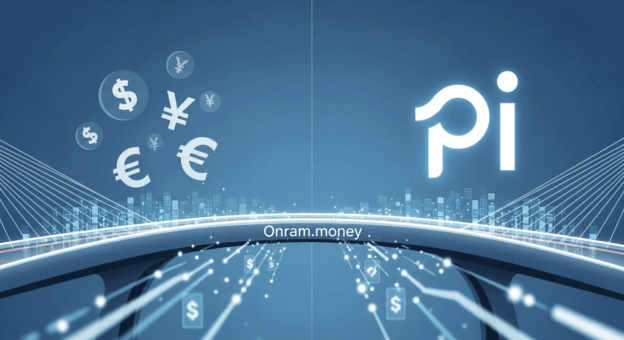
Onram.money Joins Pi Network KYB: What This Means for Easier Pi Coin Purchases and Key Considerations

Pi Network has grown into a project with tens of millions of users worldwide, striving to realize its grand vision of “cryptocurrency for everyone.” Indispensable to this vision is the KYB (Know Your Business/Customer) process, which ensures user trustworthiness and network health. Pi Network is currently in its “Enclosed Mainnet” phase, and its evolution is constantly watched.

Amidst this, there has been a recent development in Pi Network’s KYB section. Information has circulated within the community that new crypto on-ramp/off-ramp services, “Onram.money” and “Onramper,” have been added.

What impact will this development have on the future of Pi Network? And what possibilities will it open up regarding the “purchase” of Pi Coin, which many Pioneers have been interested in? This article objectively delves into the significance of Onram.money’s addition to the Pi Network ecosystem and important precautions Pioneers should be aware of.

Introduction: Pi Network’s Current State and the Importance of KYB

The grand vision of Pi Network is to create “cryptocurrency for everyone.” To achieve this, the KYB (Know Your Business/Customer) process, which ensures user trustworthiness and network health, is indispensable. This article focuses on a recent addition to the KYB section, Onram.money, and thoroughly explores its potential impact on the Pi Network ecosystem.

  • Pi Network’s Vision: It aims to build a fairer and more accessible cryptocurrency ecosystem, replacing centralized financial systems. Its ease of mining via smartphones has attracted many new users.
  • The Role of KYB (Know Your Business/Customer): This refers to identity verification for businesses and customers, essentially the same process traditional financial institutions use to prevent fraud and money laundering. In Pi Network, KYB plays a central role in ensuring ecosystem trustworthiness and security by verifying that real humans participate in the network and eliminating bots or fraudulent accounts. This maintains a healthy transaction environment and provides a foundation for a smooth transition to the future open mainnet.
  • Expectations for Mainnet Transition and Liquidity: Pi Network is currently in the “Enclosed Mainnet” phase, where the value of Pi is said to arise only from exchange for goods and services within the Pi ecosystem. During this phase, utility building within the ecosystem and community expansion are progressing. The addition of Onram.money/Onramper is noted as part of infrastructure development aimed at improving liquidity and preparing for a future open mainnet.

New Development in Pi Network’s KYB Section: The Emergence of Onram.money and Onramper

Pi Network’s KYB (Know Your Business/Customer) plays a central role in enhancing community safety and trustworthiness. Recently, two new services, Onram.money and Onramper, have been confirmed as added to this crucial section. Let’s explore what these services are and why they have been integrated into Pi Network now.

Previously, Pi Network’s KYB section displayed existing crypto asset services like Banxa and Simplex as partners, serving as gateways for users to access Pi with fiat currency. However, with this update, Onram.money and Onramper have been added as options.

These services are generally platforms that provide “on-ramp” functionality. An on-ramp refers to a service that acts as an “on-ramp to a highway,” allowing users to purchase crypto assets using fiat currency (e.g., Japanese Yen or US Dollars). Conversely, a service that exchanges crypto assets for fiat currency is called an “off-ramp.”

The intention behind Onram.money and Onramper appearing in Pi Network’s KYB section is believed to be part of infrastructure development, enabling Pi Network Pioneers (users) to access Pi Coin more easily and use it within the ecosystem in the future.

What is Onram.money? Its Functions and Impact on Pi Network Users

Onram.money, newly added to Pi Network’s KYB section, is a platform that provides crucial “on-ramp” functionality, connecting the world of crypto assets with the world of fiat currency. This section will delve into Onram.money’s specific functions, particularly its relevance to Pi Coin, and how it may impact Pi Network users.

Onram.money Overview and Key Functions

Onram.money is a platform that primarily offers “Buy and Sell and Swap Crypto” functionalities. It supports the trading of major cryptocurrencies such as Bitcoin (BTC), Ethereum (ETH), and USDT (Tether). A key feature is its ability to allow users to utilize various familiar payment methods.

Important Considerations Regarding Pi Coin “Purchase” Possibilities

Source information suggests the possibility of selecting “P” (presumably referring to Pi) on the Onram.money website and purchasing Pi Coin through local E-wallets (Shopee Pay, GoPay, Dana, etc.), QRIS, or bank transfers. This appears to be a groundbreaking solution, especially for Indonesian Pioneers, allowing access to Pi Coin without needing stablecoins like USDT.

However, here is the most critical point to note:

Pi Network is currently in the “Enclosed Mainnet” phase, and it is officially restricted from being listed on external exchanges or directly exchanged with fiat currency. The official value exchange of Pi is currently only possible through the exchange of goods and services within the Pi ecosystem.

Whether the “Pi” offered on Onram.money refers to Pi Network’s Mainnet Pi, Testnet Pi, or unofficial transactions anticipating the future Open Mainnet (e.g., something like an IOU or a service brokering P2P transactions) is uncertain information unless there is a clear statement from Pi Network official sources.

If Pi Network’s Mainnet Pi could be purchased with fiat currency on Onram.money, it could potentially contradict Pi Network’s current Mainnet policy, and the legality and safety of such transactions might not be guaranteed. Users are strongly advised to thoroughly review official Pi Network announcements and the terms and conditions of the platforms they use, acting at their own discretion and responsibility.

Supported Payment Methods and Fees

Onram.money supports a variety of payment methods. According to source information, the following methods are indicated, especially in Indonesia:

  • E-wallet: Dana, GoPay, Shopee Pay, etc.
  • QRIS: Indonesia’s unified QR code payment system, supporting multiple payment apps.
  • Bank Transfer

Fees for purchasing Pi Coin are also mentioned (e.g., for a 10,000 Rupiah purchase):

  • Gas fee: 300 Rupiah
  • Blockchain fee: 174 Rupiah (equivalent to 0.02 Pi)
  • Payment Gateway fee: 5,000 Rupiah

It’s important to note that these fees are Onram.money’s service fees and are not directly charged by Pi Network itself.

Global Expansion and Partnerships

Onram.money is stated to be available in over 60 countries and supports more than 400 tokens. It also emphasizes partnerships with major cryptocurrency exchanges, wallets, and projects, including:

  • Binance
  • MetaMask
  • Bybit
  • Coinbase
  • Circle
  • And others like BingX, Bookoin

These partnerships suggest that Onram.money is a platform with a certain level of trust and track record in the crypto industry.

Implications for the Pi Network Ecosystem and Future Outlook

Onram.money’s integration suggests Pi Network’s intention to improve user accessibility as it moves towards the Open Mainnet. We will consider what implications this development has for the entire Pi Network ecosystem and how it connects to future prospects.

Possibilities for Pi Network

  • Improved Accessibility: If Onram.money were to handle Pi Network’s Mainnet Pi safely and legally, many Pioneers might be able to easily purchase Pi Coin with fiat currency. Especially by supporting region-specific payment methods, Pi Network could potentially expand to layers that were previously difficult to access.
  • Promoting Ecosystem Participation: Easier Pi Coin purchases could vitalize participation in DApps (decentralized applications) within the Pi app and services within the Pi ecosystem, potentially increasing Pi Coin’s utility.
  • Infrastructure Development for Future Open Mainnet: A fiat gateway is essential when Pi Network transitions to an Open Mainnet. The integration of services like Onram.money can be seen as a preparatory stage for this.

Challenges to Overcome and Precautions

While expectations are high, there are also challenges to overcome and precautions to consider.

  • Securing Official Pi Coin Liquidity: As mentioned, Pi Network is still in the Enclosed Mainnet phase, and official exchange listings or direct fiat currency exchanges for Pi Coin are restricted. If “Pi Coin purchase” on Onram.money indeed refers to Mainnet Pi, it must align with Pi Network’s official movements. A clear announcement from the Pi Core Team is awaited on this matter.
  • Regulatory Compliance: Regulatory frameworks for crypto assets are evolving worldwide. If a service like Onram.money partners with Pi Network to enable fiat currency exchange, compliance with each country’s regulations is crucial.
  • User Understanding and Literacy Improvement: When new technologies and services are introduced, it is essential for users to correctly understand their mechanisms and risks. Especially in crypto asset transactions, it is necessary to always verify official information sources and make calm judgments to avoid being misled by scams or misinformation.

Integrating external services like Onram.money has the potential to accelerate Pi Network’s development towards realizing its vision. However, this process should proceed cautiously and transparently.

Summary: Pi Network’s Evolution and What You Need to Know

The addition of Onram.money to Pi Network’s KYB section holds the potential to signify a major step towards improved Pi Coin accessibility. Onram.money’s fiat on-ramp functionality and diverse payment methods have the potential to lower the barrier to entry for crypto assets, especially for users in emerging countries.

However, it is crucial to correctly understand the true significance of this development and maintain a calm perspective without excessive expectations. Specifically, it must not be forgotten that Pi Network is currently in the “Enclosed Mainnet” phase, and it is officially restricted from being listed on external exchanges or directly exchanged with fiat currency. Regarding how the suggested “Pi Coin purchase” on Onram.money aligns with the current rules of Pi Network, continued attention to official announcements from the Pi Core Team is necessary.

Pi Network continues to steadily build its ecosystem to realize its vision. Partnerships like Onram.money hold the potential to be a crucial part of this process, but understanding based on accurate information and cautious judgment at your own responsibility are always required.

While anticipating Pi Network’s further development, always check official information and strive for safe and knowledge-based actions.

Next Steps: Deep Dive into Pi Network Information

Staying updated on Pi Network’s latest developments and official announcements is essential for understanding its progress. Let’s delve deeper into knowledge and observe Pi Network’s evolution using the following methods:

  • Regularly check the Pi Network official website and in-app announcements: These are the most reliable sources of information. Important updates will be announced here.
  • Acquire basic knowledge of cryptocurrency and blockchain: To deeply understand Pi Network, fundamental knowledge such as crypto on-ramp/off-ramp, P2P transactions, and blockchain mechanisms will be helpful. Utilize reliable learning resources.
  • Caution: Always be vigilant against Pi Network-related scams and misinformation, and be careful not to easily share personal information or wallet passphrases.

We hope this information helps you understand the current state and future of Pi Network. The Pi Network journey has just begun. Let’s observe its evolution with a calm and informed perspective.
Pi Network’s Turbulent June 2025: The Truth About IOUs and Future Prospects

Pi Network, a cryptocurrency project capturing the attention of millions worldwide, has always oscillated between hope and uncertainty. June 2025, in particular, proved to be a tumultuous month for Pi Network. Significant price fluctuations and shifts in market sentiment sparked vigorous debate among many participants.

This article objectively and deeply explores what happened to Pi Network’s IOU price in June 2025, the underlying factors, the inherent challenges Pi Network faces, and its future possibilities. By gaining this information, you will be able to more accurately understand the current state of Pi Network and lay the groundwork for calmly assessing its future developments.

## Pi Network’s Turbulent June 2025: What Happened?

In June 2025, Pi Network’s IOU price underwent a significant correction. Its price plummeted by approximately 28%, temporarily falling from $39 to the $28 range. This sharp decline raised concerns among many investors and ignited intense discussions within the Pi Network community.

For the millions of ‘Pioneers’ who have spent time and effort mining Pi on their smartphones, this was not merely a temporary price drop. It was truly a ‘litmus test’ moment that challenged their belief in the project’s long-term potential. This price decline clearly demonstrated the speculative nature of the IOU market.

### Pi Coin IOU Price Plunge and Community Disquiet

This decline was not a sudden flash crash but a slow downward trend. As a result, investor confidence gradually eroded, sparking profound discussions within the community about Pi Network’s future and the true value of IOUs. This period of uncertainty underscored the critical importance of understanding the decisive difference between IOUs and actual Pi coins.

### Main Factors Behind the Price Drop: Pi Network’s Unique Circumstances

The primary reasons for Pi Network’s IOU price plummeting by 28% can be primarily attributed to the following two points:

1. **Profit-taking and Cooling Down of Overheated Expectations:** On-chain data (transaction history on the blockchain) indicated a surge in selling activity in the middle of the month, particularly from large holders securing their profits.
2. **Lack of Information from the Pi Core Team:** The absence of a specific open mainnet launch date or the announcement of a new roadmap further exacerbated the price decline. Automatic sell orders were triggered when the price fell below $35, accelerating the downturn.

On social media, negative sentiments like ‘Pi is a scam’ and ‘no mainnet’ became trending topics, turning perception into reality. With no positive developments, the IOU price continued to fall.

### Impact of the Overall Market Downturn on Pi Network

Pi Network’s 28% decline was not an isolated phenomenon. It was a symptom of a larger downward trend that swept across the entire cryptocurrency market. June 2025 was a challenging month for the market as a whole, characterized by significant losses, widespread fear, and general uncertainty pervading the digital asset space. The term ‘crypto bloodbath’ was frequently used to describe the market conditions.

1. **Bitcoin (BTC) Plunge:** Bitcoin, the bellwether of the cryptocurrency market, dropping over 15% sent shockwaves throughout the industry.
2. **Ripple Effect on Altcoins:** The decline in Bitcoin’s value had a cascading effect on most other cryptocurrencies like Ethereum (ETH), Solana (SOL), and Cardano (ADA), with these altcoins experiencing even steeper drops than Bitcoin.

When Bitcoin falters, highly speculative projects like Pi Network are hit the hardest. Furthermore, high interest rates and economic uncertainty created a ‘risk-off’ environment, prompting investors to review their portfolios and seek safer assets. Pi, being pre-launch and not yet fully established, was particularly vulnerable to these market dynamics. The combination of an overall market sell-off, negative macro trends, and a shift towards risk-off amplified Pi Network’s losses.

## The Misunderstood ‘IOU’: The Truth You Need to Know

The Pi currently being traded on some exchanges is not, in fact, the ‘real’ Pi coin. Understanding this crucial distinction is paramount for engaging in any trading activity. Even if these platforms appear to list Pi, what they are offering are essentially IOUs, not the actual cryptocurrency you have been mining.

### IOU is a ‘Promissory Note,’ Not Real Pi Coin

IOU stands for ‘I Owe You,’ signifying a type of ‘acknowledgment of debt’ or ‘promissory note.’ In the context of Pi Network, an IOU is merely a speculative placeholder representing a ‘promise for the future’ that Pi coins will be provided once the mainnet launches and actual Pi coins become transferable. Think of it like a ‘pre-sale ticket’ for an event that hasn’t happened yet. Its value is based almost entirely on speculation and expectation.

* The IOU price is driven almost entirely by the hype surrounding Pi Network, social media buzz, and general excitement.
* It does not necessarily reflect the fundamental value of the project or the potential of the Pi cryptocurrency itself.
* The IOU market is susceptible to manipulation and unpredictable price swings because it is influenced by rumors, speculation, and the actions of a relatively small number of traders.

This activity in the IOU market does not indicate actual network activity or the true utility of the Pi cryptocurrency. It is merely a reflection of speculative trading taking place on these isolated exchanges. The true value will be determined by network adoption and usage after the mainnet launch.

### Speculative Nature and Potential Risks of the IOU Market

The IOU market has low liquidity and can be easily manipulated. Low trading volume means there are few buyers and sellers. Even a relatively small transaction or a single large trade can dramatically swing the price, potentially leading to artificial ‘pump and dump’ schemes that are detrimental to inexperienced traders.

Even if there’s good news from the Pi Core Team – positive progress or significant milestones – the IOU price might not move at all if traders aren’t paying attention or if market sentiment is already biased in a certain direction. The IOU market functions independently of actual project development.

Volatility is a double-edged sword. While the IOU market offers the potential for quick gains due to its susceptibility to extreme price swings, it also carries the risk of sudden and significant losses. You could potentially lose most, if not all, of your investment in a very short period.

Many Pioneers tend to mistakenly judge the value of the Pi they’ve diligently mined through the Pi app by the IOU price, leading to unrealistic expectations. However, this can be misleading and lead to disappointment. The IOU price is not a reliable indicator of Pi’s future value.

The actual launch price of Pi, once the mainnet is live and Pi is truly tradable, could differ significantly from what the IOU market currently suggests. It could be substantially higher if demand and utility are strong, but it could also be much lower if there are massive sell-offs or a lack of real-world use cases. The IOU market can create unrealistic expectations, generate false valuations, lead to disappointment for many Pioneers, expose the community to unnecessary financial risks, and encourage speculative behavior. It is a financial and psychological minefield for those unaware of the risks involved.

Until the mainnet launches, the IOU price is merely a speculative guess, a ‘guesstimate’ based on limited information and a lot of hope. Let’s not confuse it with the real thing. Approach the IOU market with extreme caution, and remember that the true value of Pi will only become apparent after the mainnet launch.

## Pi Network’s Biggest Challenge: The Impact of Mainnet ‘Delays’

Pi Network’s biggest challenge is the ‘endless delay’ of its open mainnet. The specific launch date remains ‘coming soon,’ and the community’s patience is wearing thin.

### Concerns Over Mainnet Launch Progress

The Pi Core Team states that KYC (Know Your Customer) migration and a robust application ecosystem are necessary before the open mainnet, but progress is difficult to measure. Each delay prolongs investor anxiety and increases selling pressure.

The IOU price is like a ‘bet’ on the future of the mainnet. The longer the delay, the riskier that bet becomes. If user fatigue builds up, users might abandon the project, and the IOU price could undeniably crash. Until the open mainnet launches, Pi’s potential remains locked, and its credibility hangs in the balance.

### Impact of Delays on Credibility and Project Future

For a project’s credibility, transparency in development and adherence to its roadmap are essential. In Pi Network’s case, the lack of visible mainnet progress fuels community anxiety and may diminish mid- to long-term participation interest. This delay is not merely a technical issue; it could lead to fundamental doubts about the project’s future. Investors and developers are seeking concrete answers to when Pi will actually be usable and when its true value will be realized.

## Two Keys Shaping Pi Network’s Future

So, what holds the potential to turn Pi Network’s situation around? Two major keys exist that will shape its future.

### Massive Mainnet Migration Progress

The first key is the announcement of massive user migration to the mainnet. If the Core Team announces that millions of users have migrated to the mainnet, it would serve as proof that the project is making ‘real progress.’ This would counteract the negative perception of endless delays and significantly boost community trust. News of a large-scale migration would likely sweep social media, reverse sentiment, and spark an IOU price rally.

A large number of users participating on the mainnet means that a stronger, more active ecosystem will be built at launch. This is not mere hype but fundamental progress for the project. Progress in migration could be the catalyst Pi needs.

### Overall Cryptocurrency Market Recovery Trends

The second major catalyst is the recovery of the overall cryptocurrency market. If Bitcoin recovers and an ‘altcoin season’ (a period where altcoin prices surge after Bitcoin’s price stabilizes) arrives, highly speculative projects like Pi Network could see significant gains.

Pay attention to the ‘Bitcoin Dominance’ chart. A decline in this figure suggests that funds are flowing into altcoins. In July 2025, we might see investors rotating funds back into riskier assets, which could fuel a Pi price rally.

Pi’s fate hinges on both its internal progress and external market trends. If these two factors align, Pi’s price could explode. Market euphoria alone could push Pi even higher. July 2025 holds the potential to be a ‘perfect storm’ for Pi Network’s resurgence.

## Pi Network’s Position from Comparison with Other Projects

To understand Pi Network’s characteristics more deeply, let’s compare it with other cryptocurrency projects. For example, Shiba Inu (SHIB), which also declined in June 2025, is at least an operational and tradable asset with an active ecosystem. Similarly, Cardano (ADA), sometimes criticized for slow progress, is at least a functional blockchain.

However, Pi Network’s value rests entirely on its future potential, not its current utility. Pi’s greatest strength is arguably its user base of over 55 million, which will be immediately available upon launch. This is a scale most projects can only dream of. But all of its potential remains sealed until the mainnet launches.

Pi’s price fluctuates based on speculation, not fundamental utility. Its recovery depends on ultimately launching the open mainnet, not on developing superior technology compared to other projects. The June 2025 decline was due to the overall market downturn and the limits of community patience, not simply competition with other projects. Pi’s future hinges on whether it can finally launch its mainnet.

## Conclusion: A Calm Perspective on Pi Network’s Future and Next Steps

June 2025 was a tough month for Pi Network. The IOU price dropped by 28%, and community trust was shaken. Real risks, such as the endless mainnet delays and the speculative nature of the IOU market, exist and hold the potential for further pain.

However, July 2025 offers a glimmer of hope. Two significant ‘catalysts’ – a massive mainnet migration announcement and the recovery of the overall cryptocurrency market – could potentially transform Pi Network’s situation. If internal progress aligns with external momentum, it could reverse the negative trend, erase the losses of June 2025, and potentially climb to new heights.

The Pi Network project is still in its early stages, and its true value will only become apparent with the mainnet launch and the development of its ecosystem. It is paramount to understand that the current IOU price merely reflects market expectations and speculation, and to maintain a calm, objective perspective. For those interested in Pi Network’s future trends, it is advisable to carefully follow official project announcements and reliable information sources, without being swayed by emotions. Always conduct your own thorough research and consideration before deciding on your next learning steps or actions.

What is Dr. Nicolas Kokkalis’s “Silent Strategy,” Pi Network’s Founder? Building New Value That Questions the Cryptocurrency World

The modern cryptocurrency market is awash with flashy social media promotions and discussions driven by short-term price fluctuations. Many projects compete to grab attention through frequent updates from founders and large-scale marketing campaigns. However, there’s an exceptional project that quietly and steadily continues to expand its user base.

That project is “Pi Network.” And its founder, Dr. Nicolas Kokkalis, distinguishes himself from many other prominent figures in the crypto world by rarely appearing in public and making extremely infrequent posts on social media. Why has he chosen silence? Is it merely indifference?

This article delves into how Dr. Kokkalis’s “silent strategy” is not mere indifference but a cleverly designed approach for Pi Network’s long-term success and fundamental value creation. We will objectively explain Pi Network’s vision, which pursues true utility beyond hype, and how it could influence the future of cryptocurrency.

1. **Overturning Modern Crypto Market Norms with “Silence”**

In the world of cryptocurrency, it has become almost standard for project founders to actively post on social media and interact with their communities. However, Dr. Nicolas Kokkalis, the founder of Pi Network, has defied this norm, making almost no posts on Twitter (now X) and maintaining silence for many years. This silence has been a mystery to many.

1.1. **Dr. Kokkalis’s Social Media Silence and Pi Network’s Unusual Growth**

While many cryptocurrency projects chase social media “buzz,” Dr. Kokkalis has conducted very little overt promotional activity. Despite this, Pi Network has grown its user base at an astonishing pace, now forming a massive community with over 60 million participants (Pioneers) worldwide.

This suggests that Pi Network is taking a fundamentally different approach compared to other projects that attempt to manipulate token prices with a single social media post. The fact that it has grown to such a scale without relying on social media hype speaks volumes about Pi Network’s uniqueness and the cleverness of the strategy behind it.

1.2. **Appearance at Consensus 2025 and Market Reaction**

In one of his first public appearances in years, Dr. Kokkalis was seen at “Consensus 2025,” a major cryptocurrency conference held in Toronto. Interestingly, after his presentation, the price of Pi temporarily dropped.

Typically, a significant announcement from a founder is expected to boost market prices, but this reaction symbolizes that Pi Network is not focused on short-term price fluctuations or speculative movements. Rather, it highlights the project’s commitment to steady foundational building and establishing utility, prioritizing long-term value over immediate prices.

2. **Quiet Practice: Pi’s Strategy of Pursuing Substance, Not Hype**

Pi Network’s growth is supported not by superficial buzz, but by the “quiet practice” at its core. This is a unique strategic choice that sets it apart from many other projects.

2.1. **Steady Transition to “Full Decentralization”**

In his Consensus 2025 presentation, Dr. Kokkalis mentioned that Pi Network has already transitioned to “full decentralization,” separating from centralized servers, with everything processed by community-operated “nodes.” This is a crucial development: not just a concept, but a system actually operating in this manner.

While many projects loudly announce innovative updates on social media, Pi Network has quietly but steadily implemented them. This approach of “silent execution” rather than “vocal promises” is what enhances Pi Network’s trustworthiness and substance.

2.2. **Similarity to Early Bitcoin: The Power of Silence**

Pi Network’s approach is reminiscent of early Bitcoin. “Satoshi Nakamoto,” the alleged creator of Bitcoin, also did not use social media platforms like Twitter, instead communicating directly with the community on the forum he launched, “Bitcoin Talk.”

Dr. Kokkalis also prioritizes direct communication with “Pioneers” (users) through Pi Network’s in-app chat system. This is a strategy to convey necessary information directly and accurately, without getting caught up in the clamor of social media.

Just as Bitcoin was quietly launched, spread by word-of-mouth, and exploded in popularity once its true value was understood, Pi Network also holds the potential to follow a similar path. However, while Bitcoin was at this stage with a few thousand participants, Pi Network has already had over 60 million people participating in building and testing for several years, indicating a vastly larger scale of preparation.

3. **Pi Network’s Unique Communication Strategy: Control and Community**

Pi Network’s “silent strategy” means more than just distancing itself from social media. It is a calculated strategy to control the flow of information and foster a genuine community.

3.1. **Information Dissemination via Proprietary In-App Ecosystem**

While other cryptocurrency projects heavily rely on external platforms they cannot control, such as Twitter, YouTube, and Discord, Pi Network has built its own communication system. All updates, announcements, and important news are delivered directly to active users through the Pi app.

The advantages of this approach are immeasurable. There is no risk of information being filtered by algorithms or subjected to shadow banning by platforms. Pi Network can completely control its own “story” and disseminate information without external interference. This is a truly groundbreaking mechanism, especially as many projects struggle with their relationships with social media platforms.

3.2. **Attracting “True Users” Instead of Speculators for Community Building**

By intentionally avoiding the social media hype game, Pi Network has attracted not short-term profit-seeking speculators, but individuals who genuinely use the platform and contribute to building its ecosystem. This has fostered a healthy and active community, fundamentally different from many other projects.

Even after Pi’s price temporarily dropped after Consensus 2025, serious discussions about Pi’s technology and its potential continued actively within the community. Such “intrinsic interest” forms the foundation for building sustainable, long-term value, rather than temporary pump-and-dump cycles.

Within the Pi community, there’s a joke that “Pi will hit $5 if Dr. Nicolas just posts on Twitter,” which reflects the long-standing anticipation within the Pi community. When Pi is listed on major exchanges, this anticipation may not be a fleeting one, but rather one underpinned by real utility and a strong community, potentially leading to long-term impact.

4. **Pi Network’s Current Status and Long-Term Outlook**

Under its “silent strategy,” Pi Network is steadily solidifying its foundation and preparing for the future.

4.1. **Current Status of Pi Network’s Aim for an “Open Network”**

While a previous source mentioned the open network launching in February 2025, current information (as of May 2024) indicates that Pi Network is still in its “Closed Mainnet” phase, awaiting the fulfillment of specific conditions (e.g., reaching KYC completion user targets, building ecosystem utility) before transitioning to the Open Mainnet.

However, this does not mean the project is stagnant. Even during the Closed Mainnet phase, users can test Pi and execute transactions within the ecosystem. This preparation period is a crucial step for the project to be fully stable and have a rich array of practical applications before being released to a larger market.

Unlike Bitcoin, which grew with a small number of participants in its early stages, Pi Network already has over 60 million Pioneers who have been participating in the project’s building and testing for years. This vast user base and well-prepared infrastructure hold the potential to create an immeasurable impact once the transition to the Open Network is realized.

4.2. **What “Silence” Reveals About Pi Network’s Future**

Pi Network’s approach is independent and distinct from traditional cryptocurrency marketing methods. This suggests that when Pi reaches mainstream recognition, it could emerge not as a mere empty hype project, but as a “functioning ecosystem” with millions of real users, concrete applications, and proven utility.

If Dr. Kokkalis begins posting regularly on social media in the future, it is hypothesized that it would not be to generate hype, but to announce that Pi Network is ready to advance to its next major phase. At that time, many people will be surprised by what has been quietly built right before their eyes.

**Conclusion: A Quiet Revolution Shows a New Form of Cryptocurrency**

Pi Network founder Dr. Nicolas Kokkalis’s “silent strategy” is more than just avoiding the limelight. It is a clear statement of intent to pursue sustainable value rooted in true innovation, utility, and strong community building, in a cryptocurrency world often dominated by short-term speculation and social media hype.

While many projects rely on social media “noise” to attract immediate attention, Pi Network has taken the opposite path, focusing on building a functional, community-driven ecosystem. Millions of active users are already building, testing, and transacting within the ecosystem, steadily forming its foundation. This grassroots movement does not require constant attention from influencers or flashy announcements.

Pi Network aims for “long-term value” rather than “overnight riches,” prioritizing utility and adoption. This approach mirrors Bitcoin’s path to success in its early days, which relied not on marketing or mainstream media, but was driven by a dedicated group who believed in the technology and its potential. However, Pi has achieved a broad user base from the outset by offering a mobile-first design and a more accessible entry point.

In today’s cryptocurrency world, where speculation often obscures substance, Pi Network stands out by focusing on utility and widespread adoption. The project is being built for long-term operation, not for short-term price surges. Regardless of whether specific voices are active online, the network continues to evolve, and that is what will determine Pi’s future success.

By checking Pi Network’s official website and related information, gaining a deeper understanding of its full scope, and observing how this “quiet revolution” will bring new norms to the future of cryptocurrency, will be highly significant for us. The future may be taking shape more quietly, yet more certainly, than we imagine.

Pi2DAY: Pi Network Launches AI Strategy – What Future Do ‘Pi App Studio’ and New Initiatives Aim For?

Pi Network, which has built a globally immense community through participatory smartphone mining, has announced its full-scale entry into the field of AI (Artificial Intelligence) as its next move. This announcement, made in conjunction with “Pi2Day” in 2025, is not just about adding new features; it is a highly strategic step that concretely illustrates the future vision of the ecosystem the project aims to achieve.

They propose a grand vision: to provide unique solutions to societal challenges brought about by AI, utilizing blockchain technology. This article objectively and systematically explains the full scope of the newly announced core features, “Pi App Studio” and “Ecosystem Directory Staking,” as well as crucial surrounding technological updates.

Summary source: Official Blog
https://minepi.com/blog/pi2day2025/

Pi Network’s Proposed “Challenges in the AI Era” and “Role of Blockchain”

Why is Pi Network focusing on AI now? This move is rooted in their perception of fundamental challenges that modern society is increasingly facing due to the rapid evolution of AI technology.

Three Challenges Brought by AI

Pi Network points out the following three major challenges that need to be addressed as AI permeates society:

  1. Immaturity of the AI application layer: A significant gap still exists between advanced AI foundational technologies and concrete applications that utilize them in real-world society.
  2. Role of human labor and intellect: Uncertainty about what role human labor and intellect will play in a world where AI replaces much of productive activity.
  3. Unequal distribution of wealth: The concern that the immense productivity gains AI will generate may concentrate among a few corporations or individuals, widening disparities.

Pi Network’s Solution: “Value Distribution” via Blockchain

To address these challenges, Pi Network proposes the fusion of AI and blockchain technology as a solution. What’s interesting here is the uniqueness of their approach.

While many “decentralized AI” projects focus on decentralizing AI training data or computational processes themselves using blockchain, Pi Network presents a more macro perspective. It is the idea of leveraging blockchain as a scalable foundation for fairly and inclusively “distributing and redistributing” the “products and value” generated by AI to society as a whole.

Instead of a few monopolizing the wealth generated by AI, Pi Network’s core vision is to fairly return this wealth to “real humans” who are participants in the ecosystem, through blockchain.

Realizing this vision requires a vast number of real humans verified through Know Your Customer (KYC) processes and a vibrant social network in which they participate, a foundation that Pi Network claims to already possess.

What is the Core Feature “Pi App Studio”? The Dawn of an Era Where Anyone Can Be an App Developer

The core engine for realizing this grand vision is the newly announced “Pi App Studio.” This is an innovative platform with the potential to fundamentally transform the way applications are developed.

No-Code App Development Platform Utilizing Generative AI

Pi App Studio’s greatest feature is that it does not require specialized programming knowledge. Users simply input their app ideas and requirements in natural language (everyday words), as if conversing with a human. Generative AI then interprets these instructions and automatically builds the application.

Pi Network highlights “guided workflows” and “access to a massive user base” as differentiators from other AI tools. Beyond simply providing tools, they guide individuals without product development expertise to bring their ideas to fruition and provide an environment where immediate feedback can be obtained from a community of tens of millions, thereby supporting practical product development.

Two Development Options: Specialized Chatbots and Free App Creation

Pi App Studio, as released, primarily offers two development options:

Screenshot of Pi App Studio

  1. Creation of topic-specific chatbots: This workflow allows developers to train AI with their own expertise and knowledge to create custom chatbots that can provide high-quality responses on specific topics. Beyond mere Q&A, it is expected to be applied to various application formats such as step-by-step wizards, interactive quizzes, and recommendation engines.
  2. Open App Development Platform (Beta): This platform allows for more free-form creation of any application one envisions, without coding. While still in beta, it suggests that various types of apps will be possible in the future.

Apps created can also aim for monetization by integrating with the Pi Ad Network and .pi Domains.

Mechanism of Another New Feature: “Ecosystem Directory Staking”

Even if many excellent apps are created, they are meaningless if users cannot discover them. To solve this problem, a new feature called “Ecosystem Directory Staking” has been introduced.

This mechanism allows users to support specific apps they wish to back by staking their Pi for a certain period. The more Pi staked, the more prominently the app will be displayed in the ecosystem’s directory (listing page). This mechanism can be described as a decentralized ranking system that aims for truly valuable apps to be evaluated by the collective intelligence of the entire community, rather than by the amount of advertising spend.

Important Technical Updates Supporting the Ecosystem

In addition to these two main features, this announcement also includes several important technical updates aimed at strengthening the overall ecosystem’s foundation.

Improved Accessibility: Onramper Integration

Onramper, a third-party aggregation tool for KYB (Know Your Business)-certified on-ramp services, will be integrated into Pi Wallet. This will provide users with more options to participate in the Pi ecosystem from fiat currency, in compliance with regional regulations, thereby improving accessibility.

Enhanced Node Functionality and Visibility (v0.5.2)

Several important updates were also implemented for the Node software, which underpins the Pi network, as version 0.5.2.

Screenshot of Pi Desktop and Node Ranking

  • Renaming and Feature Expansion: The traditional dedicated Node application has been renamed to “Pi Desktop.” This clarifies its position as a more general-purpose desktop application, which will integrate functions not related to Node operation in the future, such as utilizing Pi App Studio on a larger PC screen. Usability has also been improved, including the ability to resize windows.


  • Node Ranking Page Publication: The top 5,000 highest-performing Pi Nodes are now publicly ranked on Pi Blockexplorer. The ranking is updated every 24 hours and evaluated based on the following key metrics:
    • Reliability
    • Availability
    • Port Openness
    • Total Active Days
    • CPU Performance

    This makes high-performing nodes that stably contribute to the network visible, and users can check their node’s position on the ranking using their public key.

Accelerated KYC and Mainnet Migration

Improvements have also been made to the KYC (Know Your Customer) process and Mainnet migration. Specifically, updates resolving issues for users facing unique challenges in certain regions have allowed over 500,000 additional Pioneers to unlock their migration blocks, enabling them to join the Mainnet.

Developer Support: .pi Domain Auction Extension

With the release of Pi App Studio, many developers will need to secure unique and memorable Web3 identifiers for their apps. In response, the .pi domain auction deadline has been extended to September 30, 2025.

Bonus: Limited-Time Interactive Challenge Also Held

To celebrate the release of these new features, Pi Network is hosting the “Pi2Day Ecosystem Challenge.” Through this interactive challenge, users can experience various features of the ecosystem, including the newly announced functions, and receive digital memorabilia.

Summary: Can Pi Network Create New Value at the Intersection of AI and Blockchain?

Pi Network has now officially launched its AI strategy, announcing “Pi App Studio,” which enables anyone to become an app developer, and “Ecosystem Directory Staking,” a community-driven evaluation system, as its core components.

Underlying this is an ambitious vision: not a future where wealth generated by AI is monopolized by a few large capitals, but one where blockchain technology is used to widely and fairly distribute that value to society. Numerous surrounding technical updates, such as enhanced node functionality and improved KYC processes, indicate that this vision is not mere fantasy but is based on concrete implementation plans.

Of course, the success of this grand scheme remains to be seen. Its success will depend on how many appealing and practical applications emerge from Pi App Studio and are embraced by users worldwide. There is no doubt that this announcement marks an important step in building a strong foundation for that challenge.

Renewed Attention on Pi Network’s Progress Amidst Its Massive User Base

As the cryptocurrency market enters a new phase, Pi Network, with its massive user base, is once again drawing attention. However, many may still find its true status unclear, a mix of optimistic voices and skeptical views. Now, stepping back from the market’s hype, is the project truly moving forward?

This article objectively analyzes Pi Network’s specific initiatives for ecosystem building, based on network data observed over a specific period and official announcements. We will explore the project’s current status and future potential, not just from a speculative angle, but from the perspective of “utility.”

**Important:** Pi Network’s Current Status: Understanding the “Enclosed Mainnet” Before “Open”

Crucial to understanding Pi Network’s current situation is that the network is presently in the “Enclosed Mainnet” phase. We will first explain what this means and why this phase is necessary.

The Enclosed Mainnet refers to a state where Pi’s blockchain itself is operational, but it is intentionally not connected to external exchanges or other blockchains. It functions as a preparatory period before the official open launch. The main objectives of this phase are summarized in these three points:

* **Large-scale Know Your Customer (KYC) implementation:** To maintain the network’s legitimacy and enforce the one-account-per-person principle.
* **Ecosystem fostering:** Providing a secure environment for developers to build and test applications on Pi.
* **Utility testing:** Verifying whether Pi can function as a currency in an environment isolated from external market noise.

Therefore, it is crucial to understand that the data and activities presented in this article represent progress within this “closed network,” and are significant steps towards the future “Open Mainnet” (a state where external connections are possible).

Network Growth Through Data: Key Indicators from a Specific Period

Network activity data is crucial as an objective indicator of project health. Here, we will examine user numbers and asset movements during a specific disclosed period (reported as the first 100 days after the mainnet transition).

The growth during this period suggests that the project is maintaining community interest and continues to expand.

| Metric | Value | Significance |
|—|—|—|
| New Mainnet Participants | Over 3 million | Increase in active users who completed KYC and migrated to the Mainnet. |
| Total Mainnet Users | Over 13 million | Indicates a steady expansion of the network’s scale. |
| Total Pi Migrated to Mainnet | Over 7.4 billion Pi | Users’ mined assets are actually recorded on the blockchain. |
| Amount of Pi Locked Up | 5.2 billion Pi | A large portion of the total migrated amount is locked up, suggesting many users are involved with a long-term perspective on the project. |

Catalyst for Ecosystem Expansion: Establishment of “Pi Network Ventures”

To enhance the network’s value from within, a large-scale investment arm has been established. We will explain the purpose of “Pi Network Ventures” and the future it envisions.

Pi Network Ventures is a $100 million venture fund (denominated in Pi and USD) established by the Pi Foundation. Its primary objective is to strategically invest in startups and projects that enhance Pi’s utility and promote its real-world adoption. This demonstrates a strong commitment to not just distributing coins, but also fostering their practical use within the ecosystem itself.

As the initial area of focus, “gaming” is highlighted due to its immense market size and strong affinity with digital payments. The aim is believed to be expanding Pi’s economic sphere through experiments with in-game payments and advertising revenue models.

A Touchstone for Utility: “Pifest” Demonstrates Pi Payment Potential

For cryptocurrencies to be more than just digital data, it is essential for them to be “usable” in the real world. “Pifest,” a large-scale commercial event held in 2024, served as a crucial test case to explore this potential.

Remarkably, over 125,000 sellers from around the world registered to participate in this event, with approximately 58,000 stores and individuals actually accepting Pi as payment for goods and services. The community-developed store locator app, “Map of Pi,” attracted over 1.8 million users during this period, and active transactions were reported.

This initiative provided valuable empirical data on whether Pi could function as a daily payment method within a specific community. It demonstrates the project’s commitment to proving its value not just theoretically, but through practical application.

Will it Become the Foundation of Digital Identity? The Evolution of “Pi Domains”

In the world of Web3, the value of human-readable names (digital identities) that replace long, complex wallet addresses is growing. Pi Network’s answer to this is “.pi domains.”

During the domain auction launched concurrently with Pifest, over 57,000 users participated, and a total of over 123,000 bids were placed. These domains are more than just aesthetically pleasing names. They are expected to function as unified digital IDs usable across various apps and services within the Pi ecosystem in the future. This is a crucial step towards dramatically improving user experience and deepening the overall ecosystem’s integration.

Strengthening Technical Infrastructure to Support Mass Adoption

A robust technical foundation is indispensable for an ecosystem that millions of users can comfortably and securely utilize. Here, we will overview key improvements being made behind the scenes.

* **Improved Developer Experience:** Enhancements to the developer portal for quicker app publishing and support for monetization through the Pi Ads Network are underway. This is a crucial measure to attract diverse applications to the ecosystem.
* **Enhanced Security and Convenience:** To protect user assets, two-factor authentication has been introduced for wallet migration, and account recovery features have been strengthened. Furthermore, the KYC process continues to be improved, including support for external identity verification services like “Yoti,” to allow users in more regions to complete verification smoothly.

Conclusion: What the Data Reveals About Pi Network’s Current Position and Future Outlook

Integrating the individual data points we’ve examined so far, what overall picture of Pi Network emerges? Let’s consider the project’s next phase.

The data analyzed suggests that Pi Network is not swayed by short-term market price fluctuations, but is steadily progressing towards its long-term vision of building a practical digital economy. The multifaceted approach – consistent user growth, funding and tools for developer support, real-world payment testing, and strengthening the underlying infrastructure – can be interpreted as calculated groundwork for the future Open Mainnet transition.

Of course, the project’s success is not guaranteed. However, these facts indicate that Pi Network is at least attempting to evolve from being “just a coin you can mine on your phone” into a platform with its own economic sphere. The future value of the project will depend on how many attractive and practical applications and services emerge and integrate into society upon this foundation.

Summary and Next Steps

Finally, let’s summarize the key points of this article.

* Pi Network is currently in the “Enclosed Mainnet” phase, disconnected from external networks, and focused on ecosystem building.
* Data on user numbers, asset migration, and commercial events indicate that the network is growing quietly but steadily.
* The $100 million venture fund and enhanced developer support are tangible investments aimed at increasing Pi’s utility.
* The project’s evaluation criteria are shifting from speculative expectations to “utility.”

We hope this article serves as a helpful guide to objectively understanding Pi Network’s current status. For a deeper understanding, we strongly recommend reviewing the roadmap and whitepaper published on the official website to verify the project’s overall vision for yourself.

Why Isn’t Pi Coin Rising? 5 Challenges Facing Pi Network Amidst Bitcoin’s Surge

In 2025, the cryptocurrency market is regaining vitality, with Bitcoin showing robust movement, buoyed by factors such as the proliferation of spot ETFs. However, has this wave reached the Pi Network, which boasts one of the world’s largest communities? This article delves into five structural challenges faced by Pi Network, which answer the common question, “Why isn’t Pi’s price increasing?” We will explore these challenges with objective data.

### Challenge 1: The “IOU Price” Dilemma – Disconnected from the Market

Many users are most concerned about the “price” of Pi, but the figures currently displayed on some exchanges do not reflect the actual value of Pi Coin. These are “IOUs (I Owe You),” which are essentially promissory notes, where the “right to exchange for real Pi coins in the future” is traded speculatively. While this IOU price can indicate market expectations, it is decoupled from the project’s intrinsic value. Therefore, it does not directly correlate with the price increases of other cryptocurrencies like Bitcoin. Unawareness of this fact can lead users to feel left out of the broader market movement.

### Challenge 2: The Barrier of a “Closed Mainnet” – Isolated from the Outside

The primary reason Pi Network has not been listed on exchanges is its current “Closed Mainnet” phase. This means the network is confined within the Pi ecosystem, preventing free movement of coins to and from external blockchains or exchanges. Major exchanges like Binance do not list projects that cannot ensure asset security or liquidity. Until this “wall” is overcome and Pi transitions to an “Open Mainnet” accessible to everyone, it cannot acquire significant market value.

### Challenge 3: “Immature Ecosystem” – Lack of Proven Utility

The true value of a cryptocurrency is determined not by speculative price but by its utility – “what it can be used for.” Pi Network aims to expand its ecosystem of usable applications (dApps) and has set a goal of deploying 100 dApps. However, as of 2025, no killer app has emerged that strongly attracts many users, and the specific use cases for Pi Coin remain limited. The lack of clear answers to questions like “What can I buy with Pi?” or “What useful services can I access?” is a major factor in the project’s stagnating value.

### Challenge 4: “Expectation vs. Reality Gap” in a Massive Community

The Pi Network’s greatest asset is its massive community, reportedly tens of millions strong worldwide. However, due to its sheer size, a significant gap has emerged between user expectations and project progress. The impatience and frustration among users who have been mining for years, asking “When can I cash out?” are frequently seen within the community. As long as there is a discrepancy between the grand vision presented by the project team and the concrete benefits users seek in their daily lives, there is a risk of the community’s enthusiasm gradually diminishing.

### Challenge 5: Project “Progress Opacity” and Trust Issues

Many users feel a lack of transparency regarding the core team’s activities and the roadmap. The absence of clear conditions or specific timelines for the Open Mainnet transition often makes users wonder if the project is genuinely progressing. Delays in KYC (Know Your Customer) verification and reports of technical issues in the migration process also contribute to eroding trust. While regulatory compliance and security are important, insufficient visibility into progress breeds skepticism about the project.

### Conclusion: Observing a Grand Experiment with an Objective View

Pi Network appears to be left behind by the overall market surge, but this is due to five clear, structural challenges: the unique nature of IOU trading, the technical constraint of a closed mainnet, an immature ecosystem, the gap between community expectations and reality, and the opacity of project progress.

This project, which began with the ease of “mining on your phone,” has grown into a grand social experiment involving tens of millions of participants worldwide. However, its success is far from guaranteed. It is now imperative for each user to correctly understand the current challenges, avoid being swayed by excessive expectations or anxieties, and calmly observe the future of this project, making their own informed decisions.

Pi Network & Generative AI: Full-Scale Integration Begins. Shocking Consensus Appearance and Pi2Day Prospects Explained

A single announcement displayed on the Pi Network mobile app has spread great anticipation and excitement throughout the global community. A major announcement concerning its core strategy, “Generative AI (Gen AI)”, has been teased for “Pi2Day” on June 28, 2025, the project’s anniversary. This move could mark a historic turning point, evolving Pi Network from a mere cryptocurrency project into a broader Web3 ecosystem.

This article will delve deeply into the founders’ movements behind this significant announcement and the possibilities it unlocks, based on the latest objective information, explained in an easy-to-understand manner for everyone.

### The Beginning of Everything: Founder Speaks at Consensus 2025

In 2025, a highly symbolic event indicated Pi Network’s transition to its next stage. Dr. Nicolas Kokkalis, one of the founders, took the stage at “Consensus 2025”, one of the world’s largest blockchain conferences.

Consensus is one of the most prestigious events where industry leaders, developers, and investors from around the globe gather to discuss the future of technology. There, Dr. Kokkalis participated in a panel discussion on “AI and Blockchain Infrastructure,” a theme directly addressing the core of our era. His remarks there held significant meaning, showcasing Pi Network’s grand vision to the world.

“AI, especially Generative AI, has made tremendous progress. We are now at the stage of actually building excellent applications and products using this technology.”

This statement strongly conveyed that Pi Network’s AI strategy is no longer just a concept but has entered a concrete phase aimed at practical implementation, decisively raising expectations for the upcoming “Pi2Day”.

### [Nicholas Kokkalis’s Consensus 2025 Speech] What is the ‘Foundation of Trust in the AI Era’ that Pi Network is Building? KYC, Value Distribution, and Vision for the Future

### Why are ‘Generative AI’ and ‘Blockchain’ the Strongest Tag Team?

To deeply understand its relationship with Pi Network, let’s first briefly outline the fundamental reasons why “Generative AI” and “Blockchain” are considered such a strong combination.

* **Generative AI:** Artificial intelligence that learns from vast amounts of data and creates new content from scratch, such as text, images, and program code. Its capabilities are immeasurable, but it faces challenges like “information veracity” and “opaqueness of decision-making processes”.
* **Blockchain:** A technology that records transactions and data in “blocks” and links them like a “chain,” making tampering extremely difficult. Its essence lies in “ensuring trustworthiness”.

When these two are combined, a powerful synergy emerges. For example, by recording AI’s decision-making processes and training data on a blockchain, anyone can verify their transparency and fairness. Conversely, AI can evolve “smart contracts” that automatically execute complex contractual terms into more advanced and secure ones.

### What is the ‘Foundation of Trust in the AI Era’ that Pi Network is Building?

What Dr. Kokkalis particularly emphasized at Consensus 2025 was the importance of “trust” in the AI era. In a future where AI can create vast numbers of realistic fake accounts (bots), the value of proving that “the entity behind an account is truly a unique human” is immeasurable.

Here, Pi Network’s unique strength, built over many years, plays a decisive role.

Pi Network’s greatest asset is its vast global network of real humans who have completed KYC (Know Your Customer) verification.

This “human-verified” network can be both the best teacher and the best customer for AI. For example, it provides an unshakeable foundation for preventing AI services from being abused by malicious bots, or for fairly distributing the value generated by AI not to a few giant corporations, but to the real people who contributed to the network.

### Ecosystem’s Current Status: Objective Growth of Pi Network with Latest Data

While the vision is grand, the project’s foundation is also steadily solidifying. Let’s look at the objective growth of the Pi Network ecosystem based on the latest publicly available data.

| Metric | Value |
| :——————————— | :—————– |
| Users who completed Mainnet migration | Over 13 million |
| Total Pi migrated to Mainnet | Over 7.4 billion Pi |
| ┗ Of which, Pi voluntarily locked up | 5.2 billion Pi (approx. 70%) |
| ┗ Pi available for ecosystem use | 2.2 billion Pi |
| Number of active nodes operating worldwide | Over 400,000 |

*Numbers fluctuate regularly. Please refer to official announcements for the latest information.

These figures serve as objective evidence that the project is not just a theoretical concept but is supported by an active community and infrastructure geared towards practical implementation.

### Future Outlook: What Will Be Revealed at the Approaching ‘Pi2Day 2025’?

And now, all attention is focused on the upcoming “Pi2Day” on June 28, 2025. The Consensus 2025 announcement can be seen as a grand prelude to this day. The Pi Core Team, the operating body of Pi, alluded to Dr. Kokkalis’s appearance in an official message, clearly indicating that the answers regarding the relationship between Generative AI and Pi Network will be revealed on Pi2Day.

More specific details are expected in this year’s announcement, such as:

* **AI Strategy Roadmap:** Detailed stages and timelines for integrating Generative AI into the Pi ecosystem.
* **Release of Developer Tools:** Announcement of tools (e.g., APIs) for developers to build new AI-powered applications on the Pi platform.
* **Introduction of Specific Use Cases:** Demonstration of the first official application leveraging Generative AI.

These could be the final puzzle pieces for Pi Network’s transition to the long-awaited Open Mainnet (a state where anyone can freely transact).

### Summary: Key Points to Watch as Pi Network Enters its Next Chapter

Dr. Nicolas Kokkalis’s appearance at Consensus 2025 served as a signal that Pi Network has entered a new chapter.

* **Clarification of Vision:** Pi Network’s core strategy, “integration with Generative AI,” was clearly demonstrated on the world’s highest stage.
* **Core of Uniqueness:** The foundation of this strategy lies in maximizing the inherent value of Pi’s “KYC-verified human network” in the AI era.
* **Date to Watch:** “Pi2Day” on June 28, 2025, will be an extremely important date for learning the concrete details of this grand plan.

This could offer a glimpse into a future socio-economic model where decentralized technology and artificial intelligence converge, going beyond the mere framework of cryptocurrency. Without being swayed by speculation, let’s closely watch for official announcements from Pi Network’s official channels and witness this historic step of the project together.

Pi Network: The Truth About ‘KYC Expiration’ and What Happens to Unverified Accounts’ Pi Coins – An Analysis Based on Official Information

Within the Pi Network user community, information is circulating that the “KYC (Know Your Customer) application deadline has passed” and “unverified accounts will lose their coins.” Many may feel anxious about the fate of their assets. Meanwhile, encouraging rumors like “the Open Mainnet has launched” are also being heard.

For those seeking to verify the truth amidst conflicting information, this article objectively analyzes the latest situation regarding Pi Network’s KYC, based on reliable external sources and official announcements. Reading this article will help you accurately understand the current status and build a foundation for calmly deciding what actions to take now.

At the Heart of the Discussion: The Truth Behind the Claim “KYC Ended on March 14, 2025”

First, let’s explain the date “March 14, 2025,” which has garnered significant attention within the community. This date was indeed a crucial milestone for Pi Network. According to multiple sources, this day was widely announced as the “final deadline for the grace period” for KYC and migration procedures, allowing users to transfer their mined Pi to the Mainnet (the live, operational network).

While this is slightly different from a declaration that “no new KYC applications will be accepted ever again after this date,” it is true that completing identity verification by this deadline was extremely important for securely retaining the Pi coins mined up to that point. The setting of this deadline is positioned as a crucial step to advance the project to its next phase.

What Happens to Mined Pi Coins If KYC Is Not Completed?

So, if KYC was not completed by the deadline, will the mined Pi coins truly be “forfeited”?

According to information closely aligned with official policy, Pi remaining in accounts with uncompleted KYC may eventually be invalidated and reallocated as incentives for the active, verified community. This is not merely a punitive “forfeiture.” This measure has clear objectives to protect the project’s integrity, such as:

  • Elimination of Fake Accounts: Prevents one individual from unfairly earning coins through multiple accounts.
  • Maintenance of Network Fairness: Ensures assets are distributed to genuine users (Pioneers) who are actually active and contributing.
  • Ensuring Security: Protects the entire network from misuse and attacks.

In other words, this mechanism is a measure based on logical judgment, intended to maintain the long-term value and trustworthiness of the entire ecosystem.

[By Situation] Your KYC Status and What You Should Check Now

Your future outlook and interpretation will vary depending on your current situation. Here, we organize the current status into three main cases.

Case 1: Applied Before the Deadline, But Still “Pending Approval”

Many may have applied for KYC before March 14, 2025, but their status remains “under review” or “pending approval.” In that case, there might be no need for excessive worry.

Pi Network is a massive community of tens of millions of users, processing an enormous number of applications using a combination of manual and automated systems. Therefore, it is expected that the review process will take time. Although not officially confirmed, it is believed that applications submitted before the deadline are still being processed. The basic stance is to wait patiently for your status to be updated within the app.

Case 2: KYC Already “Approved”

Those who have successfully passed KYC have gained the right to fully participate in the Pi ecosystem. Specifically, by progressing through the items on the “Mainnet Checklist” within the Pi app, you can migrate your Pi to your Mainnet wallet.

Here’s one important point: while there’s information circulating that “the Open Mainnet has launched,” this is not accurate at present. As of 2025, Pi Network is in the “Enclosed Network” phase. This means that while Pi’s blockchain is operational, it is intentionally not connected to external exchanges or other blockchains. Approved users can engage in the following activities within this closed network:

  • Sending and receiving Pi among users.
  • Making payments and using compatible applications (DApps) developed on the Pi Browser.

Listing on external exchanges or exchanging with other cryptocurrencies requires waiting for the next “Open Mainnet” phase.

Case 3: Missed the Opportunity to Apply for KYC

There may be some who missed the KYC application by the deadline or haven’t had the opportunity to apply at all yet. While hopeful speculation about a “second wave of KYC” is whispered within the community, there are currently no such official announcements.

However, it is also suggested that the path is not entirely closed. Pi Network is showing signs of expanding participation in its ecosystem, such as partnering with external KYC service providers (e.g., Banxa) and piloting new wallet creation flows. While there’s a non-zero possibility that additional identity verification opportunities might be provided in some form in the future, it remains uncertain. For now, we can only wait for official announcements from Pi Network.

Is “Open Mainnet” Still Distant? Three Conditions for Migration

The key to the project’s ultimate success lies in the migration to the “Open Mainnet.” This will be the first time Pi connects with external economic spheres, theoretically enabling listing on exchanges. However, the core team has shown a very cautious approach to this transition and has officially announced that the following three conditions must be met for migration:

  1. Readiness of Technology, Product, Business, and Legal Aspects: The network must possess stability and security capable of withstanding external connections, and legal issues must be cleared.
  2. Ecosystem Goal Achievement: The number of KYC-completed users, users migrated to the Mainnet, and practical Pi apps must reach the set targets.
  3. Absence of Unfavorable External Environment: The global situation should not hinder the project’s success, avoiding global economic crises, wars, or the introduction of stringent regulations.

As these conditions indicate, Pi Network prioritizes building a sustainable ecosystem with practical value, rather than merely aiming for speculative price increases. The transition to Open Mainnet will occur only after all these preparations are complete.

Conclusion: What Pi Network Users Should Keep in Mind Now

The series of developments regarding the KYC deadline is a crucial step for Pi Network’s transition to its next phase. Finally, here’s a summary of points for all users to keep in mind to calmly assess this situation.

KYC is an unavoidable “key” to fully participating in the Pi ecosystem. And the most accurate information regarding this key will always be communicated directly from official sources.

Instead of fluctuating between joy and anxiety based on community rumors and unofficial information, prioritizing Pi Network’s official blog, official social media, and in-app announcements as primary sources of information is paramount to protecting your valuable assets.

First, open your Pi app and re-check your current KYC status. And for future developments, let’s carefully monitor announcements from official sources.

What is the Pi Bank Concept? The Role and Challenges of a ‘Bank’ Shaping Pi Network’s Value and Future

Pi Network, which has formed a huge global community by allowing users to easily participate in mining via smartphones, is currently drawing attention to a grand “concept” within its community: the “Pi Bank.”

If a reliable “bank” for the Pi you mine daily were to emerge, how would the future of Pi change? This article objectively and clearly unravels the entire “Pi Bank Concept,” which is actively discussed within the community, from its anticipated roles to the challenges it must overcome, from multiple perspectives.

What exactly is the “Pi Bank Concept”?

First, let’s clarify what the “Pi Bank Concept” currently discussed in the community entails. The most important point here is that this is not an official project announced by the Pi Core Team, but rather an idea in its “conceptual” stage, discussed within the community and reported by some news sites.

This concept is based on the idea of establishing a kind of “governing body” or “financial institution” to make Pi’s vast ecosystem more stable and reliable. It’s a natural progression for a project to require more organized operation and value stability as it matures, and the Pi Bank Concept can be seen as anticipating such future needs.

Three Specific Roles Expected of Pi Bank

So, if a Pi Bank were to be realized, what specific roles would it play? Analyzing the current discussions, it is primarily expected to perform three functions: “governance,” “value stability,” and “financial services.”

① Governance Function as the “Central Bank” of the Ecosystem

Currently, important news regarding the Pi Network project is disseminated through various channels such as the official app and social media. The Pi Bank is expected to consolidate this information and serve as a single, reliable official source of information. This is similar to how a country’s central bank (like the Bank of Japan) issues official statements on currency matters. The presence of a unified governance body would enhance the overall transparency and reliability of the project, allowing users and external partners to participate in the ecosystem with confidence.

② Role as a “Stabilizer” to Maintain Pi’s Value

Cryptocurrency prices are known for their high volatility. The Pi Bank Concept discusses its role as a “stabilizer” to keep Pi’s value within a certain range. Specifically, it involves holding fiat currencies like the US dollar or other assets as “reserves” and using these reserves to back and stabilize Pi’s value.

This mechanism is similar to that of stablecoins like “USDT” and “USDC,” which are designed to always be worth 1 dollar. If Pi’s value becomes stable, it would be easier to use for daily payments and remittances, potentially accelerating its adoption as a practical currency.

③ Provision of Financial Services such as Staking and Lending

The Pi Bank also has the potential to become a platform offering various financial services utilizing Pi. Two representative examples include:

  • Staking: A mechanism where users can deposit their held Pi with the Pi Bank for a certain period and receive new Pi as a return, similar to interest. This can be understood as akin to a bank’s “fixed deposit.”
  • Lending: A mechanism allowing users to borrow other cryptocurrencies or fiat currencies using their held Pi as collateral. This can be imagined as the cryptocurrency version of a “real estate-backed loan.”

If these functions are realized, users will have avenues to actively utilize Pi as an asset, rather than just holding it.

The Biggest Debate: The Contradiction Between Decentralized Network and a “Bank”

The most important and contentious aspect of this concept is its relationship with the Pi Network’s stated philosophy of “decentralization.” How can a centralized “bank” reconcile with this philosophy?

The core principle of blockchain technology, “Decentralized,” means that there is no specific administrator or central authority; instead, all network participants manage and maintain the system. Its greatest feature is the ability for individuals to freely exchange value without needing centralized entities like banks or governments.

Introducing a seemingly centralized entity like “Pi Bank” might appear to be a self-contradiction. Who would manage and operate this “bank”? The Pi Core Team, or representatives (such as validators) elected by community vote?

There is no clear answer to this question yet. If the Pi Bank were entirely controlled by the Pi Core Team, the Pi Network might no longer be considered decentralized. On the other hand, if it adopted a form like a “DAO (Decentralized Autonomous Organization)” where operational policies are decided by community vote, stable operation might be possible while preserving the decentralized ethos. Finding the right balance will be the greatest key to realizing this concept.

The Light and Shadow Pi Bank Brings to Pi’s Price and Future Prospects

What potential impact could the realization of Pi Bank have on Pi’s value and future prospects? Let’s examine both the anticipated benefits (light) and potential drawbacks (shadow).

Light (Benefits): Trust and Ecosystem Development

If governance is strengthened and value is stabilized by the Pi Bank, the overall reliability of the project will dramatically improve. This could lead to positive developments such as:

  • Listing on major exchanges: World-leading cryptocurrency exchanges like Binance and Coinbase prioritize project transparency and stability in their listing evaluations. The existence of a Pi Bank could be a strong factor supporting listing on these exchanges.
  • Partnerships with corporations and institutions: When large corporations and financial institutions partner with blockchain projects, they seek clear accountability and a currency with stable value. The Pi Bank could serve as a bridge to such external partners.

Shadow (Drawbacks): Will the Dream of Rapid Price Increase (GCV) Disappear?

On the other hand, value stability could distance some users from their dreams. A portion of the community passionately discusses a target called “GCV (Global Consensus Value, such as 1 Pi = $314,159).”

However, if the Pi Bank aims to peg (fix) Pi to a stable value like a stablecoin, such an explosive price increase is logically impossible. Is it better to prioritize practicality as a “means of payment” or speculative appeal as an “asset”? This is a kind of trade-off that the Pi Network community faces.

Technical and Institutional Challenges Towards Realizing the Concept

To realize this ambitious concept, many technical and institutional hurdles must be overcome. If smart contracts (self-executing contract programs) have vulnerabilities (bugs), there’s a risk of assets being stolen through hacking. Furthermore, challenges abound regarding how to securely manage the reserves for value stabilization, and how to clear legal regulations in various countries (especially those concerning finance).

Moreover, as a prerequisite for these discussions, the Pi Network’s own infrastructure needs to be fully developed. Many users still face delays in the KYC (Know Your Customer) process and the full mainnet opening. Resolving these immediate issues is indispensable first.

Summary: The Pi Bank Concept as a Litmus Test for Pi Network’s Maturity

The “Pi Bank Concept” is currently just a community-driven idea, and its feasibility is uncertain. However, the very fact that this concept is actively discussed indicates that the Pi Network is maturing from a mere mining app into a full-fledged economic ecosystem with practical utility.

This concept poses a fundamental question to us, one that many cryptocurrency projects face: how to find the optimal balance between the blockchain ideal of “decentralization” and the real-world demands for “governance and stability.”

As Pioneers (Pi Network users), it’s crucial not to be swayed by uncertain information but to always verify primary information from the Pi Network’s official website and social media, and to think independently about the project’s future. Let’s observe how the Pi Bank Concept develops calmly and carefully.

Will Pi Network Launch Open Mainnet on June 28, 2025? An Objective Look at the Founder’s Announcement and 5 Key Takeaways

Introduction: Why Pi Network is Gaining Attention Again

Pi Network, a cryptocurrency project long awaited by many participants dubbed ‘Pioneers,’ has recently seen a surge in global anticipation. This follows a statement from one of its co-founders, fueling speculation that the Open Mainnet might finally launch on June 28, 2025.

Why is this announcement significant now? This article delves into the core of the statement, objectively analyzing the five plans indicated by the project. We aim to clarify the ‘present’ and ‘future’ of Pi Network in an easily understandable way.

What is Pi Network, Anyway?

To understand this news, let’s first briefly review what Pi Network is.

Pi Network is a cryptocurrency project launched in 2019 by Stanford University graduates Dr. Nicolas Kokkalis and Dr. Chengdiao Fan. Its most distinctive feature is that it allows users to easily participate in mining (the process of acquiring new coins) through a smartphone app, without the need for high-performance equipment. This accessibility has attracted many participants, but until now, the network has remained in a ‘closed mainnet’ phase, isolated from external blockchains.

The Core: What Will Happen on ‘Pi Day,’ June 28, 2025?

The origin of the buzz was a hint from co-founder Dr. Chengdiao Fan, suggesting that ‘something big will happen on Pi Day, June 28, 2025.’ This date could potentially be a decisive turning point for the project.

The community’s highest expectation is the transition to an ‘Open Mainnet.’ This is an extremely crucial step for Pi Network to advance to its next stage.

【What is an Open Mainnet?】
In short, it means ‘transitioning from a closed testing environment to a public, open production environment accessible to anyone.’ Currently, coin transactions can only occur within the Pi Network. However, an Open Mainnet would open the way for trading Pi on external cryptocurrency exchanges and allow developers to freely build applications (DApps) on the Pi blockchain.

However, it’s important to note that there has been no official confirmation from Pi Network that the Open Mainnet will launch on June 28, 2025. June 28 is an annual community event day known as ‘Pi2Day,’ and the current situation is that anticipation for some significant announcement on this day is high.

The Founder’s ‘Five Major Transformations’: Key Points of the Plan Explained

This announcement hinted at five significant plans associated with the Open Mainnet transition. Each of these is a crucial factor in forecasting Pi Network’s future.

1. Tens of Millions of Pioneers: The Power of a Vast Community

The project claims to have a massive user community (Pioneers) numbering over tens of millions worldwide. This ‘network effect’ is one of the most important assets for increasing the value of a currency or service. On the other hand, there are reports that the actual number of users who have completed Know Your Customer (KYC) verification and migrated to the mainnet is more limited than the total user count publicly stated.

2. Full-Scale Launch of DApps and Nodes: Birth of a Unique Economic Ecosystem

The transition to an Open Mainnet signifies the full-scale operation of DApps (Decentralized Applications) and Nodes (computers supporting the network). This means the ‘foundation’ for various independent services—such as games, finance, and social media—to emerge on the Pi Network will be complete.

3. Integration with the Real Estate Sector: Ambition for Expanded Real-World Use

Particularly noteworthy is the plan for integration with the real estate sector. The concept of enabling real estate transactions using Pi Coin is highly ambitious, but if realized, it would significantly boost Pi’s practical utility.

4. Preparation for Listing on Major Exchanges: Towards Establishing Market Value

What many Pioneers eagerly await is the listing of Pi Coin on major cryptocurrency exchanges. If listed, Pi Coin would gain its first public market value, making it tradable by a wider audience.

5. Strengthening Global Community Cohesion

The project repeatedly emphasizes that the strength of a robust global community is essential for the success of these major transformations.

Objective Perspective: Pi Network’s Current Status and Future Outlook

While strong anticipation surrounds the project, it’s also crucial to calmly assess its current status. Pi Network has been under development for many years, with the community closely watching its progress.

According to information officially provided by Pi Network, the transition to an Open Mainnet requires clearing multiple conditions:

  1. Completion of technical, product, business, and legal preparations
  2. Achievement of network KYC (Know Your Customer), mainnet migration, and utility goals
  3. Stability of the external environment

While ambitious plans are presented, their realization hinges on meeting these stringent conditions.

Conclusion: Will Pi Network Be the ‘Next Crypto Revolution’?

The recent announcement by the founder suggests that Pi Network stands at a critical juncture for the project. There’s a strong possibility that ‘Pi Day,’ June 28, 2025, could become a historic day.

However, its true value depends on how concretely and steadily the announced plans are executed. The term ‘revolution’ only becomes a reality when accompanied by results.

To assess Pi Network’s future potential, it’s crucial to continuously pay attention to primary information officially released in the future, without being swayed by temporary hype. Furthermore, calmly examining what that information means from multiple perspectives and establishing your own criteria for judgment will be the most important stance when engaging with the future of the cryptocurrency world.