Recently, the term “decentralization” has gained significant attention alongside the concept of Web3. Pi Network, a smartphone mining app gaining global popularity, is a project striving to realize this decentralized network vision.
In Pi Network’s envisioned decentralized future, the Pi Node (now Pi Desktop) plays a crucial role. Alongside mobile app mining, Pi Nodes serve as the backbone, maintaining network security and integrity.
This article provides a comprehensive explanation of Pi Node (renamed Pi Desktop in the latest Pi Network update), covering its role, participation levels, selection criteria, and future roadmap. Even without specialized knowledge, you’ll gain a deep and accurate understanding.
How will you contribute to Pi Network’s future? Through this article, gain insight into the importance and potential of Pi Nodes and take the next step in your engagement with the Pi Network ecosystem.
What is a Pi Node? Its Role in Supporting the Decentralized Network
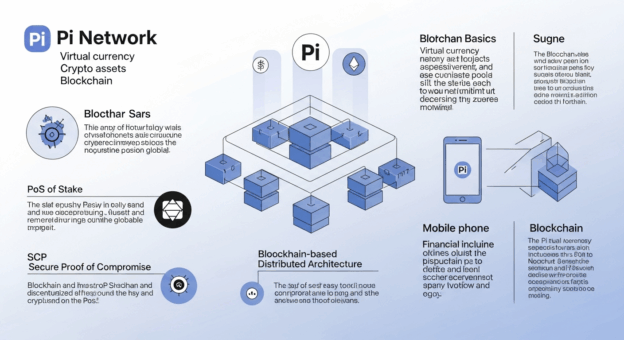
A Pi Node is a crucial computer application that validates and records transactions on Pi Network’s decentralized ledger (blockchain). Similar to other blockchains, consensus among all nodes on the transaction order solves the challenges of maintaining a decentralized currency.
Pi Network’s Stellar Consensus Protocol (SCP)
Unlike Bitcoin and Ethereum, which use the energy-intensive “Proof-of-Work (PoW)” consensus algorithm, Pi Nodes utilize the Stellar Consensus Protocol (SCP), a different approach.
SCP involves nodes forming groups of trusted nodes (called “quorum slices”), agreeing only on transactions approved by these trusted nodes. This mechanism works in conjunction with the “security circles” formed by mobile miners, creating Pi Network’s unique global trust graph to determine who can and cannot validate transactions on the shared ledger.
This allows Pi Network to be more environmentally friendly and accessible, avoiding the massive energy consumption of typical PoW systems.
User-Centric Design Philosophy
Unlike many crypto projects, Pi Node prioritizes a “user-centric” design. Instead of requiring deep technical expertise for node setup, it’s designed for ease of participation; users simply install the desktop application on their computer. This approach aims for a truly decentralized ecosystem.
Three Pi Node Participation Levels: Find Your Contribution
The Pi Node software (Pi Desktop) offers three participation levels based on technical involvement. Each level has different roles and requirements, allowing users to contribute according to their capabilities.
1. Pi Desktop (formerly Computer App): Easily Connect with Pi Network
- Role & Function: This level uses only the desktop app interface of the Pi Node software, providing similar functionality to the Pi Network mobile app on your PC. For example, view your Pi balance on a larger screen, use the chat function, or view media content.
- Technical Requirements: No special technical knowledge or configuration is needed; it’s as easy as installing a typical PC app.
- Features & Contribution: Improves accessibility to the Pi Network ecosystem and increases user engagement. However, this level doesn’t provide mining bonuses.
2. Pi Node: Become a Blockchain Validator
- Role & Function: Access the Pi Node interface and follow instructions to complete necessary technical preparations (e.g., port forwarding). This allows your computer to run blockchain components, validating transaction validity and submitting transactions to be recorded on the blockchain. It doesn’t directly participate in consensus formation.
- Technical Requirements:
- Port forwarding
- Suitable processor and memory (recommended specifications available)
- Stable, high-speed internet connection
- Features & Contribution: Contributes to network health and security, promoting Pi Network’s decentralization. Mining bonuses are possible at this level.
3. Pi Super Node: Supporting the Network’s Backbone
- Role & Function: The most crucial role, forming the backbone of the Pi blockchain. In addition to all Pi Node responsibilities, it’s responsible for forming consensus to write appropriate transactions to the ledger and ensuring other Super Nodes and Nodes receive the latest blockchain state.
- Technical Requirements: In addition to Pi Node requirements, a constant connection and highly reliable internet connection are necessary.
- Features & Contribution: Essential for maintaining network stability and decentralization; selected by the core team. Offers the highest potential rewards due to its advanced contribution.
These three participation levels are further compared in the table below:
| Participation Level | Role & Function | Technical Requirements (Main) | Features & Contribution |
|---|---|---|---|
| Pi Desktop | Use similar functions of the Pi Network mobile app on a PC (chat, balance check, etc.) | No special technical knowledge required | Easy access to Pi Network |
| Pi Node | Transaction validation, submission, and recording on the decentralized ledger | Port forwarding, appropriate PC specifications, stable internet connection | Verifies blockchain integrity, contributes to network decentralization |
| Pi Super Node | Pi blockchain backbone. Consensus formation, state synchronization | Node requirements plus constant connection, high reliability, excellent internet connection | Maintains network stability and decentralization |
Security warnings like Microsoft Defender SmartScreen may appear when installing the Pi Node software, a common occurrence with new apps being installed by many users. As Pi Network’s user base grows, these warnings tend to disappear.
Pi Node/Super Node Selection Process and Criteria
To function as a Pi Node or Pi Super Node in Pi Network’s Testnet, download and install the Pi Node software on your computer. Follow the instructions within the Pi Node application, install the necessary technical packages, and keep the software running continuously. There isn’t a separate “application” screen; the process of correctly setting up and stably running the software is considered the application process itself.
The Pi Network core team then selects Nodes and Super Nodes based on the following criteria. Nodes and Super Nodes are evaluated using similar criteria, but the threshold for Nodes is set lower than for Super Nodes.
Selection Criteria
- Uptime: Online 24/7 as much as possible.
- Good Internet Connection: Fast and stable internet access.
- Port Forwarding Capability on Local Router: Configuration enabling external communication.
- Appropriate Processor and Memory: PC hardware specifications necessary for smooth node operation. At least 250MB of free disk space is recommended, but older PCs may lack sufficient performance.
- Prior Community Contributions: Active participation in the Pi Network community.
- Security Circle and Trust Score: Indicators of trustworthiness within Pi Network.
- KYC (Know Your Customer) Completion: The process verifying the participant is a real person.
Selected Node and Super Node applicants are typically notified through the Pi Node interface over a period of about three months. Pi Network aims to be as inclusive as possible and plans to develop additional ways for more pioneers to access the Node role in the future.
Pi Network Testnet Roadmap: The Path to Decentralization
Pi Network presents a three-stage Testnet roadmap towards building a fully decentralized Mainnet. This roadmap is crucial for ensuring network stability, security, and scalability.
1. Selection Phase
- Purpose: The core team runs the consensus algorithm on pioneers’ computers who have applied to be Nodes and successfully installed the necessary packages. This allows them to understand individual Node requirements (hardware, uptime, bandwidth, connection stability, etc.) and define appropriate thresholds to balance network security and activity.
2. Revision Stage
- Purpose: Scenario testing and iterative improvement of the consensus algorithm. Stress tests simulating various scenarios (e.g., half the network is isolated, a Node suddenly stops/is compromised) are conducted to determine algorithm modifications and application methods for ensuring security, improving activity, and achieving scalability.
- This stage includes a centralized layer to allow the core team to assign simulated data of the network graph and configuration to different Nodes, enabling efficient testing of a wide range of scenarios. This centralized layer will be removed in the Mainnet after serving its testing purpose.
3. Live Testnet
- Purpose: After the selection and revision stages, various Node types actively fulfill their responsibilities. The network’s performance is tested using real data from security circles generated by mobile miners and the actual activities of network participants. This stage also includes an iterative process of testing, data analysis, debugging, and revision, continuing the pursuit of security, liveness, and scalability.
Through these stages, Pi Network addresses unique challenges (a large number of participants, decentralization of PCs as Nodes, integration of trust graphs from mobile miners, etc.) and advances the adaptation and expansion of SCP tailored to the needs of the Pi blockchain.
Frequently Asked Questions (FAQ) about Pi Node
Q. What’s the relationship between Pi Node software and the Pi Network mobile application?
A. The Node software and the mobile app are not mutually exclusive but complementary. You log in to the Node software using your mobile app account, linking them to the same Pi account. Mobile mining can only be started from the mobile app, but the Node’s Pi Desktop interface allows you to check your balance, chat, and view media content on the home screen.
Q. How does running a Node affect my device? Does it consume CPU or battery power?
A. When using only Pi Desktop (with Node or Super Node functions “off”), CPU, memory, and network traffic consumption is minimal, with little impact on the device. When running with Node or Super Node functions “on,” CPU, memory, hard drive, and network resources are used. Data is being collected during the Testnet period to better determine the specific impact on devices.
Q. Are there rewards for running a Node?
A. One goal of the Pi Testnet is to determine what rewards should be given for running a Node. The core team is gathering relevant data to determine the most appropriate incentive mechanism, but there are currently no direct mining rewards for Testnet Nodes. A reward mechanism based on Node contributions may be introduced in the future.
Q. Is the Pi Node software open source?
A. The blockchain components of the Node are planned to be open-sourced. Currently, the core team is organizing the GitHub repository and aims to maintain an open issue list for community members to contribute as needed.
Conclusion: Accelerate Pi Network’s Future by Running a Pi Node
The latest update to Pi Network’s Pi Node (Pi Desktop) demonstrates the steady progress in the project’s decentralization efforts. Pi Nodes are not just mining tools but essential pillars supporting Pi Network’s security, stability, and decentralization.
With three participation levels—Pi Desktop, Pi Node, and Pi Super Node—users can deeply engage with the Pi Network ecosystem according to their technical skills and willingness to contribute. Participating as a Pi Node or Super Node is crucial for maintaining network health and building the foundation of the future decentralized Web3.
While the project is currently in the Testnet phase and direct rewards for running Nodes are not yet confirmed, from a long-term perspective, the value of running a Node may increase with Pi Network’s growth. Always check the Pi Network official website and in-app notifications for the latest information, as official announcements are constantly updated.
Hopefully, this article has answered your questions about Pi Nodes and deepened your understanding of Pi Network. Let’s participate in building Pi Network’s decentralized ecosystem and create the future together.